In a continent racing to harness artificial intelligence while grappling with deep structural inequalities, three influential players, the University of Cape Town (UCT), the Centre for Artificial Intelligence and Sustainable Development (CAISD), and Frank Dialogue Holdings, are joining forces to host a landmark high-level dialogue that moves beyond academic discussion toward concrete policy development, ethical frameworks, and the equitable integration of generative AI in higher education. Senior university leaders, government ministers, students, researchers, policymakers, and tech innovators from South Africa and the region will convene this September 2026 at UCT.
The urgency is clear. According to a 2026 Google-Ipsos survey, 70% of South African adults have used an AI chatbot, a figure that surpasses global averages and represents a 25-percentage-point increase since 2023, with 87% of those using AI for learning or schoolwork reporting a positive impact. Yet most universities and TVET colleges remain dangerously unprepared for this rapid adoption. The September summit will unfold through a non-hierarchical, solution-oriented format blending plenaries, panel discussions, breakaways, and networking, designed to produce actionable outcomes rather than well-intentioned declarations.
A High-Level Strategic Meeting
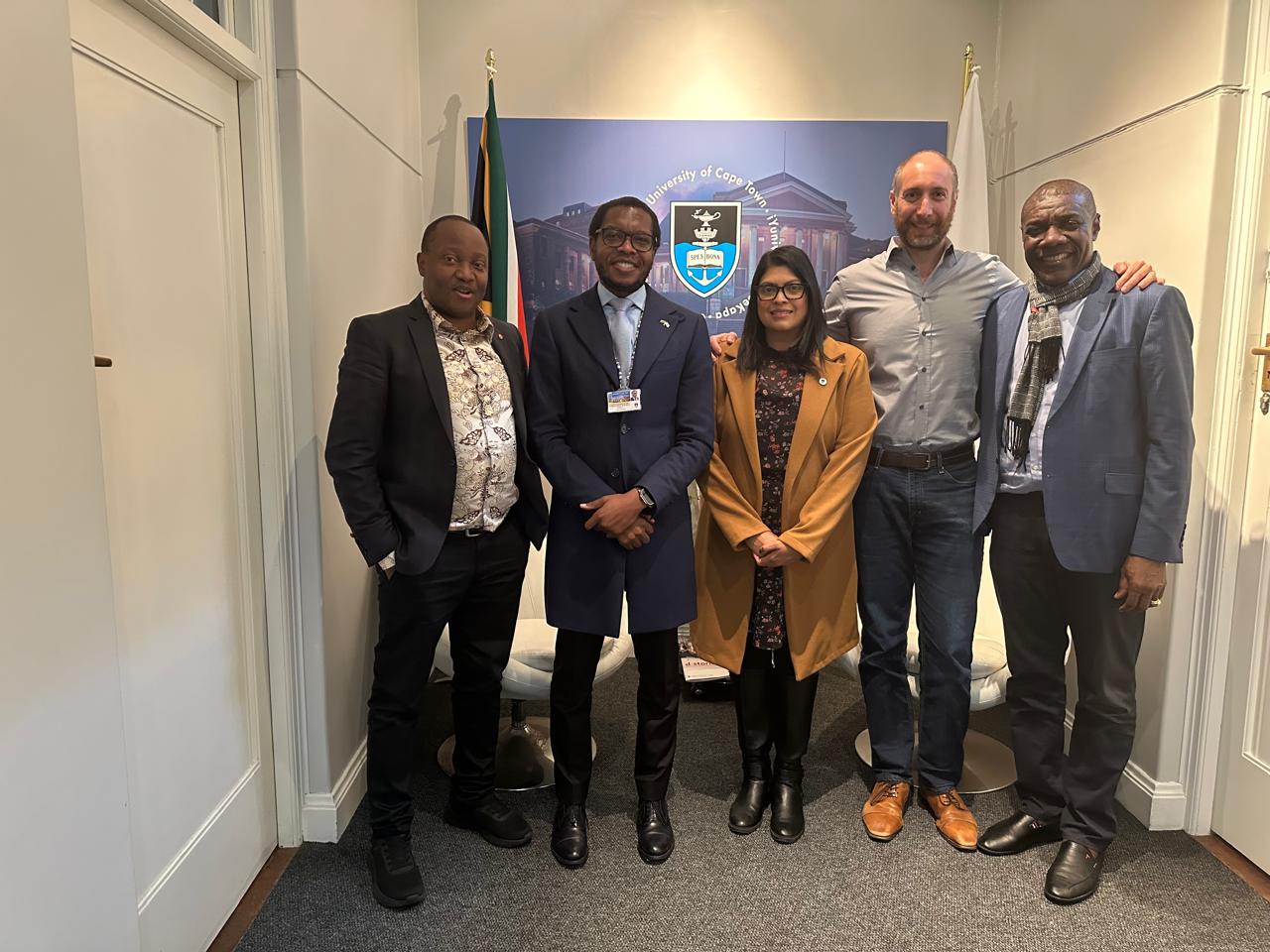
This initiative was shaped during a high-level strategic meeting held at UCT’s historic Bremner Building, the home of the Vice-Chancellor’s office and the university’s senior leadership. The gathering was hosted by Professor Mosa Moshabela, the UCT Vice-Chancellor, and included the head of UCT’s AI Institute. Also in attendance were Prof. Onkgopotse JJ Tabane, Founder and CEO of Frank Dialogue Holdings, and Dr. Alexandre Essome, Co-Chair of CAISD. The meeting produced a clear, shared mandate to deliver a first-of-its-kind conference that translates the continent’s surging AI adoption into coherent policy, responsible practice, and meaningful investment across African higher education.
A Conference with a Mandate
The gathering established the foundation for a September 2026 conference intended to set a new standard for AI discourse on the continent. Central to the discussion was the need to move beyond symbolic dialogue. Participants agreed on the importance of securing the right mix of decision-makers in the room, not only scholars and technologists but ministers, regulators, vice-chancellors, and senior officials who hold the authority to translate recommendations into frameworks governing how AI is adopted, funded, and governed across the higher education sector. The explicit goal is to move the dialogue format toward real, measurable policy change.
Alongside policy influence, the conference is being designed to attract investors. Funding AI in academia remains one of the most persistent and underacknowledged gaps on the continent. African universities are not short of intellectual capacity or institutional ambition, but the resources required to build AI research infrastructure, train faculty, develop curricula, and pilot meaningful applications remain chronically scarce. By bringing investors into the conversation at its earliest stage, the conference aims to begin bridging that gap in a structured and deliberate way.
Grounding the Conversation in Global and Continental Context
Two complementary perspectives emerged on the question of how best to frame the conference’s reach and relevance, and together they give the September event a distinctive character.
Professor Moshabela proposed linking the conference to international best practice by partnering with the National University of Singapore. Singapore’s model of state-backed investment, institutional agility, and long-term strategic planning has positioned its universities at the forefront of global AI adoption, offering a valuable comparative lens for African institutions navigating similar terrain.
Dr. Essome offered a view that resonated strongly with all present: that the conference should be framed as a genuinely continental African dialogue from the outset, not a South African event with continental ambitions attached later. This approach would ensure that the summit addresses shared challenges across diverse national contexts, promotes solutions rooted in African realities, and produces regulatory frameworks that African governments and institutions are far more likely to adopt and implement than models borrowed wholesale from elsewhere. The two perspectives are not in tension. Together they define a conference that is globally informed and African-led.
A Foundation Being Built, Not a Conversation Being Had
The backdrop against which this initiative arrives is sobering. Prof JJ Tabane was of the view that Generative AI is already reshaping dissertations, assignments, curriculum design, and virtual simulations across South African institutions. Students use it for complex research; lecturers deploy it for personalised learning in resource-scarce environments. Yet institutional responses remain fragmented. Only a handful of universities have meaningful AI frameworks in place, while pressing ethical concerns around algorithmic bias, data privacy, authorship, academic integrity, and epistemic justice within decolonising curricula continue to intensify without coordinated guidance. AI adoption has surged well ahead of institutional readiness, a gap that risks widening educational inequalities and leaving African institutions reactive rather than proactive in a period of rapid technological change.
The Frank Dialogue-CAISD collaboration, formalised through a Memorandum of Understanding signed in April 2026, brings together two organisations with complementary strengths. Frank Dialogue’s expertise in convening high-level public discourse through media innovation and live dialogue, combined with CAISD’s grounding in AI policy, governance, and sustainable development, creates a partnership with the capacity to do more than talk. The addition of UCT as host institution adds academic credibility, infrastructural depth, and the convening authority of one of Africa’s most internationally recognised universities.The conference, to be convened under the banner of the Frank Dialogue on the Use of Artificial Intelligence in Academia, carries a clear mandate which is,
“to explore current AI utilisation across universities and TVETs, examine ethical dimensions and comparative experiences from across the region, gather perspectives from lecturers and students, and forge collaborative, responsible policy frameworks that serve African higher education on African terms”.
What took shape in the Bremner Building was the beginning of something Africa’s higher education sector has long needed: a serious, sustained, and strategically constructed conversation about artificial intelligence, driven not by abstract enthusiasm but by a commitment to policy impact, institutional change, and continental relevance. September 2026 cannot come soon enough.
Leave a Reply