Category: Artificial Intelligence

  • UN Global Dialogue on AI Governance to be held in Geneva this week

    UN Global Dialogue on AI Governance to be held in Geneva this week

    On 6 and 7 July 2026, Geneva will host a meeting without precedent in the short history of global technology governance. The Global Dialogue on AI Governance is the United Nations platform where all governments and stakeholders will convene to discuss international cooperation, share best practices and lessons learned, and facilitate open, transparent and inclusive discussions on artificial intelligence governance. For the first time, every member state, regardless of its level of technological development, will sit at the same table to shape how artificial intelligence is governed globally. For Africa, this is the first formal multilateral occasion where rules of the AI era will be negotiated jointly, rather than dictated by the handful of states and firms that currently control the technology’s frontier.

    Africa has witnessed successive waves of technological change, from telecommunications standards to digital trade rules, entered the conversation after the architecture was already fixed elsewhere, and negotiating from other blueprints. The Global Dialogue offers a rare opportunity to change the sequence for AI, as it will allow Africa to participate in agenda-setting. Whether the continent seizes that chance depends on how well it understands the policy space it is walking into, and what it intends to ask for once inside it.

    The programme, and why each component matters for Africa

    The Dialogue’s draft structure is built around thematic discussions on AI opportunities and implications across societal, cultural and economic dimensions, on bridging AI divides through capacity-building, access and digital foundations, on safe, secure and trustworthy AI, and on respecting, protecting and promoting human rights through transparent and accountable approaches. Each of these clusters carries direct and unequal weight for the African continent, and each demands a prepared African position rather than a reactive one.

    The Bridging AI Divides cluster is, according to Dr Sally Dzingwa, CAISD’s Advisor on Data Governance, Data Management and Ethical AI, “arguably the cluster of greatest consequence for Africa. The AI divide is not an abstract concept, it is a reflected one”, argues Dzingwa, “The infrastructure that underpins AI compute capacity, energy systems and trusted data, remains disproportionately concentrated outside Africa. Consequently, most African countries are still net consumers of foundational AI technologies rather than producers of the models and capabilities that will shape the future digital economy.”   she added.

    International responses to this gap already exist in embryonic form as witnessed by a G7-endorsed AI Hub for Sustainable Development now anchors itself in fourteen African partner countries, working precisely on the levers that determine who can access AI infrastructure, namely data, energy-aware compute, talent, trust and financing. That initiative rests on a demographic argument that Africa has a genuine opportunity to leapfrog traditional development pathways through AI-enabled solutions in healthcare, education, agriculture, finance and governance.

    The policy question for Geneva is whether such initiatives remain donor-led pilots or become the basis for continentally owned digital foundations. Capacity-building financed externally without African institutional ownership risks reproducing dependency in a new technological register, just as earlier waves of donor-funded infrastructure left ownership and maintenance capacity offshore. The continent’s negotiating position should insist that financing be matched by transferred ownership of data, infrastructure and governance capability, not merely access to tools built and controlled elsewhere.

    A lot to learn from global key players

    The Safe, secure and trustworthy AI cluster will be where the global conversation is most advanced, and where Africa risks being handed standards rather than helping to write them. The European Union’s AI Act, the G7 Hiroshima Process, and the OECD’s AI principles each reflect the regulatory instincts of jurisdictions with mature digital economies, dense technical regulatory capacity, and established enforcement infrastructure. Africa has neither the same enforcement capacity nor, in most cases, the same regulatory maturity, yet the continent is routinely expected to adopt frameworks built for entirely different starting conditions. South Africa’s own experience is instructive here. Its Draft National AI Policy was withdrawn from gazette in April 2026, evidence that even the continent’s most industrialised AI economy has not yet settled on a workable domestic governance model.

    The analytic point for Geneva should be stated without diplomatic softening. Safety and trustworthiness frameworks calibrated for high-compute, high-enforcement jurisdictions cannot simply be transplanted onto economies where regulatory bodies are under-resourced and AI adoption is still largely informal. What the continent needs is a tiered approach to trust and safety, proportionate to actual deployment risk and institutional capacity, rather than a single global standard borrowed wholesale.

    The Human rights, transparency and accountability cluster will be where the African narrative has the most distinctive evidence to contribute, because the human rights risks of AI in African contexts are frequently different in kind from those debated in Brussels or Washington. Misinformation amplification, biometric identification systems deployed without adequate legal safeguards, and labour displacement in informal economies are not peripheral concerns; they are central to how AI will be experienced by most Africans. The algorithmic amplification of xenophobic discourse on social platforms in South Africa, for instance, illustrates a category of harm that is more pronounced in societies with high informal migration and weak content moderation capacity than in the jurisdictions whose human rights frameworks currently dominate the debate. The policy implication is that human rights safeguards must be designed around the realities of informal economies and weak data protection enforcement, rather than retrofitted from frameworks built for formal, heavily regulated labour markets.

    The AI opportunities and societal, cultural and economic dimensions is the cluster that makes the leapfrogging argument explicit. Leapfrogging has a coherent policy logic where infrastructure is absent rather than legacy and entrenched, new technology can be adopted without the cost of dismantling old systems first, as happened when mobile money bypassed formal banking infrastructure across much of the continent. AI-driven precision agriculture follows the same logic. Rather than waiting for industrial-scale mechanised agriculture to arrive, smallholder systems can absorb AI-enabled tools, such as predictive irrigation, pest detection and market analysis, directly. The policy argument for Geneva is that leapfrogging requires deliberate public investment now, in digital public infrastructure, data governance and skills, rather than an assumption that markets alone will reproduce the same outcome that mobile money achieved organically. Where that investment has not been made, AI adoption risks widening inequality within African economies even as it narrows the gap with wealthier ones, by benefiting the formal, urban and already-connected segments of the population first.

    Relevant Key sessions during the Geneva conference

    This dialogue on AI Governance is critical for Africa because it offers a rare platform to shape international AI rules rather than merely adopting them. Key sessions include the Opening Ceremony featuring high-level remarks from Antonio Guterres (UN Secretary-General), Annalena Baerbock (President of the General Assembly), and Khaled El-Enany (UNESCO Director-General), which set the tone for inclusive global cooperation. On Day 1, Thematic Breakout Cluster 1 on AI opportunities and implications (social, economic, cultural, ethical, linguistic, and technical dimensions) directly addresses leapfrogging potential in African contexts like agriculture, healthcare, and education. These components matter because they allow African voices to push for continentally owned digital foundations, capacity-building, and context-specific solutions instead of imported frameworks that risk deepening dependency.

    The Dialogue’s thematic clusters further reinforce Africa’s priorities: bridging AI divides through infrastructure and access (Cluster 2), developing proportionate safe and trustworthy AI standards (Cluster 3), and advancing human rights protections tailored to informal economies and local risks (Cluster 4). By engaging actively in these sessions and the concluding multistakeholder plenaries, African states and stakeholders can advocate for ownership of data, skills, and governance rather than perpetual net consumption of AI tools. This preparatory engagement is essential to translate demographic advantages into genuine technological sovereignty and inclusive development.

     CAISD is committed to ensuring that Africa is not merely a consumer of artificial intelligence but an active contributor to its future. By strengthening AI governance, data stewardship, ethical innovation and institutional capacity, the Centre seeks to support sustainable AI development that reflects Africa’s priorities while advancing the vision of the UN AI Governance Dialogue for inclusive, trustworthy and equitable AI.
  • UCT, CAISD, and Frank Dialogue Chart a New Course for AI in African Academia

    UCT, CAISD, and Frank Dialogue Chart a New Course for AI in African Academia

    In a continent racing to harness artificial intelligence while grappling with deep structural inequalities, three influential players, the University of Cape Town (UCT), the Centre for Artificial Intelligence and Sustainable Development (CAISD), and Frank Dialogue Holdings, are joining forces to host a landmark high-level dialogue that moves beyond academic discussion toward concrete policy development, ethical frameworks, and the equitable integration of generative AI in higher education. Senior university leaders, government ministers, students, researchers, policymakers, and tech innovators from South Africa and the region will convene this September 2026 at UCT.

    The urgency is clear. According to a 2026 Google-Ipsos survey, 70% of South African adults have used an AI chatbot, a figure that surpasses global averages and represents a 25-percentage-point increase since 2023, with 87% of those using AI for learning or schoolwork reporting a positive impact. Yet most universities and TVET colleges remain dangerously unprepared for this rapid adoption. The September summit will unfold through a non-hierarchical, solution-oriented format blending plenaries, panel discussions, breakaways, and networking, designed to produce actionable outcomes rather than well-intentioned declarations.

    A High-Level Strategic Meeting

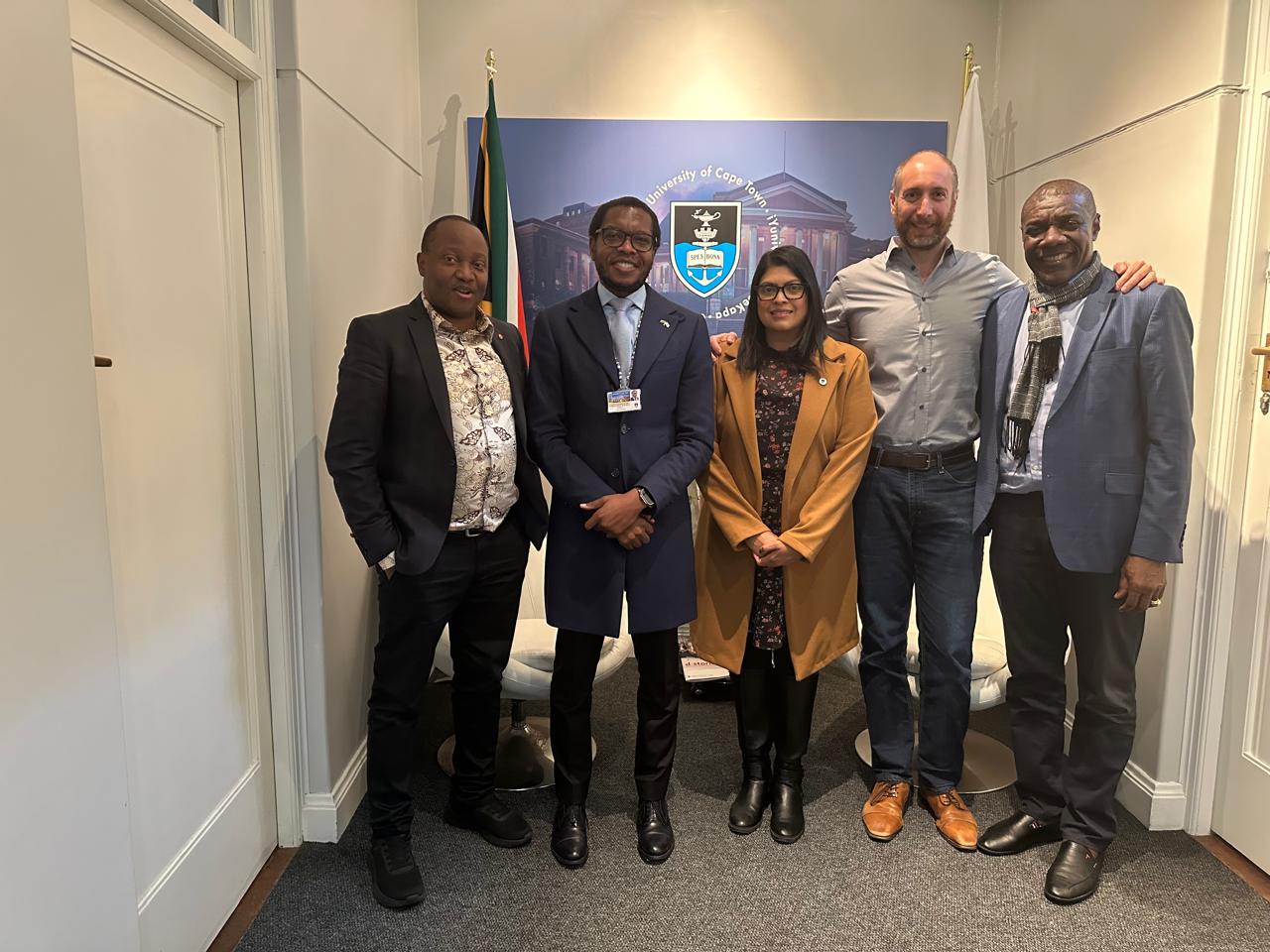
    This initiative was shaped during a high-level strategic meeting held at UCT’s historic Bremner Building, the home of the Vice-Chancellor’s office and the university’s senior leadership. The gathering was hosted by Professor Mosa Moshabela, the UCT Vice-Chancellor, and included the head of UCT’s AI Institute. Also in attendance were Prof. Onkgopotse JJ Tabane, Founder and CEO of Frank Dialogue Holdings, and Dr. Alexandre Essome, Co-Chair of CAISD. The meeting produced a clear, shared mandate to deliver a first-of-its-kind conference that translates the continent’s surging AI adoption into coherent policy, responsible practice, and meaningful investment across African higher education.

    A Conference with a Mandate

    The gathering established the foundation for a September 2026 conference intended to set a new standard for AI discourse on the continent. Central to the discussion was the need to move beyond symbolic dialogue. Participants agreed on the importance of securing the right mix of decision-makers in the room, not only scholars and technologists but ministers, regulators, vice-chancellors, and senior officials who hold the authority to translate recommendations into frameworks governing how AI is adopted, funded, and governed across the higher education sector. The explicit goal is to move the dialogue format toward real, measurable policy change.

    Alongside policy influence, the conference is being designed to attract investors. Funding AI in academia remains one of the most persistent and underacknowledged gaps on the continent. African universities are not short of intellectual capacity or institutional ambition, but the resources required to build AI research infrastructure, train faculty, develop curricula, and pilot meaningful applications remain chronically scarce. By bringing investors into the conversation at its earliest stage, the conference aims to begin bridging that gap in a structured and deliberate way.

    Grounding the Conversation in Global and Continental Context

    Two complementary perspectives emerged on the question of how best to frame the conference’s reach and relevance, and together they give the September event a distinctive character.

    Professor Moshabela proposed linking the conference to international best practice by partnering with the National University of Singapore. Singapore’s model of state-backed investment, institutional agility, and long-term strategic planning has positioned its universities at the forefront of global AI adoption, offering a valuable comparative lens for African institutions navigating similar terrain.

    Dr. Essome offered a view that resonated strongly with all present: that the conference should be framed as a genuinely continental African dialogue from the outset, not a South African event with continental ambitions attached later. This approach would ensure that the summit addresses shared challenges across diverse national contexts, promotes solutions rooted in African realities, and produces regulatory frameworks that African governments and institutions are far more likely to adopt and implement than models borrowed wholesale from elsewhere. The two perspectives are not in tension. Together they define a conference that is globally informed and African-led.

    A Foundation Being Built, Not a Conversation Being Had

    The backdrop against which this initiative arrives is sobering. Prof JJ Tabane was of the view that Generative AI is already reshaping dissertations, assignments, curriculum design, and virtual simulations across South African institutions. Students use it for complex research; lecturers deploy it for personalised learning in resource-scarce environments. Yet institutional responses remain fragmented. Only a handful of universities have meaningful AI frameworks in place, while pressing ethical concerns around algorithmic bias, data privacy, authorship, academic integrity, and epistemic justice within decolonising curricula continue to intensify without coordinated guidance. AI adoption has surged well ahead of institutional readiness, a gap that risks widening educational inequalities and leaving African institutions reactive rather than proactive in a period of rapid technological change.

    The Frank Dialogue-CAISD collaboration, formalised through a Memorandum of Understanding signed in April 2026, brings together two organisations with complementary strengths. Frank Dialogue’s expertise in convening high-level public discourse through media innovation and live dialogue, combined with CAISD’s grounding in AI policy, governance, and sustainable development, creates a partnership with the capacity to do more than talk. The addition of UCT as host institution adds academic credibility, infrastructural depth, and the convening authority of one of Africa’s most internationally recognised universities.The conference, to be convened under the banner of the Frank Dialogue on the Use of Artificial Intelligence in Academia, carries a clear mandate which is,

    “to explore current AI utilisation across universities and TVETs, examine ethical dimensions and comparative experiences from across the region, gather perspectives from lecturers and students, and forge collaborative, responsible policy frameworks that serve African higher education on African terms”.

    What took shape in the Bremner Building was the beginning of something Africa’s higher education sector has long needed: a serious, sustained, and strategically constructed conversation about artificial intelligence, driven not by abstract enthusiasm but by a commitment to policy impact, institutional change, and continental relevance. September 2026 cannot come soon enough.

  • A Development-First Critique of South Africa’s Withdrawn AI Policy

    A Development-First Critique of South Africa’s Withdrawn AI Policy

    A Necessary Withdrawal, and an Unfinished Conversation

    Authored by CAISD – Centre for Artificial Intelligence and Sustainable Development.

    On 26 April 2026, Minister Solly Malatsi announced the withdrawal of the Draft National Artificial Intelligence Policy published for public comment in Government Gazette No. 54477. The stated reason was unambiguous: the document contained fictitious sources in its reference list, the most plausible explanation being that AI-generated citations were incorporated without proper verification. The Minister was right to act decisively. A national AI policy whose own evidentiary foundation is compromised by precisely the kind of AI governance failure it was meant to address is not merely an embarrassment. It is a structural contradiction that would have undermined the document’s authority from the moment of its enactment. The Centre for Artificial Intelligence and Sustainable Development (CAISD) notes, with candour, that our own review of Gazette No. 54477 had flagged irregularities in portions of the reference architecture. We therefore welcome the withdrawal of the document draft policy and commend the ministry for urgent action.

    The withdrawal of this flawed draft should not silence this urgent national conversation. South Africa’s need for a credible, development-oriented AI governance framework should not be diminished by a single policy failure. If anything, the manner of that failure, a government document corrupted by unverified AI outputs in a policy designed to regulate AI, illustrates with painful precision why the governance imperatives identified in CAISD’s advisory submission remain pressing. We submit this analysis as a contribution to the redrafting process and direct it to the substantive policy architecture that the next draft must contain.

    The Developmental Imperative Cannot Wait

    The conceptual foundation of Gazette No. 54477, notwithstanding its referencing failures, contained genuine insight. Its philosophical grounding in Ubuntu, its insistence that AI must serve the community rather than merely maximise corporate efficiency, and its proposal for an AI Insurance Superfund modelled on the Road Accident Fund represented distinctive contributions to global AI governance discourse. These ideas deserve to be rescued from the wreckage of a poorly quality-assured drafting process and carried forward into the revised document with greater rigour and stronger enforcement architecture.

    The central argument of CAISD’s advisory position is structural rather than rhetorical. For South Africa, AI governance designed primarily as a risk-management exercise is a strategic error. The OECD AI Principles, updated by the OECD Ministerial Council in May 2024, are explicit on this point that governments must invest in AI for public benefit while building governance environments that ensure equitable distribution of AI’s gains and adequate protection of citizens from its harms (OECD, 2024). A development-first framework does not abandon governance risks but calibrates regulatory strictness to the nature and severity of potential harm rather than applying precautionary restrictions that impose compliance costs on local innovators without protecting the citizens most exposed to AI-driven disruption.

    The AI system that misdiagnoses a patient in a public hospital, the algorithm that denies a social grant application processed by SASSA, the automated credit-scoring model that reproduces apartheid-era spatial inequality in lending decisions are not abstract governance concerns. They are the specific harms that a development-first framework must anticipate and prevent, while simultaneously deploying AI in precisely these same domains to improve diagnostic accuracy, reduce administrative backlogs, and expand financial inclusion. The revised policy must be architecturally equipped to do both.

    CAISD identified ten discrete governance gaps in Gazette No. 54477 relative to the standards established by verified international frameworks. Each gap is referenced below against sources that have been confirmed as genuine.

    Robust Data Governance Mechanisms

    The Draft National AI Policy should place robust data governance at the centre of its implementation architecture, as trusted AI systems depend fundamentally on the quality, integrity, fairness, and lawful use of data. In this regard, the policy should expressly strengthen bias-mitigation mechanisms through sustained investment in locally relevant, representative datasets that reflect South Africa’s demographic, linguistic, and socio-economic realities. Equally, it should require explainability standards for high-risk AI applications to ensure that automated decisions affecting citizens can be understood, interrogated, and challenged where necessary. These measures must be firmly aligned with the Constitution, particularly the rights to equality, dignity, just administrative action, and privacy, while ensuring full compliance with the Protection of Personal Information Act (POPIA). A strong data governance framework will not only protect the public interest but also enhance trust, legitimacy, and long-term adoption of AI across both the public and private sectors.

    The withdrawn draft treated all AI as a single regulatory category. Singapore’s Infocomm Media Development Authority, in collaboration with the AI Verify Foundation, finalised the Model AI Governance Framework for Generative AI in May 2024, establishing nine governance dimensions specifically designed for large language models, deepfakes, and synthetic content (IMDA & AI Verify Foundation, 2024). The revised South African policy requires a dedicated generative AI chapter with mandatory transparency disclosures and content provenance requirements, particularly urgent given the country’s multilingual digital environment.

    Algorithmic Impact Assessments.

    The EU AI Act, formally adopted in 2024, requires fundamental rights impact assessments before high-risk AI systems are deployed (European Parliament, 2024). Canada’s Directive on Automated Decision-Making requires equivalent assessments for all federal government automated decision systems. South Africa’s revised policy must mandate pre-deployment assessments for public sector AI, beginning with SASSA’s grant administration and the South African Police Service’s use of predictive analytics.

    Right to challenge AI decisions.

    The 2024 OECD update to Principle 1.3 on Transparency and Explainability reframed the governance standard from enabling individuals to understand AI decisions to enabling them to actively challenge those decisions (OECD, 2024). This shift is constitutionally grounded in South Africa in Sections 33 and 34 of the Constitution, covering just administrative action and access to courts, respectively. A statutory right to contest AI-driven decisions, routed through the proposed AI Ombudsperson, must appear in the revised draft.

    AI sovereignty and sovereign compute.

    The draft’s aspiration for regional AI factories requires structural enforcement. Without defined domestic ownership thresholds, minimum compute capacity targets, and prohibitions against foreign hyperscalers operating under local branding, these factories risk becoming another iteration of structural dependency dressed in developmental language. The revised policy requires a sovereign AI capability roadmap with measurable targets, including a strategy for accessing advanced semiconductors amid tightening global export controls.

    Green energy co-investment.

    OECD Principle 1.1, in its 2024 formulation, explicitly addresses environmental sustainability as a core dimension of trustworthy AI, acknowledging the significant and growing energy footprint of large-scale AI systems (OECD, 2024). The EU AI Act requires energy consumption disclosure for large AI models. South Africa’s revised policy must mandate binding green energy co-investment requirements for all AI factories and data centres, making AI infrastructure development a lever for renewable energy expansion rather than an additional burden on a coal-dependent grid during the Just Energy Transition.

    Remaining gaps.

    Five further governance deficits require attention: a mandatory AI incident reporting regime modelled on POPIA’s breach notification framework; a supply chain accountability map specifying minimum duties across the AI development and deployment chain; a SANAS-accredited conformity assessment pathway for high-risk AI systems; a National AI Procurement Policy governing government AI tenders; and a formal SME support regime with differential compliance timelines to prevent regulatory architecture from entrenching the market dominance of large foreign technology firms at the expense of local innovators.

    The Human Imperative: Building an AI-Productive Nation

    Beyond institutional architecture, the most consequential long-term investment South Africa can make is in the human capacity to produce, govern, and critically interrogate AI systems. The withdrawn draft’s treatment of talent development was its most substantively developed thematic area, and it is the dimension most worth preserving and strengthening in the revised document. The country has more than twenty million people under the age of thirty-five; an unemployment rate above thirty percent among youth; and a structural mismatch between the skills the economy currently rewards and those an AI-transformed economy will require. The distance between producing passive AI consumers and active AI producers is, in this context, a development variable of first-order importance.

    The revised policy must move beyond aspirational language on talent development to specify a National AI Skills Framework with competency standards by schooling phase, funded youth AI innovation programmes with measurable targets, and a legislated social dialogue mechanism, housed within NEDLAC, for managing AI-driven labour market disruption. The OECD (2024) is clear that fair labour market transitions require structured social dialogue, reskilling programmes, and social protection for displaced workers; these are not peripheral concerns in a country with South Africa’s employment structure. They are the conditions under which an AI governance framework can credibly claim to serve the people it governs.

    The withdrawal of Gazette No. 54477 is, in the final analysis, a moment of institutional accountability that South Africa should take seriously and move on from quickly.

    CAISD is an organisation that leverages artificial intelligence for development. It works with African universities, including AUDA-NEPAD, the UN and AI experts to advocate for AI that is development oriented.  Dr AD Essome is the Co-Chair of CAISD and can be reached at essome@caisd.co.za

  • 2026 FINTECH Money20/20 in Asia:

    2026 FINTECH Money20/20 in Asia:

    “CAISD attendance aims to convince majors world finance players to invest in AI and technology projects in Africa”

    Pretoria, South Africa, 15 April 2026. As Asia’s premier fintech and financial world players gathering opens at the Queen Sirikit National Convention Centre, in Bangkok Thailand, the Centre for Artificial Intelligence and Sustainable Development (CAISD) will step onto the global stage to champion a distinctly African vision: ethical, high-impact AI that drives both financial inclusion and environmental resilience. CAISD is not attending Money20/20 Asia 2026 merely to observe. It arrives ready to convince major financial players and FINTECH companies of Asia and other global corporations to invest in the sustainable development in Africa. The Team of CAISD will showcasing homegrown solutions that transform local realities into globally relevant breakthroughs. From AI models that unlock finance for the unbanked using alternative data, to climate-smart systems supporting precision agriculture and mining safety, CAISD demonstrates how African ingenuity can solve universal challenges with context-specific intelligence and rigorous ethical governance.

    At a moment when 96.5 percent of financial leaders worldwide are already deploying AI and sustainability sits at the heart of industry conversations, CAISD brings something uniquely valuable, that is the “Human-in-the-Loop” accountability, African-language natural language processing, and inclusive datasets rooted in real African contexts. This participation marks far more than a presence at one of the world’s most influential fintech events. It represents a strategic platform for CAISD to accelerate knowledge exchange on responsible AI frameworks, forge powerful partnerships across Asia-Pacific (APAC) and beyond, attract funding and talent, and launch pilot collaborations that can scale African AI fintech solutions into new markets.

    The Money20/20 Asia 2026 Opportunity

    Money20/20 Asia 2026 stands as the continent’s most influential fintech convergence, convening more than 4,000 senior decision-makers from banks, venture capital firms, fintech innovators, payments companies, and regulators across 75 countries. With one in three attendees occupying C-suite positions and over half holding senior leadership roles, the event delivers unparalleled access to the individuals shaping Asia’s and increasingly the world’s financial future.

    Spanning five stages and featuring more than 350 speakers alongside 50 hours of curated content, the programme explores policy, infrastructure, innovation, and the dynamic convergence of traditional finance (TradFi) and decentralised finance (DeFi). A new dedicated zone will spotlight digital assets and blockchain leaders, while Policy20; an exclusive summit brings together over 100 policymakers, central bankers, and regulators. The upgraded Startup and Investor Park hosts a high-stakes pitch competition, and Marketing Thursday offers targeted strategies for customer acquisition and growth.

    Sustainability emerges as a central theme, exemplified by speakers such as Maybank’s Group Chief Sustainability Officer, Shahril Azuar Jimin. These priorities align seamlessly with CAISD’s expertise in ethical AI governance and sustainable fintech. For African organisations, the event represents a gateway to APAC markets, where demand for inclusive, climate-resilient financial tools mirrors Africa’s own imperatives. CAISD Money20/20 Asia participation will therefore facilitate meaningful dialogue on how African AI fintech solutions can adapt to and enrich Asian contexts, fostering cross-continental innovation that benefits both regions.

    By representing Africa at Money20/20 Asia 2026, CAISD positions the continent not as a recipient of global innovation but as an exporter of proven, scalable solutions. Its Africa-centric models for financial inclusion and ethical governance directly address the event’s priorities in AI deployment, cross-border infrastructure, and sustainability offering practical insights that Asian markets can readily adapt.

    Headquartered in Pretoria, South Africa, CAISD empowers African stakeholders through advanced research and development, ethical AI governance frameworks, and the creation of context-specific intelligence models. CAISD bridges frontier technology with tangible impact across multiple sectors, with strength in fintech. Its AI-powered strategy, which leverage alternative data sources to extend financial services to the unbanked, exemplify how ethical AI fintech can promote transparency, inclusion, and economic empowerment. Beyond fintech, CAISD’s portfolio spans precision agriculture, mining safety enhancements, climate resilience systems, and more.

    Key Opportunities for Collaboration

    CAISD’s presence at Money20/20 Asia 2026 creates targeted opportunities for networking, fundraising, knowledge exchange, and strategic acquisitions with global leaders in fintech, banking, venture capital, policy, and sustainability. C-suite executives and regulators attending the event will find in CAISD a partner capable of co-developing responsible AI frameworks that balance innovation with accountability. The centre actively seeks strategic partnerships, talent acquisition, and pilot collaborations. Institutions interested in adapting African AI fintech solutions for their unbanked populations or integrating sustainable agriculture modules into cross-border platforms will discover ready-to-deploy assets. CAISD brings unique value through its extensive organisational network, policy influence via AUDA-NEPAD affiliations, and a track record of delivering high-impact projects that combine technological excellence with measurable sustainable development outcomes.

    What to Expect from CAISD at the Event

    Picture credit: Money2020

    Attendees will have proactive engagements with CAISD throughout the three days. Representatives will participate in key panel discussions on ethical AI deployment and sustainable fintech, host targeted side meetings in the innovation zones, and maintain a dedicated presence in the exhibition area for one-on-one conversations. CAISD will also engage actively in the Startup & Investor Pitch environment, presenting pilot models and exploring co-development opportunities with potential partners.

  • CAISD delegation will attend the Amazon AWS Imagine for Nonprofits Conference 2026 in Washington DC

    CAISD delegation will attend the Amazon AWS Imagine for Nonprofits Conference 2026 in Washington DC

    By CAISD Research Team

    On 19 March 2026, In the halls of the MGM National Harbor of Washington DC in the USA will buzz with discussions on petabyte-scale data, autonomous agents, and the future of intentional innovation. This year event projects to be a groundbreaking one compared to the previous ones. In the agenda: Getting hundreds of global organizations to discuss AI, but more importantly, to scale up those organisations outputs as far as mobilizing resources. “2026 AWS will be different” promise the Amazon AWS Imagine organisers, in so far as it will strengthen civil society organizations and help them to leap forward tangibles actions of development through AI and other technology models in their respective communities.

    For the Centre for Artificial Intelligence and Sustainable Development CAISD, the AWS Imagine for Nonprofits conference represents far more than a tech showcase. It offers a vital platform to bridge the widening gap between cutting-edge cloud advancements and the resource-constrained realities of African communities. Nonprofits worldwide face a digital revolution that often bypasses grassroots needs. The Southern Africa based organization  attendance is to champion inclusive tools that “amplify humanity” as noted by its leader, Dr Alexandre D, Essome, that “by blending global trends with localized African insights”.  CAISD is working to convert high-tech potential into tangible, sustainable social impact. At its core, CAISD believes technology must be as accessible in a rural African health clinic as in a Silicon Valley boardroom ensuring no one is left behind in the AI era.

    The Power of Coalition Building: “Going Far Together” 

    A recurring theme throughout the 2026 conference will be the essential role of coalitions in addressing systemic challenges like inequality and climate change. Sessions and networking opportunities that will be availed depicts that no single organization can tackle these issues alone. The Centre of Artificial Intelligence and Sustainable Development will connect with leaders from organizations such as the NAACP Legal Defense Fund, the American Red Cross and financial global players, exploring frameworks for scaling impact through shared resources and advocacy. This is captured well in one of the conference notes: “If you want to go fast, go alone; if you want to go far, go together.” For CAISD’s delegation, “going far” translates to fostering a global movement where African organizations evolve from technology recipients into strategic partners and co-architects. This collaborative approach is “in sync with the African philosophy of Ubuntu and underpins CAISD’s efforts to build resilient networks that drive continental sustainable development,” Dr Essome has noted before leaving Pretoria, CAISD’s HQ.

    Bringing the African Perspective

    The “global” AI solutions incorporates African realities. CAISD delegation will highlight the need for ethical AI frameworks resilient in low-bandwidth settings and attuned to regional dialects and cultural nuances often overlooked by dominant models.  By advocating for inclusive data collection, localized model training, and avoidance of the “legacy trap” of exclusionary digital systems. The hope as far as CAISD delegation attending this conference is that the conversation shifts from isolated local initiatives to truly integrated global movements. CAISD presence amongst others African organizations will infuse discussions with the “African feel” rooted in community resilience, linguistic diversity, and real-world constraints positioning Africa as a key testing ground and contributor to robust, equitable AI.

    The Shift to Agentic AI: Proactive Tools for Missions

    The conference will mark a clear evolution from generative AI (prompt-responsive) to agentic AI (proactive task managers). In sessions such as [INSP106] and [WKSHP 102], attendees will explore how these agents automate workflows and act as true partners.   What stands out as CAISD prepares for this conference is learning more about “agentic AI-powered workspace” for nonprofits, reducing costs and enabling complex automation. For CAISD’s delegation, this transition demands responsibility deploying reliable, hallucination-free agents culturally attuned to African contexts, where “every second counts” in healthcare, crisis response, to the extent that, a tool that discovers cholera with 94% efficacy or an application to promote epilepsy care awareness in remote clinics in Africa  receive and benefit of the same attention and resources  as other tools in the field and developed in the world.

    Legacy data trapped in inaccessible formats remains a major barrier. Sessions highlighting the use of Intelligent Document Processing ([BLD106]) to convert historical records into insights, will be a must learn for us at CAISD as we prioritize modernizing African data foundations to enable data-driven development in areas like conservation, agriculture, and climate resilience. This requires not just technical upgrades but human-centered leadership ensuring that “time to insight” becomes “time to impact” while preserving and valuing local knowledge. For CAISD, this conference should inspire us to treat social development sectors as drivers of stability and growth through robust data strategies and ethical AI. 

    Toward AWS Partners Network and a Future Grounded in Collaborative Responsibility

    Dr Essome has indicated that for CAISD and other organisations leveraging AI to promote development in the continent, the key objective during this meeting is progressing toward AWS Partner Network (APN) membership. This global community meeting and interaction offer funding, tailored solution-building, and collaborative opportunities. Learning from the global player such as Amazon AWS, CAISD would undertake to move from tool user to solution builder delivering context-specific innovations across the continent and amplifying impact through world-class expertise.

    The AWS Imagine for Nonprofits conference reinforces that technology’s greatest power lies in amplifying humanity’s capacity for good when guided by data. CAISD’s delegation advocacy and strategic partnerships will look to build a world where African voices shape global AI ethics, data strategies reflect continental realities, and technology that serves diverse communities.   

    Photo credit: AWS website

  • Mining Indaba 2026: A Record-Breaking Convergence of Collaboration and Optimism

    Mining Indaba 2026: A Record-Breaking Convergence of Collaboration and Optimism

    The 2026 mining events in Cape Town illuminated a stark dichotomy: the “Corporate Story” of technological advancement and investment at the Investing in African Mining Indaba, versus the “Alternative Story” of community hardship and systemic inequities at the Alternative Mining Indaba (AMI). With over 10,500 delegates, including 58 ministers, the main Indaba underscored Africa’s pivotal role in the critical minerals boom holding 55% of global cobalt, nearly half of manganese, and 90% of platinum group metals (PGMs) amid the global energy transition. However, the AMI revealed how this wealth often perpetuates poverty traps, environmental tragedies (e.g., Zambia’s Kafue River toxic dump affecting 300,000 people), and social disruptions.

    Analytically, this duality exposes a “mineral sovereignty gap,” where resource abundance fails to yield inclusive growth due to weak beneficiation, capital flight, and regulatory failures. CAISD’s dual participation highlights a node into the discussions that generative AI’s (GenAI) potential as a bridge and predictive tools could slash unplanned maintenance costs (up to 60% of total spending) by 10%, while incorporating community data ensures human-centered outcomes. Key contributions of CAISD into the Indaba discussions is the urgency of formalizing artisanal and small-scale mining (ASM, engaging 45 million globally), enhancing accountability through AI-enabled early warning systems, and fostering regional value chains. This article proposes AI entry points to transform mining into a vehicle for shared prosperity, aligning with SDGs and Agenda 2063.

    Beyond the “Critical Minerals” Hype: 5 Uncomfortable Truths from the Alternative Mining Indaba

    The global rush for “clean energy” has cast Africa into a familiar, high-stakes spotlight. As the world pivots toward a green transition, the continent’s reserves of cobalt, lithium, and Platinum Group Metals (PGMs) are being hailed as the new “gold.” Yet, beneath this corporate enthusiasm lies a profound Mineral Sovereignty Gap. This gap represents the tragic paradox where Africa holds 90% of the world’s PGMs and 55% of its cobalt yet remains tethered to systemic poverty and environmental degradation. To bridge this divide, we must move beyond the industry hype and confront the uncomfortable truths that define the frontlines of African extraction.

    1. Shared Prosperity is Never an Accident

    There is a persistent myth that mineral wealth automatically translates into national prosperity. History suggests the opposite; resource abundance often results in capital flight and “revenue-only” gains that never reach the citizenry. Tanzania offers a poignant lesson in this struggle. In 1967, Julius Nyerere stopped mining to wait for national ownership and sovereignty, but when the sector reopened in the 1990s, the dream of local ownership largely fell apart. Today, despite small-scale mining contributing 42% to the GDP, Tanzanians still struggle with unfair compensation and a lack of local capital retention. Prosperity must be a deliberate design, not a hopeful byproduct. Shared prosperity cannot be a mining by-product; It has to be designed, basically, from day one.

    2. The 50-Million-Liter Tragedy You Didn’t Hear About

    On February 18, 2025, the environmental costs of the “green” transition became devastatingly clear in Zambia’s Copperbelt. A tailings dam failure at Sino-Metals Leach Zambia released 50 million liters of toxic waste into the Kafue River. This disaster decimated livestock and poisoned the water source for 300,000 local community members. This represents an “accountability gap” that technology alone cannot fix. It was a failure of regulatory oversight and the absence of a functional early warning system. When we treat environmental safeguards as optional line items, the supply chain for “clean” technology is built on the destruction of African ecosystems.

    3. AI’s Real Value is in “Life-Saving,” Not Just “Money-Making”

    Artificial Intelligence is often sold to boards as a tool for corporate efficiency, and the math is compelling. Unplanned maintenance currently consumes 60% of total mining spending; AI and predictive tools can slash those costs by 10%. However, the true ethical frontier for AI lies in closing the data asymmetry that costs human lives. In South Africa, mining fatalities reached a record low of 42 in 2024, yet across the continent, the picture remains grim. In Zimbabwe’s artisanal and small-scale mining (ASM) sector, accident prevalence stands at a staggering 35%. AI’s highest calling is acting as a humanitarian early warning system for tailings instability and toxic spills.

    4. The 2% Trap and the Crisis of Local Ownership

    In Malawi’s Kalonga and Kasikizi regions, the discovery of gold has triggered a social emergency rather than an economic boom. While the minerals flow out, the government receives a mere 2% in revenue. The lived reality for locals is even bleaker: children are dropping out of school to join the mines, and women are forced to carry water uphill because their local sources are no longer safe. This “2% Trap” is a direct result of the Mineral Sovereignty Gap, where abundance fails to produce inclusive growth. These regions have become hives for HIV and STIs, while laborers work without protective equipment or formal contracts. True value is realized only when institutions are strong enough to protect land as a heritage, rather than a commodity for the highest bidder.

    Long-term value doesn’t come from shifting this development responsibility back and forth between government and companies. In our view, it comes from strong institutions, predictable regulation, but also partnership, which are anchored in transparency, accountability and local economic transformation.

    The Rocks Don’t Lie, But the Geopolitics Do

    There is significant political noise surrounding the energy transition, often driven by shifting global leadership and competing interests. Amidst this, “trusted data” remains the only objective foundation for a just transition. However, we must get over the “AI versus Geologist” debate; technology is a tool, not a replacement. As James Campbell notes, effective AI implementation involves scanning through 57 different geological models at once, yet it still requires a human explorationist to filter those results. The “interactive feedback loop” between machine learning and human expertise is the only way to ensure that technology serves the reality of the ground, rather than just the efficiency of the ledger.

    The science doesn’t lie. You know, geopolitics is noisy, views change based on leadership, but the rocks never lie. — Siphelele Buthelezi

    The Architecture of a Just Transition

    The future of African mining depends on whether the continent can finally bridge the Mineral Sovereignty Gap. This requires moving away from siloed extraction and toward regional cooperation, such as the Lobito corridor, and the implementation of ethical, human-centered AI. We cannot build a sustainable future for the rest of the world by refining a PR model that masks the endangerment of African communities. As we look toward the architecture of a new energy era, we must remember the words of Hon. Anthony P. Mavunde:

    Prosperity is not determined by what is under the ground. Prosperity is determined by what we build above the ground through vision, governance and long-term planning.

    The minerals are there, but the vision must be ours. Are you willing to ask where the minerals in your smartphone or electric vehicle truly come from?

    Representatives participating in the Alternative Mining Indaba 2026, representing countries including Nigeria, Germany, South Africa, Malawi, Liberia, Zimbabwe, Zambia, and Eswatini, committed to building stronger regional alliances and mutual support systems among communities impacted by mining operations. They emphasized the importance of uniting across national borders to amplify shared concerns, foster collective action, and create more effective networks that can advocate for fairer treatment and greater accountability in the extractive industries.

    A core element of their commitments involved systematically capturing and recording the real-world stories and impacts faced by those living near mining sites. By compiling these firsthand accounts, participants aim to inform stronger advocacy efforts, influence policy decisions, and drive meaningful reforms that prioritize the rights and well-being of affected populations over purely economic considerations.

    History made at the Mining Indaba

    The Investing in African Mining Indaba 2026 concluded as a resounding success, achieving the largest attendance in its 32-year history with over 10,500 delegates, including more than 1,450 mining company executives, 1,300 global investors, 1,400 government officials, and 625 speakers from over 100 countries. Under the powerful theme “Stronger Together: Progress Through Partnerships”, the mining Indaba fostered unprecedented levels of collaboration, with participants highlighting the vital role of strategic alliances between governments, private sector players, investors, and communities to unlock Africa’s mineral wealth. Attendees described the atmosphere as highly positive and energetic, noting record-breaking momentum that underscored growing global confidence in the continent’s mining potential amid surging demand for critical minerals essential to the energy transition.  Feedback from delegates and industry leaders emphasized a clear shift toward long-term value creation rather than mere resource extraction. Key discussions centered on de-risking projects through reliable infrastructure particularly power and logistics beneficiation within Africa, regulatory stability, and the integration of technology and AI to enhance efficiency and sustainability. Participants praised the robust engagements, with many pointing to the event’s success in facilitating meaningful deal-making, networking, and policy dialogues that position African nations as central players in global supply chains. Sentiment was overwhelmingly optimistic, with comments reflecting a collective recognition that partnerships are the key to converting geopolitical interest into tangible economic benefits for the continent.

    Overall, the Indaba reinforced Africa’s untapped potential while calling for sustained investment in skills development, environmental stewardship, and community inclusion to ensure inclusive growth. Delegates expressed excitement about the emerging commodity supercycle focused on Africa and the need for collaborative efforts to address binding constraints like energy access. The record turnout and high-quality conversations have set a strong foundation for future progress, leaving participants energized and committed to advancing sustainable mining practices that drive prosperity across the region.

    Moving Ahead. The CAISD analytics as a solution provider 

     CAISD will pioneer AI-integrated environmental monitoring platforms that synthesize real-time data from IoT sensors, satellite imagery, and community reports to predict hazards like tailings instability or pollution spills, as demonstrated in global case studies where AI has reduced environmental incidents by up to 50%. We will forge collaboration with Zambian and Kenyan authorities and local NGOs to deploy pilot systems in high-risk areas like the Copperbelt, incorporating geological, meteorological, and historical data to provide proactive alerts, thereby preventing disasters and supporting regulatory compliance. This work will extend to formalizing ASM through AI traceability tools that ensure minerals meet international standards, enabling access to finance and markets while embedding safety protocols to lower injury rates, which currently stand at 25.7% in Zimbabwean ASGM. By fostering multi-stakeholder partnerships, CAISD aims to scale these solutions continent-wide, aligning with SDGs for sustainable industrialization.

    CAISD will advance GenAI for predictive maintenance, developing models that analyze unstructured data from equipment sensors and wearables to forecast failures, as seen in implementations reducing accident rates through real-time hazard detection like collision avoidance and fatigue monitoring. Our initiatives will include capacity-building programs for miners and operators, using virtual simulations to train on AI-driven safety systems, and integrating these with governance tools for transparent revenue tracking to combat capital flight. Through research collaborations with institutions like the University of the Witwatersrand, we will refine hybrid AI models that incorporate community-specific variables, ensuring equitable resource allocation and minimizing ecological footprints. This forward-looking agenda not only addresses the sovereignty gap but also positions AI as a catalyst for just transitions, inviting broader collaboration to realize a safer, more sustainable mining future in Africa.

    The profound insights from both the Alternative Mining Indaba and the Investing in African Mining Indaba underscore the urgent need for predictive safety and environmental monitoring in Africa’s mining sector. Tragedies highlighted at the AMI, such as the 2025 Kafue River disaster where a tailings dam collapse released 50 million liters of toxic waste, contaminating waterways, killing aquatic life, and endangering over 300,000 residents, demand innovative solutions like AI-driven early warning systems. Coupled with high accident rates evidenced by South Africa’s 42 mining fatalities in 2024 and broader African statistics showing 35% accident prevalence in artisanal mining, generative AI (GenAI) can forecast equipment failures and environmental hazards, potentially reducing unplanned downtime and costs by 10% while mitigating risks. Based on these dual perspectives, CAISD positions itself as a key part of the solution by addressing these points through targeted AI applications that bridge corporate efficiency with community resilience.

    • Taurai Chiraerae is a researcher on international policies and the Executive Secretary of CAISD based in Pretoria. A network of universities in the continent working to leverage AI to promote efficiency in mining.

  • Africa’s AI “Leading Frontier Five” (2026 Profiles)

    Africa’s AI “Leading Frontier Five” (2026 Profiles)

    1. South Africa: The Infrastructure Giant

    South Africa remains the continental leader in raw compute power and institutional research.

    • Policy Strategy: Driven by the Presidential Commission on the 4IR (PC4IR) and the National AI Government Plan. It focuses on high-level regulation (POPIA for data privacy) and industrial modernization.
    • Tech Integration: * Compute: Hosted Africa’s first “AI Factory” in 2025 with 3,000+ NVIDIA GPUs via Cassava Technologies.
      • Research: Home to CAIR (Centre for AI Research) and the Wits MIND Institute, focusing on machine intelligence.
      • Economy: Deep integration in FinTech and mining; AI is projected to add up to R1.4 trillion to its GDP by 2030.

    2. Nigeria: The Talent & Startup Hub

    Nigeria is positioning itself to capture 43% of Africa’s AI-driven economic gains by 2030, leaning heavily on its massive youth population.

    • Policy Strategy: The National AI Strategy (launched 2024/25) focuses on “Human-Centered AI” and digital literacy. It recently moved into the global top 40 for “Policy Capacity.”
    • Tech Integration:
      • Language: Leading the continent in NLP (Natural Language Processing) for local languages (Yoruba, Igbo, Hausa) to drive financial inclusion.
      • Ecosystem: Over 120 active AI startups.
      • Infrastructure: Building the first National AI Centre in UNIJOS to decentralize tech growth.

    3. Kenya: The Bottom-Up Innovator

    Kenya has the highest grassroots AI adoption rate on the continent, with over 42% of internet users utilizing AI tools like ChatGPT and Gemini as of 2026.

    • Policy Strategy: Focused on “AI Resilience” and ethics. Kenya uses a “sandbox” approach, allowing startups to test AI solutions in a controlled regulatory environment.
    • Tech Integration:
      • Green AI: Leveraging geothermal energy to power sustainable data centers.
      • AgriTech: Widespread use of AI for pest control and crop disease detection (e.g., PlantVillage).
      • Education: Over 600,000 citizens trained in basic AI literacy through government-backed digital programs.

    4. Egypt: The Public-Private Pioneer

    Egypt bridges the gap between the African and Arab AI strategies, focusing on large-scale government digitization.

    • Policy Strategy: National AI Strategy 2.0. It features a “National AI Council” that oversees cross-ministerial implementation.
    • Tech Integration:
      • Smart Cities: AI is the “brain” of the New Administrative Capital’s utility and security systems.
      • Arabic LLMs: Investing heavily in Arabic-centric generative AI to serve the MENA region.
      • Logistics: AI-driven optimization of the Suez Canal traffic and maritime logistics.

    5. Rwanda: The Governance Laboratory

    Despite its size, Rwanda is arguably the most “AI-ready” government, using the country as a “Proof of Concept” hub for the continent.

    • Policy Strategy: A comprehensive National AI Policy that mandates AI training for civil servants. It is the first to sign the “Global Statement on Inclusive AI.”
    • Tech Integration:
      • Health: AI-powered drone logistics (Zipline) and automated diagnostic tools in rural clinics.
      • Ethics: Working with the World Economic Forum to create the “African AI Governance Framework.”
      • Research: Home to the Carnegie Mellon University-Africa campus, a primary feeder for AI engineers.

    The Emerging Challengers (Active Drafting & Implementation)

    These nations are in the final stages of policy adoption and have significant private sector AI growth.

    • Nigeria: Drafting a comprehensive AI National Policy; leading in local language models (NLP) and startup funding.
    • Ghana: Policy continuity focusing on ethics; integration in cocoa farming and education.
    • Ethiopia: Embedded AI in its 10-year Development Plan; focusing on AI for public health and linguistics.
    • Morocco: Strong focus on AI in manufacturing and aeronautics; AI research centers in Ben Guerir.
    • Tunisia: National AI Strategy focusing on the startup ecosystem and “deep tech.”
    • Algeria: Established a National School for AI; focusing on industrial modernization.

    3. The “Drafting & Developing” Group (Active Progress)

    These countries have recently initiated formal policy processes or have integrated AI into their ICT policies.

    • Angola: Recently drafted comprehensive AI legislation (2025).
    • Tanzania: Developing AI guidelines under the Ministry of ICT; focusing on e-health.
    • Uganda: Part of the AU technical support program; focusing on AI in education.
    • Namibia & Botswana: Actively drafting national strategies to diversify from mineral-led economies.
    • Zambia: Meaningful progress in early rollout for mining and fintech.
    • Côte d’Ivoire: Officially entered the AI policy space in March 2025.

    4. The Early/Alignment Stage (Foundational ICT Focus)

    These countries are currently aligning their existing data protection and ICT laws with the AU Continental Strategy.

    • Group A (West/Central): Cameroon, Gabon, Republic of Congo, DRC, Togo, Sierra Leone, The Gambia, Burkina Faso, Guinea, Mali, Mauritania.
    • Group B (East/South): Malawi, Zimbabwe, Mozambique, Madagascar, Seychelles, Eswatini, Lesotho.
    • Current State: Focusing on building “Data Sovereignty” and basic digital infrastructure before AI-specific laws.

    5. High-Constraint / Recovery States

    Countries currently facing infrastructure deficits or post-conflict recovery where AI remains in the academic or NGO pilot phase rather than national policy.

    • Countries: South Sudan, Somalia, Chad, Central African Republic, Eritrea, Libya, Sudan, Comoros, Djibouti, Guinea-Bissau, Liberia, Niger, Sao Tome and Principe, Equatorial Guinea.

    1. The Infrastructure-First Group (Southern & North Africa)

    These countries are focusing on building the “backbone” (data centers and connectivity) before rolling out high-level AI services.

    • Mauritius: Despite its small size, it ranks #2 in Africa for AI readiness. By 2026, it has successfully automated its maritime surveillance using AI to protect its vast Blue Economy from illegal fishing.
    • Morocco: A leader in “Industrial AI.” With strong ties to the EU, Morocco uses AI in its automotive and aerospace manufacturing hubs (like Tanger Med) to optimize supply chains.
    • Botswana & Namibia: Both countries are leveraging their mineral wealth to fund AI-driven precision mining. In 2026, Namibia is also using AI to manage its “Green Hydrogen” water desalination projects.

    🌾 2. The Resource-Constraint Innovators (West & East Africa)

    Countries with limited electricity or high data costs are turning to “Offline-First” or “Lightweight” AI models.

    • Senegal: A standout in West Africa, Senegal launched its Big Data National Platform in 2025. It focuses on AI for “Public Service Delivery”—automating government records in rural areas where administrative staff are few.
    • Ghana: Following the AU AI Strategy closely, Ghana has integrated AI into its Cocoa Board (COCOBOD) operations. In 2026, they use satellite-linked AI to predict crop yields and detect “swollen shoot” disease before it spreads.
    • Ethiopia: Despite internal challenges, the Ethiopian AI Institute has developed its own locally-tuned models for healthcare diagnostics and Amharic NLP (Natural Language Processing), reducing reliance on foreign tech.

    🛡️ 3. The “Fragile-State” Resilience Models

    Even in countries facing conflict or severe economic recovery, AI is being used as a tool for Humanitarian Resilience.

    • Sudan & South Sudan: AI is being used by NGOs and local tech hubs for predictive flood modeling and tracking displaced populations to better allocate food aid.
    • Somalia: The 2026 profile shows a surprising leap in AI-based FinTech. Since Somalia skipped traditional banking for mobile money, they now use AI for biometric security and fraud detection in the informal economy.

    🚀 Key 2026 Technology Integration Trends

    Technology TypeKey CountriesIntegration Focus
    Edge AITanzania, UgandaAI that runs locally on smartphones without needing constant internet—crucial for rural health.
    Sovereign CloudAngola, Côte d’IvoireBuilding local data centers to ensure “Data Sovereignty” (keeping citizen data within the country).
    GovTech AIBenin, TogoUsing AI to digitize land titles and prevent property fraud—a major hurdle for investment.

    The 2026 Constraint Reality

    While progress is visible, two major “walls” remain for these countries:

    1. The “Power Gap”: AI requires massive electricity; countries like DRC and Zambia are trying to link AI hubs directly to hydroelectric projects.
    2. The “Language Gap”: Most AI is trained on English. In 2026, the Masakhane project (a grassroots NLP community) is the primary force helping smaller countries build AI in Wolof, Swahili, and Zulu.

    In early 2026, the Francophone Africa AI block has moved from high-level “digital visions” to a highly structured, sovereign-first model. While English-speaking Africa often leads in VC-funded startups, the Francophone block—led by Senegal, Benin, and Côte d’Ivoire—is setting the continental gold standard for integrated e-governance and linguistic preservation.

    Their collaborative model is anchored by the AFRIA (Francophone Agency for AI) and the IDIA (Initiative for the Development of AI) network, which ensures that technology isn’t just imported but “localized” for French and indigenous languages.


    🏛️ 1. Benin: The “Model Student” of AI Policy

    Benin has arguably the most detailed AI roadmap in Africa, known as SNIAM 2023–2027.

    • The 2026 Milestone: The government has successfully rolled out its “National Data Strategy” (late 2025), which treats data as a national sovereign asset.
    • Technology Integration:
      • “JaimeMaLangue” (LoveMyLanguage): A massive AI project launched in early 2026 that uses crowdsourced data to build LLMs for Fongbe and other local languages, ensuring rural populations can access digital services via voice-AI.
      • Smart Gov: AI-driven automation for land titles and tax collection, making Benin one of the easiest places in West Africa to register property.

    🇸🇳 2. Senegal: The Regional “Compute” Hub

    Senegal’s strategy is built on the Plan Sénégal Émergent and a 2025 operationalization plan supported by international partners like Enabel and France.

    • The 2026 Milestone: Senegal has positioned itself as the “Data Center of the region,” hosting sovereign clouds that store government data for neighboring Mali and Guinea.
    • Technology Integration:
      • Supercomputing: The national supercomputer at Diamniadio is now being used for predictive climate modeling for Sahelian agriculture.
      • Youth Employment: Integrating AI training into “Vocational Training” centers to create a “Prompt Engineering” workforce for the Francophone global market.

    🇨🇮 3. Côte d’Ivoire: The AI Governance Leader

    In March 2025, Côte d’Ivoire officially launched its National Strategy for AI and Data Governance with a massive investment from the African Development Bank.

    • The 2026 Milestone: The completion of the AI Laboratory within the City of Innovation and Culture in Abidjan, which serves as a regional research hub.
    • Technology Integration:
      • Cybersecurity: Using AI to power its national Security Operation Center (SOC), aiming to be #1 in the Global Cybersecurity Index in Africa.
      • Gender Inclusion: A policy mandate requiring 40% female participation in all national AI research and training programs.

    🤝 The “Francophone Collaborative Model”

    Unlike the competitive nature of some tech hubs, these countries share a Common Roadmap (signed in Abidjan, Dec 2025):

    Strategy ElementHow it Works in 2026
    Linguistic SovereigntyPooling datasets across Senegal, Benin, and Togo to ensure AI understands the “West African French” nuance and local dialects.
    Regulatory SandboxA shared “Francophone Sandbox” where AI startups can test health-tech tools in one country and get “fast-track” approval in the others.
    Cloud IndependenceShifting away from complete reliance on US/Chinese clouds toward a “Francophone Data Ring” (regional data centers).

    ⚠️ The Limitation: The “Digital Divide” vs. “Sovereignty”

    Despite their sophisticated policies, these countries still struggle with connectivity costs. Their 2026 solution has been “Edge AI”—deploying AI models that run on local servers or low-end smartphones without needing a high-speed fiber connection, specifically for rural health and agriculture

    SWOT Analysis: AU Continental AI Strategy & STISA (2026)

    Strengths (S)

    • Unified Strategic Voice: The AU provides a single framework that allows smaller nations (like Lesotho or Djibouti) to adopt “best practice” laws without starting from scratch.
    • Demographic Dividend: 60% of the continent is under age 25. This “AI-native” generation is driving rapid adoption in the gig economy and software development.
    • The “Leapfrog” Effect: Similar to mobile money (M-Pesa), African nations are skipping legacy industrial systems to build AI-first infrastructure (e.g., Rwanda’s drone delivery networks).
    • Sovereign Data Focus: Strong emphasis on the Malabo Convention ensuring African data is governed by African laws.

    Weaknesses (W)

    • The “Compute” Gap: Only a few countries (South Africa, Egypt, Kenya, Nigeria) have the GPU clusters needed to train large models, creating a digital divide within the continent.
    • Fragmentation: 54 different regulatory environments make it difficult for AI startups to scale across borders.
    • Energy Deficit: Over 600 million people still lack reliable electricity, which is a fundamental requirement for the “Physical Layer” of AI (servers and towers).
    • Linguistic Bias: Only 0.02% of global internet content is in African languages, making many global AI tools inaccurate for rural populations.

    Opportunities (O)

    • AfCFTA Integration: Using AI to harmonize trade under the African Continental Free Trade Area, automating customs and logistics for all 54 states.
    • Localized LLMs: A massive opportunity to build “Small Language Models” (SLMs) for Swahili, Amharic, Wolof, and Zulu that can run on cheap smartphones.
    • Climate Resilience: AI-driven predictive modeling for the Sahel and coastal regions to combat extreme weather.
    • Health Diagnostics: Using AI to multiply the reach of the continent’s limited medical workforce.

    Threats (T)

    • “Digital Colonialism”: Dependence on foreign (US/Chinese) cloud infrastructure, which can lead to data extraction without local value.
    • AI-Enabled Disinformation: Used to destabilize elections or fuel conflict in fragile states (a major concern cited in the 2025 AU Peace & Security reports).
    • Brain Drain: High-skilled African AI researchers being recruited by global tech giants, leaving national institutes understaffed.
    • Weaponization: The risk of AI-integrated drones and surveillance tech entering conflict zones with weak institutional oversight.

    🛠️ Implementation Progress: The 54-Country Roadmap

    As of January 2026, the AU’s implementation plan is in Phase 1 (Governance & Capacity):

    1. AI Advisory Boards: 22 nations have established National AI Councils to oversee ethics and safety.
    2. Centers of Excellence: Five regional hubs are being finalized (Egypt for North, Nigeria for West, Rwanda for East, DRC for Central, and South Africa for Southern).
    3. The 2027 Review: Next year, the AU will audit all 54 countries to see which have successfully integrated AI into their National Development Plans.

    Strategic Summary for Your Report

    The African strategy is not about competing with Silicon Valley on general-purpose AI. It is about Vertical AI—deeply specialized tools for agriculture, maternal health, and trade—designed to work within the constraints of low bandwidth and limited power.

    The following checklist is a roadmap for the 54 African countries based on the AU Continental AI Strategy 2025–2030 and the STISA-2034 framework.


    🛠️ The “Tier II by 2030” Checklist

    Phase 1: Legal & Ethical Foundation (Years 1–2)

    Before any AI is deployed, the “Rules of the Road” must be established to prevent misuse.

    • [ ] Ratify the Malabo Convention: Ensure national data protection laws are aligned with the African Union’s cybersecurity standards.
    • [ ] Publish a National AI Policy: Transition from a general “ICT Policy” to a specific AI strategy with ethics guidelines.
    • [ ] Establish an AI Ethics Board: Create a multi-stakeholder group (academia, government, and civil society) to review high-risk AI deployments (e.g., in surveillance or health).

    Phase 2: The “Physical Layer” (Years 2–4)

    AI cannot run without reliable power and data storage.

    • [ ] Sovereign Cloud Strategy: Move government data from foreign servers to local or regional (African) “Sovereign Clouds.”
    • [ ] Green Power for Compute: Link AI data centers to renewable energy sources (Solar/Hydro) to ensure sustainable 24/7 operation.
    • [ ] Broadband Last-Mile: Achieve at least 60% 4G/5G or satellite internet coverage to reach rural farmers and clinics.

    Phase 3: Human Capital & Localization (Years 3–5)

    Building local talent is the only way to avoid “Digital Colonialism.”

    • [ ] AI-Ready Curricula: Integrate basic coding and AI literacy into secondary schools and vocational training.
    • [ ] The “1,000 Practitioners” Goal: Train a minimum of 1,000 local data scientists and engineers through national bootcamps.
    • [ ] NLP Localization: Fund the creation of datasets for at least two major indigenous languages to ensure AI is accessible to non-English/French speakers.

    📈 The Maturity Transition Path

    TierFocus Area in 2026Tech Integration Level
    Tier IV (Foundational)Building basic internet & power.Mobile money and SMS-based services.
    Tier III (Sector-Specific)Testing AI in one sector (e.g., Agri).Pilot drone programs; AI soil sensors.
    Tier II (Fast-Follower)Broad policy + Local talent.E-Government; AI-driven tax/health.
    Tier I (Pioneer)Sovereign LLMs & Compute.National AI Data Centers; Exporting AI.

    🚀 Why This Matters for the 54 Nations

    By 2030, the AU aims to have all 54 countries at least at Tier III. This is not about building “The Next Silicon Valley”—it is about ensuring that a mother in rural Chad can use a voice-AI bot in her own language to diagnose a crop disease, or that a student in Lesotho can access an AI tutor that understands their local curriculum.

    In early 2026, internet penetration in Africa remains the world’s most rapidly expanding digital frontier. While the continental average sits around 40-43%, the disparity between nations is vast—ranging from nearly universal access in island nations like Seychelles to under 15% in landlocked, high-constraint states.

    The following data reflects late 2025/early 2026 estimates based on reports from the ITU, DataReportal, and GSMA.


    🌐 Internet Penetration by Country (2026 Estimates)

    North Africa

    North Africa generally leads the continent in stable, high-speed connectivity.

    • Morocco: 84.1%
    • Egypt: 81.6%
    • Libya: 76.2%
    • Tunisia: 69.8%
    • Algeria: 76.9%

    Southern Africa

    High infrastructure investment has made this the most connected sub-region in Sub-Saharan Africa.

    • Seychelles: 87.4%
    • South Africa: 79.6%
    • Mauritius: 79.5%
    • Botswana: 81.4%
    • Namibia: 64.4%
    • Eswatini: 57.6%
    • Lesotho: 48.0%
    • Zimbabwe: 38.4%
    • Zambia: 31.2%
    • Malawi: 18.0%

    West Africa

    A mix of high-adoption coastal hubs and lower-adoption Sahelian nations.

    • Cabo Verde: 73.5%
    • Ghana: 69.9%
    • Senegal: 60.6%
    • Nigeria: 44.9%
    • Ivory Coast: 40.7%
    • The Gambia: 45.9%
    • Togo: 37.0%
    • Benin: 32.2%
    • Guinea-Bissau: 32.5%
    • Guinea: 26.5%
    • Mali: 35.1%
    • Burkina Faso: 17.0%
    • Niger: 23.2%
    • Sierra Leone: 20.6%
    • Liberia: 23.5%
    • Mauritania: 58.8%

    East Africa

    Often characterized by “Mobile-First” innovation despite lower general infrastructure.

    • Djibouti: 65.0%
    • Kenya: 42.5%
    • Rwanda: 34.2%
    • Tanzania: 29.1%
    • Uganda: 27.0%
    • Ethiopia: 18.2%
    • Somalia: 25.1%
    • Eritrea: 20.0%
    • Sudan: 28.4%
    • South Sudan: 12.1%
    • Comoros: 35.7%
    • Madagascar: 20.4%

    Central Africa

    This region faces the highest connectivity challenges due to geography and conflict.

    • Gabon: 71.9%
    • Sao Tome & Principe: 61.5%
    • Equatorial Guinea: 60.4%
    • Cameroon: 41.9%
    • Republic of Congo: 38.4%
    • DRC: 30.5%
    • Angola: 44.8%
    • Central African Republic: 12.5%
    • Chad: 13.2%
    • Burundi: 11.1%

    📊 Summary Table: Top 5 vs. Bottom 5 (2026)

    RankTop ConnectedPenetrationRankLeast ConnectedPenetration
    1Seychelles87.4%50Ethiopia18.2%
    2Morocco84.1%51Chad13.2%
    3Egypt81.6%52Central African Rep.12.5%
    4Botswana81.4%53South Sudan12.1%
    5South Africa79.6%54Burundi11.1%

    The “Usage Gap” Reality

    It is important to note that while coverage (people living near a signal) has reached over 80% in many countries, the usage gap remains high. This is primarily due to:

    1. Cost of Data: In countries like CAR, data can cost 25% of average monthly income.
    2. Device Affordability: The transition from feature phones to smartphones is still ongoing in rural areas.
    3. Digital Literacy: Many people have access but lack the skills to use the internet for more than basic messaging.

  • Continental Region by Region CAISD Artificial Intelligence Trends and Analysis:

    Continental Region by Region CAISD Artificial Intelligence Trends and Analysis:

    “A look at the Southern Africa road map to reach the AI sovereignty”

    By Alexandre Essome and Taurai Chiraerae

    The term Africa “AI sovereignty” was first coined at the Malabo convention (Equatoria Guinea) with the aim to ensure that African data is governed by Africa law to mitigate the risk of what is known today as “digital colonialism”. This first delivery analysis explores how Southern African states have operationalized the African Union’s (AU) strategies, utilized SADC-specific frameworks, and advanced their unique AI trajectories toward becoming global “model makers.

     In fact, the Southern African sub-region is currently witnessing a transformative epoch where digital innovation is no longer a peripheral luxury but a core pillar of macroeconomic stability and social advancement. As the Fourth Industrial Revolution (4IR) accelerates across the continent, nations within the Southern African Development Community (SADC) are increasingly aligning their domestic agendas with high-level continental blueprints to ensure that the “AI divide” does not leave their populations behind (African Union, 2024a).

    The Continental Compass (AU Strategies)

    Southern African nations have historically been early adopters of continental directives, and the African Union Continental Artificial Intelligence Strategy and the Science, Technology and Innovation Strategy for Africa (STISA-2034) serve as primary guides (African Union, 2024b). These frameworks provide a unified strategic voice, ensuring that member states can adopt “best practice” regulations without the prohibitive cost of drafting them from a vacuum (African Union, 2024a). Nations such as South Africa and Mauritius have utilized STISA-2034 to transition toward a “knowledge-based and innovation-driven” economy (African Union, 2024b).

    By prioritizing sectors such as agriculture, health, and energy, these countries are moving toward “Vertical AI” deeply specialized tools designed to work within local constraints such as low bandwidth and limited power (Wits MIND Institute & CAIR, 2026). For instance, the AU’s focus on data sovereignty has led Southern African states to prioritize the Malabo Convention (African Union, 2024a). Furthermore, the AU Continental AI Strategy has served as a catalyst for establishing National AI Advisory Boards. As of 2026, many Southern African nations are moving through the legal and ethical foundation phase of the AU’s maturity roadmap, which mandates a transition from general ICT policies to AI-specific ethics guidelines and the establishment of multi-stakeholder ethics boards (African Union, 2024a).

    The SADC Digital Transformation Strategy

    While the AU provides the broad vision, the SADC Digital Transformation Strategy (DTS) 2023–2030 offers the localized roadmap for regional integration (SADC, 2023). The SADC DTS aims for a “Single Digital Market,” focusing on interconnectedness and harmonized legal frameworks to drive government efficiency and industrial competitiveness (SADC, 2023). SADC strategies have pushed for solid regional digital infrastructure. The target for 2030 is for all member states to have at least two cross-border links with each neighbour and regional Internet Exchange Points (IXPs) that route 80% of intra-SADC data traffic (SADC, 2023). Additionally, SADC has provided model laws for cybersecurity, data protection, and electronic transactions. This regional harmonization is critical for cross-border trade under the African Continental Free Trade Area (AfCFTA), allowing AI startups to scale across borders with minimal regulatory friction (SADC, 2023). Under the SADC framework and the AU’s implementation plan, South Africa has been finalized as the “Southern Regional Hub” for AI Excellence, providing a shared center for advanced research and training that benefits neighbouring landlocked nations (African Union, 2024a).

    SADC AI Policy Status, Gvt Readiness (2025–2026)

    CountryInternet Penetration 2026 Est. AI Policy Status (2026)Govt AI Readiness Rank (2025)Key Technical Integration / Focus
    Angola44.8%Recently drafted comprehensive AI legislation141stFocus on Sovereign Cloud and building local data centres to ensure data sovereignty
    Botswana81.4%Actively drafting national strategy to diversify from mineral-led economy109thImplementation of AI-driven precision mining
    Comoros35.7%High-Constraint State; AI remains in academic/NGO pilot phase171stCurrent focus remains on foundational infrastructure deficits
    DRC30.5%Early/Alignment stage; finalizing Central African Regional Hub144thLinking AI hubs directly to hydroelectric projects to overcome the “power gap”
    Eswatini57.6%Early/Alignment stage; aligning data protection laws with AU strategy137thFocusing on basic digital infrastructure and data sovereignty
    Lesotho48.0%Early/Alignment stage; adopting AU “best practice” laws131stExploring AI tutors that understand the local curriculum
    Madagascar20.4%Early/Alignment stage; foundational ICT focus168thPrioritizing basic internet and power infrastructure
    Malawi18.0%Early/Alignment stage; foundational ICT focus149thBuilding “Data Sovereignty” and basic digital infrastructure
    Mauritius79.5%Published stand-alone AI strategy; ranks #2 in Africa for AI readiness67thAutomated maritime surveillance using AI to protect the Blue Economy from illegal fishing
    MozambiqueNo DataEarly/Alignment stage; foundational ICT focus161stPrioritizing the building of basic digital infrastructure
    Namibia64.4%Actively drafting national strategy; published AI ethics guidelines110thAI-driven precision mining and AI management for “Green Hydrogen” water desalination
    Seychelles87.4%Early/Alignment stage; highest connectivity in the sub-region140thFocusing on data sovereignty and basic digital infrastructure
    South Africa79.6%Pioneer Nation; Presidential Commission on 4IR and National AI Government Plan65thHosted Africa’s first “AI Factory” in 2025 with 3,000+ GPUs; regional hub for AI excellence
    Tanzania29.1%Developing AI guidelines under the Ministry of ICT; focusing on e-health93rdDeployment of Edge AI that runs locally on smartphones for rural health services
    Zambia31.2%Meaningful progress in early rollout for mining and fintech82ndLinking AI hubs to hydroelectric projects to solve the power gap
    Zimbabwe38.4%Early/Alignment stage; foundational ICT focus126thAligning existing data protection and ICT laws with the AU strategy

    This table illustrates varying levels of digital maturity, ranging from “Pioneer” nations to “Foundational” states currently aligning their ICT and data protection laws with the African Union Continental AI Strategy. The indicators reflect a strategic shift toward “Vertical AI,” where nations prioritize deeply specialized tools for high-impact sectors like agriculture, mining, and healthcare designed to function within constraints like low bandwidth. Higher readiness rankings in countries like Mauritius and South Africa correlate with established policy frameworks and advanced infrastructure, such as the continent’s first “AI Factory” and automated maritime surveillance for the Blue Economy. Conversely, “Active Drafting” nations such as Botswana, Namibia, and Angola are leveraging mineral wealth to fund precision mining or establishing Sovereign Clouds to ensure that citizen data remains within national borders. The table also highlights critical technical workarounds for the region’s “Power Gap” and “Language Gap,” including the deployment of “Edge AI” in Tanzania and Uganda to support rural health services on smartphones and the use of the Masakhane project to build NLP models for indigenous languages like Zulu and Swahili. Ultimately, this table benchmarks progress toward the SADC Digital Transformation Strategy (2023–2030) targets, which mandate universal affordable access and interconnected regional infrastructure to drive government efficiency and industrial competitiveness.

    Strategic Recommendations for AI Adoption: The CAISD Perspective

    To ensure Southern Africa maximizes its potential while mitigating systemic risks, the Centre for Artificial Intelligence and Sustainable Development (CAISD) (caisd.co.za) offers the following expert recommendations based on the current continental and regional context:

    • Prioritize Green AI for Infrastructure. Resilience. CAISD recommends that Southern African governments implement the AU’s “Green Power for Compute” strategy (African Union, 2024a). Given the regional energy deficit, linking AI data centres directly to renewable sources like hydro, solar, and geothermal is essential for sustainable 24/7 operations (SADC, 2023). This approach prevents AI development from placing undue strain on already overburdened national grids
    • CAISD recommends the rapid deployment of regional Sovereign Clouds. Member states should move government data from foreign servers to regional infrastructure to ensure data sovereignty and protect national security. Data should be treated as a national sovereign asset to facilitate the creation of localized Large Language Models (LLMs).
    • To combat brain-drain, nations should set a goal to train a minimum of 1,000 local data scientists and engineers through national bootcamps, incentivizing their retention through startup grants and specialized tech visas. This can be achieved by integrating AI-ready curricula into secondary schools and vocational training immediately (African Union, 2024a).
    • Adopt Blended Finance Models for AI Startups by utilizing blended finance approaches where grant capital from development finance institutions (DFIs) de-risks AI startups in their early stages. This encourages private investor participation and allows local entrepreneurs to test “tech-for-good” solutions in agriculture and health without the immediate pressure of commercial returns (SADC, 2023).
    • Strengthen Natural Language Processing (NLP) for Inclusion by funding the creation of datasets for major indigenous languages such as Zulu and Sesotho (GSMA, 2024). This ensures that AI remains inclusive and accessible to rural populations, thereby bridging the “linguistic bias” gap and preventing cultural exploitation.
    • Institutionalize AI Ethics and Safety Boards comprising academia, government, and civil society (African Union, 2024a). These boards should implement “regulatory sandboxes” that allow startups to test AI tools in controlled environments, ensuring safety and compliance with international human rights standards.
    •  

    Conclusion

    Southern Africa is uniquely positioned to lead the continent’s digital transformation. By harmonizing the infrastructure giant of South Africa, the readiness of Mauritius, and the industrial focus of Botswana and Namibia, the region can successfully domesticate the AU’s vision. However, CAISD underscores, success hinges on a sustained commitment to overcoming energy deficits and building a robust, localized talent pipeline. Only through regional cooperation and inclusive policy can Southern Africa move from being a “model taker” to a global “model maker” in the AI era.

    References

    African Union. (2024a). Continental Artificial Intelligence Strategy: Harnessing AI for Africa’s Development and Prosperity. African Union Commission. https://au.int/sites/default/files/documents/44004-doc-EN-_Continental_AI_Strategy_July_2024.pdf

    African Union. (2024b). Science, Technology and Innovation Strategy for Africa (STISA-2034): Accelerating Africa’s transition into a knowledge-based and innovation-driven continent. African Union Commission.

    GSMA. (2024). AI for Africa: Use cases delivering impact – South Africa deep dive. GSMA Central Insights Unit.

    Oxford Insights. (2025). Government AI Readiness Index 2025: To what extent can a government harness AI to benefit the public?. Oxford Insights. https://oxfordinsights.com/wp-content/uploads/2026/01/Government-AI-Readiness-Report-2025-1.pdf

    Republic of South Africa. (2024). South Africa National Artificial Intelligence Policy Framework (Towards the Development of South Africa National Artificial Intelligence Policy). Department of Communications and Digital Technologies.

    SADC. (2023). The SADC Digital Transformation Strategy and Action Plan (SADC-DTS). SADC Secretariat. https://www.sadc.int/sites/default/files/2025-08/EN%20-%205.2.3B%20-%20CM–SADC-ICT-INFO-MINISTERS-2023-4.8D%20-%20Draft%20SADC%20DTS_1.pdf

    Wits MIND Institute & CAIR. (2026). Africa’s AI “Leading Frontier Five” (2026 Profiles). Working Document.

  • Bridging Africa’s AI Infrastructure Gap: “Turning G20 2025 Commitments into Continental Reality”

    Bridging Africa’s AI Infrastructure Gap: “Turning G20 2025 Commitments into Continental Reality”

    BY AD Essome and T Chiraerae

    The 2025 G20 Summit in Johannesburg delivered an unambiguous message that artificial intelligence is indispensable for Africa’s future. While the summit spotlighted the G20’s role in enhancing Africa’s Development, the broader and more urgent challenge is that Africa currently lacks the foundational infrastructure to develop, train, deploy, and govern AI at continental scale. Without rapid, large-scale investment in energy, connectivity, computing, data centers, and talent, the historic G20 pledges made in Johannesburg in November 2025 will remain aspirational. We zoom squarely on those infrastructure deficits, the investment opportunities they present for the Global North, and the catalytic role that African institutions particularly the Centre for Artificial Intelligence and Sustainable Development (CAISD) can play in closing the gap.

    The Scale of the Infrastructure Deficit

    Africa’s AI readiness lags dramatically behind global benchmarks. On the Energy front, Africa produced 919 TWh of electricity in 2023 while global data centres alone consumed 415 TWh in 2024, a figure expected to double by 2030 (International Energy Agency, cited in TechCabal Insights, 2025). Frequent outages and high costs make sustained GPU training nearly impossible outside a handful of urban pockets. In terms of connectivity, only 38 % of Africans were online in 2024 (global average: 68 %), leaving 860 million people beyond the reach of cloud-based or real-time AI services (Egwu, 2025). The continent hosts 1 % of global data-centre capacity despite representing 18 % of world population. Just over 140 colocation and hyperscale facilities existed in 2024, overwhelmingly concentrated in South Africa, Nigeria, Egypt, Kenya, and Morocco (Africa Data Centres Association, cited in CIPIT, 2025). This demonstrates weak computing power.

    Africa has virtually no publicly accessible supercomputing clusters capable of training frontier models; researchers and firms rely on expensive, distant clouds in Europe and North America, raising latency, cost, and sovereignty concerns. In terms of talent, Africa accounts for only 3 % of global AI researchers and practitioners, exacerbated by brain drain and limited doctoral programmes (CIPIT, 2025). These gaps translate into a projected loss of up to $1.2 trillion in potential AI-enabled GDP gains by 2030 if unaddressed (African Centre for Economic Transformation, 2025).

    G20 2025 as Catalyst

    The Johannesburg outcomes explicitly recognised the infrastructure bottleneck. The Leaders’ Declaration, the new G20 Africa Engagement Framework 2025–2030, and the Ubuntu Legacy Initiative all call for accelerated deployment of digital tools and AI, with dedicated workstreams on SupTech/RegTech and AI-driven due diligence. Implementation, however, now rests on closing the very infrastructure deficits that the summit identified.

    Strategic Investment Pathways for the Global North

    2024 already demonstrated viable, replicable models that the Global North can scale aggressively. Microsoft and G42’s $1 billion geothermal-powered AI data centre in Kenya (launched 2024) proves that renewable-energy-backed hyperscale facilities are feasible on the continent (CIPIT, 2025). Similar projects in Morocco (Oracle), South Africa (Vantage) show private capital will flow when governments offer land, tax incentives, and long-term power-purchase agreements.

    Sharing digital Infrastructure Corridors is another path worth considering. The World Economic Forum estimates that 700–1 000 new shared facilities by 2030 could unlock $1.2–1.5 trillion in economic value (WEF, 2025b). Northern development finance institutions (DFIs) and pension funds can provide first-loss equity or concessional debt to de-risk these regional hubs. Google’s Africa Connect Next and Equiano cable investments, combined with four regional cloud hubs rolled out in 2024, illustrate how Northern tech giants can expand backbone and last-mile connectivity while creating local AI inference points (Google, 2025).

    Renewable Microgrids for Rural AI and talent and sovereign cloud Ecosystems can be another worthwhile strategic investment. Solar and hydro-powered edge nodes can bring low-latency AI to agriculture and health. The U.S. DFC, EIB, and Norfund have already piloted such models; scaling them could close the $68–100 billion annual infrastructure financing gap (Brookings Institution, 2025). Microsoft’s 2024 continent-wide AI skilling programmes and Google’s $17 million investment in African universities for curriculum and compute credits provide templates for blended public-private talent pipelines (Google, 2025; CIPIT, 2025).

    The Global North has both strategic self-interest and moral imperative to act swiftly. A $50–70 billion committed pipeline over the next five years 2026–2030, channelled through PPPs, DFIs, and philanthropic guarantees would be sufficient to deliver continent-wide coverage of green data centres, 5G/low-earth-orbit connectivity, and sovereign HPC capacity. In return, investors gain first-mover access to a market that McKinsey projects could generate $61–103 billion annually from generative AI alone (McKinsey & Company, 2025).

    The Unique Value Proposition of African institutions including CAISD

    African institutions, led by organisations such as the Centre for Artificial Intelligence and Sustainable Development (CAISD), can play a decisive coordinating and enabling role in closing the continental AI infrastructure gap. By hosting a Pan-African AI Centre of Excellence, running sovereign model-training pilots, and validating Africa-specific applications, these institutions can provide the technical leadership that investors need. They can accelerate adoption across the continent by openly sharing non-sensitive models and datasets under an “AI Commons for Africa” approach, lowering costs and barriers for start-ups and public agencies in all 55 countries. Through established partnerships with the African Union, the African Tax Administration Forum (ATAF), the South African Reserve Bank, and others, they can harmonise policies and regulations, giving Global North partners the regulatory certainty they require. Finally, by serving as trusted local implementing partners for blended-finance projects, African institutions like CAISD can de-risk investments, ensure genuine technology transfer, and guarantee that new infrastructure remains African-owned and African-led. The Centre for Artificial Intelligence and Sustainable Development (CAISD) is uniquely positioned to orchestrate and accelerate these efforts. As a South African-based nexus of academia, government, industry, and regional bodies, CAISD can synergize the  four critical layers of value cited above.

    Final thoughts

    The Johannesburg G20 handed Africa the policy mandate. The infrastructure gap hands the Global North the investment opportunity. With CAISD and similar African institutions as trusted partners, the continent can move from being a consumer of global AI to a producer and exporter of African-led AI solutions starting now.

    References

    African Centre for Economic Transformation. (2025). Unlocking Africa’s AI potential: Digital public infrastructure. https://acetforafrica.org

    Brookings Institution. (2025). Leveraging AI and emerging technologies to unlock Africa’s potential. https://www.brookings.edu/articles/leveraging-ai-and-emerging-technologies-to-unlock-africas-potential/

    Centre for Artificial Intelligence and Sustainable Development. (n.d.). Home. https://backend.caisd.africa/

    Centre for Intellectual Property and Information Technology Law. (2025). The state of AI in Africa report 2025. https://aiconference.cipit.org/documents/the-state-of-ai-in-africa-report.pdf

    Egwu, F. E. (2025, November 4). Africa’s offline majority risk missing out on the AI revolution. DevelopmentAid.

    Google. (2025). We’re investing in connectivity, products and skills for Africa’s AI future. https://blog.google/around-the-globe/google-africa/africas-ai-future/

    McKinsey & Company. (2025, May 12). Leading, not lagging: Africa’s gen AI opportunity. https://www.mckinsey.com/capabilities/quantumblack/our-insights/leading-not-lagging-africas-gen-ai-opportunity

    TechCabal Insights. (2025, November 4). The building blocks Africa needs for AI adoption. https://insights.techcabal.com

    World Economic Forum. (2025a). How shared digital infrastructure can bridge the gap in Africa. https://www.weforum.org/stories/2025/04/how-shared-digital-infrastructure-can-bridge-the-gap-in-africa/

    World Economic Forum. (2025b). Investment in “green” computing can unlock $1.5t in Africa. https://www.weforum.org/stories/2025/12/investing-in-green-compute-in-africa/3.2sFast

  • What could be an AI’s guiding role in forging a Sustainable and Equitable Future for DRC Mining?

    What could be an AI’s guiding role in forging a Sustainable and Equitable Future for DRC Mining?

    “DRC Mining week 2025 shed lights on where the sub regions is heading”

    By Dr AD Essome and T. Chiraerae

    The Democratic Republic of Congo (DRC) stands at a pivotal moment, poised to harness its vast mineral wealth for the global energy transition. DRC Mining Week 2025 underscored the sector’s escalating global importance, with the nation as the dominant producer of cobalt and a major source of copper. The event’s focus on “Investing in Infrastructure Development and Energy Security – Vision 2025–2030” signals a strategic shift towards local processing, value addition, and industrial sovereignty. This ambitious vision aims to transform the DRC from a mere raw material exporter into a diversified, industrialized economy, ensuring the Congolese people directly benefit from their mineral riches.

    Overcoming Entrenched Challenges

    Despite this immense potential, deep-seated challenges persist. Issues such as governance instability, an opaque tax system, human rights abuses (including dangerous working conditions, child labor, and forced evictions), environmental degradation, and illicit trade continue to undermine sustainable development. These systemic issues create a paradox where immense wealth coexists with widespread poverty, demonstrating that the extractive model has historically failed to translate mineral riches into broad-based human development. Furthermore, unpredictable policies and an uneven playing field actively deter responsible, long-term foreign investment, highlighting the critical need for regulatory certainty and fairness alongside geological potential.

    A Shared Path Forward: Collaboration and Accountability

    Realizing the DRC’s ambitious vision necessitates a dual imperative: the DRC’s unwavering commitment to ethical and transparent governance, coupled with the international community’s responsibility for ethical and sustainable engagement. Strategic recommendations, strongly advocated by Dr Alexander Essome of the Centre for Artificial Intelligence and Sustainable Development (CAISD), aim to address these systemic issues.  Dr Essome’s holds the view that these strategic recommendations must include comprehensive tax and export policy reforms, the formalization of artisanal mining, and the strengthening of traceability systems. CAISD also emphasizes the transformative potential of Artificial Intelligence (AI) in enhancing efficiency, elevating safety, and driving sustainability within the mining sector.

    Simultaneously, international partners and mining companies must commit to responsible investment, providing technical assistance, investing in critical infrastructure, and upholding rigorous ethical sourcing and due diligence standards. Successful initiatives, such as those demonstrated by Ivanhoe Mines in community development and the formalization efforts at the Mutoshi site, offer valuable blueprints for best practices that extend beyond mere compliance to actively create shared value.

    The Transformative Role of Artificial Intelligence: CAISD’s Vision

    The Centre for Artificial Intelligence and Sustainable Development (CAISD) firmly believes that AI can revolutionize the DRC mining narrative. AI offers unprecedented opportunities to tackle long-standing challenges, driving efficiency, elevating safety, and fostering sustainability.

    Enhancing Efficiency Through Intelligent Systems

    AI algorithms are being deployed to analyze complex geological data, including satellite imagery and subsurface sensor readings, to construct highly detailed three-dimensional models of ore bodies. This sophisticated modeling enables more precise drilling and blasting operations, ultimately maximizing the recovery of valuable ore while significantly reducing the extraction of waste rock. Beyond extraction, AI is also optimizing mine planning, scheduling, and logistical operations, ensuring the seamless coordination of equipment and personnel, thereby streamlining the entire mining process. Intelligent ventilation systems, powered by AI, dynamically adjust airflow based on real-time air quality data and personnel location, leading to reduced energy consumption and a safer working environment.

    Elevating Safety Standards with Proactive Risk Management

    Real-time monitoring systems, leveraging AI-powered video analytics and extensive sensor networks, continuously scan mining environments for potential hazards, including the early detection of rockfalls and the presence of dangerous gas leaks. These AI algorithms can identify anomalies and issue immediate warnings, enabling timely interventions and the prevention of accidents.

    Driving Sustainability for a Greener Mining Future

    Intelligent water management systems, powered by AI, optimize water usage across various mining processes, including mineral processing and dust suppression, by meticulously analyzing data related to water quality, flow rates, and prevailing weather patterns. Furthermore, AI algorithms can predict potential water contamination events, allowing for the implementation of proactive measures to safeguard vital water resources. In the realm of waste reduction and the promotion of a circular economy, AI plays a crucial role in optimizing mineral processing techniques to maximize the recovery of valuable resources and minimize the generation of waste.

    Strategic Recommendations for Sustainable Development

    Transforming the DRC’s mining sector into a true engine of sustainable and equitable development requires a concerted, multi-stakeholder approach. This involves significant policy reforms and proactive measures by the DRC government, complemented by responsible and ethical engagement from international partners and mining companies. The following recommendations are strongly proposed by the Centre for Artificial Intelligence and Sustainable Development (CAISD):

    For the DRC Government

    Policy Reforms. The DRC government must prioritize systemic reforms to create a more stable and transparent operating environment. This includes:

    • Tax System Reform: Establishing a single, transparent tax authority is paramount to reducing corruption and ensuring that mineral revenues are appropriately allocated and benefit the state and its citizens.
    • Stable Mineral Export Policies: Any future export quotas or tariffs should be implemented gradually, with sufficient notice and minimal alterations, to ensure predictability and encourage long-term, diversified investment.
    • Level Playing Field: It is crucial to ensure that all companies, both domestic and international, operate on the same footing, addressing historical disadvantages to foster fair competition.
    • Ethical and Transparent Governance: The government must uphold its commitment to “more ethical and transparent governance that looks to future generations,” building on existing progress to enforce transparency and community development requirements.
      • Strengthening Traceability: Investing in robust traceability systems is essential to foster transparency within the mineral supply chain, enabling ethical sourcing, meeting regulatory obligations, boosting market competitiveness, and enhancing risk management.
      • Formalizing Artisanal and Small-Scale Mining (ASM) Sector: The formalization of ASM is a critical step towards addressing widespread human rights problems and improving livelihoods. This requires:
    • Implementing clear licensing, cooperative frameworks, and comprehensive training programs for artisanal miners.
    • Introducing safety measures and appropriate mechanization to reduce dangerous working conditions and prevent accidents.
    • Creating stable employment opportunities for adults to reduce the reliance on child labor and provide funds for education.
    • Integrating artisanal miners into the formal economy to reduce human rights violations and combat illicit trade.

    For International Partners and Mining Companies

    Responsible Investment: International partners and mining companies must commit to attracting long-term investments that actively address Environmental, Social, and Governance (ESG) risks, fostering shared prosperity. Leveraging financing resources like the Development Finance Corporation (DFC) and the Export-Import Bank of the United States (EXIM) is crucial.

    Technical Assistance: Providing technical assistance for new geological mapping initiatives is vital, given that only 20% of the DRC has been geologically mapped. Strengthening mineral diplomacy capabilities, such as establishing a U.S. Geological Survey (USGS) attaché, can support resource strategy and mobilize private investments.

    Infrastructure Development: Prioritizing investment in strategic infrastructure is essential, focusing on economically viable micro-centers for hydroelectric, wind, or geothermal power, and supporting critical transport corridors like the Lobito Corridor.

    Ethical Sourcing and Due Diligence: Companies sourcing minerals from the DRC must implement sustainable sourcing strategies with clear labor standards. Expanding the OECD Due Diligence Guidance for Responsible Supply Chains of Minerals as a global standard, with a focus on the DRC, is vital. Responsible sourcing efforts must also address underlying conditions of poverty, insecurity, and governance issues, providing tangible incentives for miners to engage in responsible practices.

    Securing Global Supply Chains and Amplifying Africa’s Voicen

    The DRC’s  substantial mineral output is vital for meeting the escalating global demand for critical minerals, particularly those essential for driving the energy transition. Projections indicate that geographical concentration for key minerals like copper, nickel, and cobalt is expected to intensify by 2035, underscoring the DRC’s indispensable role in ensuring the stability and security of global supply chains. DRC Mining Week provided a crucial platform for global investors to connect directly with the DRC’s rapidly evolving cobalt sector, presenting high-return opportunities.

    The call by Mzila Mthenjane, CEO of Minerals Council South Africa, for a “recommitment to the African mining vision” and the positioning of the “Global South as a partner in international decision-making” reflects a growing desire for African nations, led by resource-rich countries like the DRC, to assert greater control and influence over global resource governance. This signifies a shift from being merely passive suppliers to becoming active shapers of global mineral policy, aiming for more equitable partnerships and a fairer distribution of value. The upcoming G20 Leaders’ Summit on African soil presents a “rare opportunity” for Africa to amplify its voice and contribute to shaping global financial reform, further solidifying its position as a key partner in international decision-making.

    Ultimately, the success of DRC Mining Week 2025 and the broader vision for the sector hinges on collective responsibility and the effective implementation of these strategic “do’s” while rigorously avoiding the “don’ts” that have historically plagued the sector. By fostering genuine partnerships, prioritizing local value addition, and upholding human rights and environmental stewardship, the DRC has the potential to truly transform its mineral wealth into genuine, inclusive, and sustainable development for its people, the sub-region, and the wider African continent, solidifying its role as a responsible and indispensable global player in the critical minerals supply chain.

    (Copyrights CAISD)