Author: admin

  • UCT, CAISD, and Frank Dialogue Chart a New Course for AI in African Academia

    UCT, CAISD, and Frank Dialogue Chart a New Course for AI in African Academia

    In a continent racing to harness artificial intelligence while grappling with deep structural inequalities, three influential players, the University of Cape Town (UCT), the Centre for Artificial Intelligence and Sustainable Development (CAISD), and Frank Dialogue Holdings, are joining forces to host a landmark high-level dialogue that moves beyond academic discussion toward concrete policy development, ethical frameworks, and the equitable integration of generative AI in higher education. Senior university leaders, government ministers, students, researchers, policymakers, and tech innovators from South Africa and the region will convene this September 2026 at UCT.

    The urgency is clear. According to a 2026 Google-Ipsos survey, 70% of South African adults have used an AI chatbot, a figure that surpasses global averages and represents a 25-percentage-point increase since 2023, with 87% of those using AI for learning or schoolwork reporting a positive impact. Yet most universities and TVET colleges remain dangerously unprepared for this rapid adoption. The September summit will unfold through a non-hierarchical, solution-oriented format blending plenaries, panel discussions, breakaways, and networking, designed to produce actionable outcomes rather than well-intentioned declarations.

    A High-Level Strategic Meeting

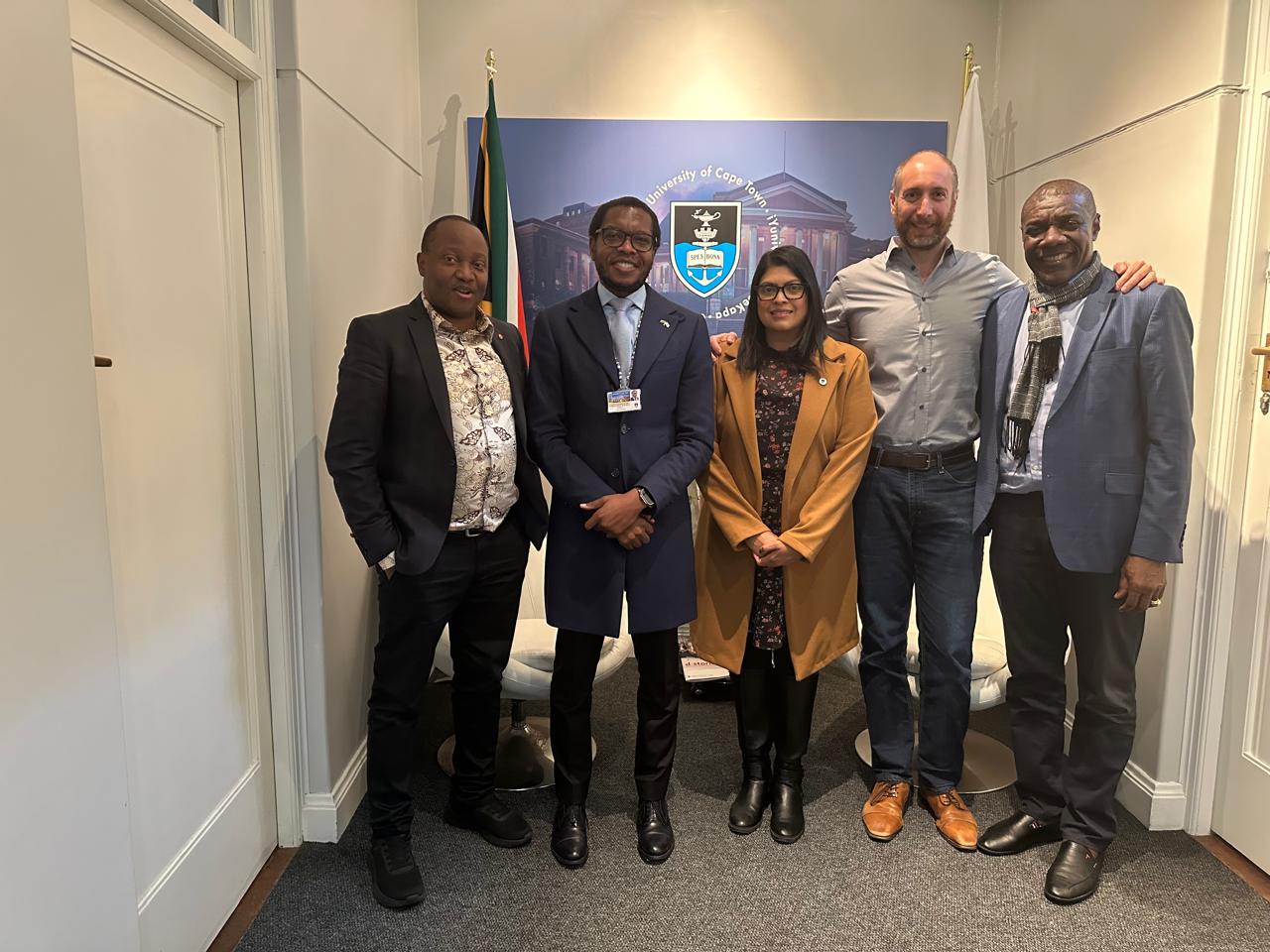
    This initiative was shaped during a high-level strategic meeting held at UCT’s historic Bremner Building, the home of the Vice-Chancellor’s office and the university’s senior leadership. The gathering was hosted by Professor Mosa Moshabela, the UCT Vice-Chancellor, and included the head of UCT’s AI Institute. Also in attendance were Prof. Onkgopotse JJ Tabane, Founder and CEO of Frank Dialogue Holdings, and Dr. Alexandre Essome, Co-Chair of CAISD. The meeting produced a clear, shared mandate to deliver a first-of-its-kind conference that translates the continent’s surging AI adoption into coherent policy, responsible practice, and meaningful investment across African higher education.

    A Conference with a Mandate

    The gathering established the foundation for a September 2026 conference intended to set a new standard for AI discourse on the continent. Central to the discussion was the need to move beyond symbolic dialogue. Participants agreed on the importance of securing the right mix of decision-makers in the room, not only scholars and technologists but ministers, regulators, vice-chancellors, and senior officials who hold the authority to translate recommendations into frameworks governing how AI is adopted, funded, and governed across the higher education sector. The explicit goal is to move the dialogue format toward real, measurable policy change.

    Alongside policy influence, the conference is being designed to attract investors. Funding AI in academia remains one of the most persistent and underacknowledged gaps on the continent. African universities are not short of intellectual capacity or institutional ambition, but the resources required to build AI research infrastructure, train faculty, develop curricula, and pilot meaningful applications remain chronically scarce. By bringing investors into the conversation at its earliest stage, the conference aims to begin bridging that gap in a structured and deliberate way.

    Grounding the Conversation in Global and Continental Context

    Two complementary perspectives emerged on the question of how best to frame the conference’s reach and relevance, and together they give the September event a distinctive character.

    Professor Moshabela proposed linking the conference to international best practice by partnering with the National University of Singapore. Singapore’s model of state-backed investment, institutional agility, and long-term strategic planning has positioned its universities at the forefront of global AI adoption, offering a valuable comparative lens for African institutions navigating similar terrain.

    Dr. Essome offered a view that resonated strongly with all present: that the conference should be framed as a genuinely continental African dialogue from the outset, not a South African event with continental ambitions attached later. This approach would ensure that the summit addresses shared challenges across diverse national contexts, promotes solutions rooted in African realities, and produces regulatory frameworks that African governments and institutions are far more likely to adopt and implement than models borrowed wholesale from elsewhere. The two perspectives are not in tension. Together they define a conference that is globally informed and African-led.

    A Foundation Being Built, Not a Conversation Being Had

    The backdrop against which this initiative arrives is sobering. Prof JJ Tabane was of the view that Generative AI is already reshaping dissertations, assignments, curriculum design, and virtual simulations across South African institutions. Students use it for complex research; lecturers deploy it for personalised learning in resource-scarce environments. Yet institutional responses remain fragmented. Only a handful of universities have meaningful AI frameworks in place, while pressing ethical concerns around algorithmic bias, data privacy, authorship, academic integrity, and epistemic justice within decolonising curricula continue to intensify without coordinated guidance. AI adoption has surged well ahead of institutional readiness, a gap that risks widening educational inequalities and leaving African institutions reactive rather than proactive in a period of rapid technological change.

    The Frank Dialogue-CAISD collaboration, formalised through a Memorandum of Understanding signed in April 2026, brings together two organisations with complementary strengths. Frank Dialogue’s expertise in convening high-level public discourse through media innovation and live dialogue, combined with CAISD’s grounding in AI policy, governance, and sustainable development, creates a partnership with the capacity to do more than talk. The addition of UCT as host institution adds academic credibility, infrastructural depth, and the convening authority of one of Africa’s most internationally recognised universities.The conference, to be convened under the banner of the Frank Dialogue on the Use of Artificial Intelligence in Academia, carries a clear mandate which is,

    “to explore current AI utilisation across universities and TVETs, examine ethical dimensions and comparative experiences from across the region, gather perspectives from lecturers and students, and forge collaborative, responsible policy frameworks that serve African higher education on African terms”.

    What took shape in the Bremner Building was the beginning of something Africa’s higher education sector has long needed: a serious, sustained, and strategically constructed conversation about artificial intelligence, driven not by abstract enthusiasm but by a commitment to policy impact, institutional change, and continental relevance. September 2026 cannot come soon enough.

  • CAISD delegation will attend the Amazon AWS Imagine for Nonprofits Conference 2026 in Washington DC

    CAISD delegation will attend the Amazon AWS Imagine for Nonprofits Conference 2026 in Washington DC

    By CAISD Research Team

    On 19 March 2026, In the halls of the MGM National Harbor of Washington DC in the USA will buzz with discussions on petabyte-scale data, autonomous agents, and the future of intentional innovation. This year event projects to be a groundbreaking one compared to the previous ones. In the agenda: Getting hundreds of global organizations to discuss AI, but more importantly, to scale up those organisations outputs as far as mobilizing resources. “2026 AWS will be different” promise the Amazon AWS Imagine organisers, in so far as it will strengthen civil society organizations and help them to leap forward tangibles actions of development through AI and other technology models in their respective communities.

    For the Centre for Artificial Intelligence and Sustainable Development CAISD, the AWS Imagine for Nonprofits conference represents far more than a tech showcase. It offers a vital platform to bridge the widening gap between cutting-edge cloud advancements and the resource-constrained realities of African communities. Nonprofits worldwide face a digital revolution that often bypasses grassroots needs. The Southern Africa based organization  attendance is to champion inclusive tools that “amplify humanity” as noted by its leader, Dr Alexandre D, Essome, that “by blending global trends with localized African insights”.  CAISD is working to convert high-tech potential into tangible, sustainable social impact. At its core, CAISD believes technology must be as accessible in a rural African health clinic as in a Silicon Valley boardroom ensuring no one is left behind in the AI era.

    The Power of Coalition Building: “Going Far Together” 

    A recurring theme throughout the 2026 conference will be the essential role of coalitions in addressing systemic challenges like inequality and climate change. Sessions and networking opportunities that will be availed depicts that no single organization can tackle these issues alone. The Centre of Artificial Intelligence and Sustainable Development will connect with leaders from organizations such as the NAACP Legal Defense Fund, the American Red Cross and financial global players, exploring frameworks for scaling impact through shared resources and advocacy. This is captured well in one of the conference notes: “If you want to go fast, go alone; if you want to go far, go together.” For CAISD’s delegation, “going far” translates to fostering a global movement where African organizations evolve from technology recipients into strategic partners and co-architects. This collaborative approach is “in sync with the African philosophy of Ubuntu and underpins CAISD’s efforts to build resilient networks that drive continental sustainable development,” Dr Essome has noted before leaving Pretoria, CAISD’s HQ.

    Bringing the African Perspective

    The “global” AI solutions incorporates African realities. CAISD delegation will highlight the need for ethical AI frameworks resilient in low-bandwidth settings and attuned to regional dialects and cultural nuances often overlooked by dominant models.  By advocating for inclusive data collection, localized model training, and avoidance of the “legacy trap” of exclusionary digital systems. The hope as far as CAISD delegation attending this conference is that the conversation shifts from isolated local initiatives to truly integrated global movements. CAISD presence amongst others African organizations will infuse discussions with the “African feel” rooted in community resilience, linguistic diversity, and real-world constraints positioning Africa as a key testing ground and contributor to robust, equitable AI.

    The Shift to Agentic AI: Proactive Tools for Missions

    The conference will mark a clear evolution from generative AI (prompt-responsive) to agentic AI (proactive task managers). In sessions such as [INSP106] and [WKSHP 102], attendees will explore how these agents automate workflows and act as true partners.   What stands out as CAISD prepares for this conference is learning more about “agentic AI-powered workspace” for nonprofits, reducing costs and enabling complex automation. For CAISD’s delegation, this transition demands responsibility deploying reliable, hallucination-free agents culturally attuned to African contexts, where “every second counts” in healthcare, crisis response, to the extent that, a tool that discovers cholera with 94% efficacy or an application to promote epilepsy care awareness in remote clinics in Africa  receive and benefit of the same attention and resources  as other tools in the field and developed in the world.

    Legacy data trapped in inaccessible formats remains a major barrier. Sessions highlighting the use of Intelligent Document Processing ([BLD106]) to convert historical records into insights, will be a must learn for us at CAISD as we prioritize modernizing African data foundations to enable data-driven development in areas like conservation, agriculture, and climate resilience. This requires not just technical upgrades but human-centered leadership ensuring that “time to insight” becomes “time to impact” while preserving and valuing local knowledge. For CAISD, this conference should inspire us to treat social development sectors as drivers of stability and growth through robust data strategies and ethical AI. 

    Toward AWS Partners Network and a Future Grounded in Collaborative Responsibility

    Dr Essome has indicated that for CAISD and other organisations leveraging AI to promote development in the continent, the key objective during this meeting is progressing toward AWS Partner Network (APN) membership. This global community meeting and interaction offer funding, tailored solution-building, and collaborative opportunities. Learning from the global player such as Amazon AWS, CAISD would undertake to move from tool user to solution builder delivering context-specific innovations across the continent and amplifying impact through world-class expertise.

    The AWS Imagine for Nonprofits conference reinforces that technology’s greatest power lies in amplifying humanity’s capacity for good when guided by data. CAISD’s delegation advocacy and strategic partnerships will look to build a world where African voices shape global AI ethics, data strategies reflect continental realities, and technology that serves diverse communities.   

    Photo credit: AWS website

  • United States of America 2025 National Security Strategy implications for Africa

    United States of America 2025 National Security Strategy implications for Africa

     By Taurai Chiraerae        The 2025 National Security Strategy (NSS) of the United States represents a fundamental departure from decades of established foreign policy. By moving away from what it describes as “vague platitudes” and “laundry lists of wishes,” the administration has proposed a “concrete, realistic plan” rooted in the principle of “America First” (National Security Strategy, 2025, pp. 1, 8). For the African continent, this realism ends the era of one-sided humanitarian assistance exacerbated by deep cuts to foreign aid programs and the effective dismantling of USAID while introducing disruptive reciprocal tariffs that have upended preferential deals like the now-expired African Growth and Opportunity Act (AGOA), hitting sectors such as textiles hard in countries like Lesotho and South Africa. Yet, far from a setback, this policy change presents a profound opportunity for African nations to assert themselves decisively as equal global players, shedding the mantle of charity recipient to forge mutually beneficial partnerships.

    The Strategic Shift

    A core pillar of the new strategy for Africa is the rejection of the traditional “foreign aid paradigm.” The 2025 NSS argues that for too long, American engagement in Africa has been preoccupied with providing aid and spreading “liberal ideology” (National Security Strategy, 2025, p. 29). The administration intends to replace this model with an “investment and growth paradigm” designed to harness the continent’s “abundant natural resources and latent economic potential” (National Security Strategy, 2025, p. 29). This transition is framed as a move toward a more respectful and realistic relationship. The strategy suggests that the United States will prioritize partnerships with “capable, reliable states” that are committed to opening their markets to American goods and services (National Security Strategy, 2025, p. 29). By focusing on “mutually beneficial trade,” the U.S. aims to move away from one-sided assistance toward a model where African nations assume “primary responsibility for their regions” (National Security Strategy, 2025, pp. 12, 29).

    The “Aid Not Trade” Debate

    While the NSS pushes for a trade-centric model, the “aid not trade” perspective traditionally argues that humanitarian assistance provides a necessary foundation for developing nations that are not yet equipped to compete in a globalized, reciprocal market. However, it should be noted that a sudden shift toward trade-only relations, especially when accompanied by aggressive tariffs, can create “global shock” and “consternation” (Kugler & Washington, 2025).

    Critics of a pure trade model might point out that nations like Lesotho, which has utilized the African Growth and Opportunity Act (AGOA) to build a textile industry employing 40,000 people, find their economic stability threatened by new reciprocal demands (Kugler & Washington, 2025). From this viewpoint, aid serves as the “soft infrastructure” required for long-term stability. However, the 2025 NSS views such traditional aid as an “unnecessary burden” on the American taxpayer and a distraction from core national interests (National Security Strategy, 2025, p. 1). The strategy explicitly favors “trade- and investment-focused” relationships, suggesting that real growth is driven by market access rather than external subsidies (National Security Strategy, 2025, p. 29).

    The Trade Relations

    The trade relationship between the United States and Africa is currently in a state of flux, characterized by significant existing trade volumes and the introduction of disruptive new policies. In 2024, total goods trade between the U.S. and Africa reached approximately $71.6 billion (Kugler & Washington, 2025). Although the U.S. exports to Africa rose by 11.9 percent, it maintained a $7.4 billion trade deficit with the continent, a figure the 2025 NSS seeks to rebalance through “fair and reciprocal” deals (Kugler & Washington, 2025; National Security Strategy, 2025, p. 13). The tariff regime landscape was dramatically altered by Executive Order 14257, which introduced a universal 10 percent tariff on imports from most countries, including many in Africa (Kugler & Washington, 2025). Furthermore, “country-specific” tariffs ranging from 11 percent to 50 percent were proposed for nations with which the U.S. holds a trade deficit (Kugler & Washington, 2025).

    Southern Africa is particularly vulnerable, with Lesotho facing a 50 percent tariff and South Africa facing 30 percent (Kugler & Washington, 2025). There are also sectoral exemptions by the US to protect its own economic security, the U.S. has exempted over 1,000 products, including petroleum, critical minerals (cobalt, manganese, graphite), and rare earth elements (Kugler & Washington, 2025). This means that mineral-rich exporters like the Democratic Republic of the Congo and Nigeria are partially shielded from the harshest impacts (Kugler & Washington, 2025). Other concerns include the African Growth and Opportunity Act (AGOA), which has provided duty-free access for African goods since 2000, lapsed on September 30, 2025 (Kugler & Washington, 2025). The “America First” agenda creates significant uncertainty regarding its reauthorization, as the administration prioritizes bilateral deals over nonreciprocal preference programs (Kugler & Washington, 2025).

    The Impact

    While the 2025 National Security Strategy emphasizes a transition to trade and investment, the abrupt and deep cuts to U.S. foreign aid including the effective dismantling of USAID—represent a significant lost opportunity for both the United States and African nations. In 2024, sub-Saharan Africa received approximately $12.7 billion in direct U.S. assistance, with additional billions supporting global health, humanitarian, and development programs where Africa was the primary beneficiary (The New York Times, March 9, 2025). These funds supported critical interventions in health, poverty reduction, education, and stability, yielding long-term strategic benefits such as improved public health outcomes, reduced extremism risks, and enhanced U.S. soft power.

    The cuts have disrupted lifesaving programs, particularly in HIV/AIDS treatment, malaria control, and maternal health, potentially leading to hundreds of thousands of additional deaths annually (Center for Global Development, December 2025). Modeling indicates that the reductions could push 5.7 million more Africans into extreme poverty in the near term and reverse decades of progress in child survival and disease prevention (Institute for Security Studies, 2025). Furthermore, aid has historically fostered goodwill and countered influence from adversaries like China, opportunities now diminished amid perceptions of U.S. retreat (Washington Post, October 9, 2025). By prioritizing immediate fiscal savings over sustained partnership, the shift risks forgoing these broader geopolitical and humanitarian gains, even as trade-focused initiatives in minerals and energy seek to fill the void.

    The transition from a foreign aid paradigm to an investment and growth paradigm will most significantly impact critical mineral development, energy infrastructure, and the textile manufacturing sector. The 2025 National Security Strategy (NSS) explicitly identifies critical minerals (such as cobalt, manganese, and graphite) and the energy sector (including nuclear, liquid petroleum gas, and liquefied natural gas) as primary areas for immediate U.S. investment because they offer high prospects for a return on investment and secure essential supply chains (National Security Strategy, 2025, p. 29; Kugler & Washington, 2025). Conversely, sectors reliant on nonreciprocal trade preferences, such as textiles and clothing, face severe disruption; specifically, Southern African nations like Lesotho, Madagascar, and Mauritius are expected to be the most affected due to high country-specific tariffs that threaten to nullify the advantages previously provided by the African Growth and Opportunity Act (AGOA) (Kugler & Washington, 2025). Furthermore, the shift necessitates a technological overhaul in customs and revenue collection, where African administrations in countries like Benin, Kenya, and Rwanda are increasingly turning to AI-driven systems to mobilize domestic resources and manage risk as traditional aid becomes a secondary concern (Thanay, 2025).

    Trade for Africa in the era of Artificial Intelligence (AI)

    As African nations navigate these new trade pressures and the growth of the African Continental Free Trade Area (AfCFTA), Artificial Intelligence (AI) is emerging as a critical tool for “domestic resource mobilization” essentially helping countries raise funds by maximizing their own revenue collection (Thanay, 2025). Organisations like the Centre for Artificial intelligence and Sustainable Development (CAISD) stand ready to usher African countries to effectively utilise AI to yield the best results in raising funds. These are a few insights by CAISD on how Africa can benefit the most from its trade 

    1. Revenue Protection and Customs Valuation AI-driven systems are being deployed to combat revenue leakage at borders. Valuation support tools use AI to analyze global pricing patterns and historical data, allowing customs officers to identify “undervaluation or misdeclaration” (Thanay, 2025). By ensuring that the correct duties and taxes are paid on imports, African governments can significantly increase their internal treasury without relying on external aid. Nations like Benin and Côte d’Ivoire have already seen faster release times and clearer visibility over the clearance chain through such digital environments (Thanay, 2025).
    2. Data-Driven Risk Management AI risk engines process massive volumes of data, including travel patterns and behavioral indicators, to highlight high-risk consignments (Thanay, 2025). This allows for “risk-based control,” where customs officers focus their limited resources on suspicious cargo while allowing legitimate, revenue-generating trade to flow with minimal friction (Thanay, 2025). Rwanda has been highlighted as a reference point for building a culture of “data-driven decision making” that balances control with trade facilitation (Thanay, 2025).
    3. Digital Payment Ecosystems The integration of AI with digital payment platforms is transforming how trade transactions are handled. When payment systems are linked directly to customs declarations and port charges, “revenue collection becomes more transparent, reconciliation is simplified and the risk of informal payments is reduced” (Thanay, 2025). These ecosystems ensure that funds intended for the state are captured securely and efficiently.
    4. Digital Sovereignty and the WCO Data Model By aligning their datasets with international standards like the WCO Data Model, African governments can use AI while maintaining “digital sovereignty” (Thanay, 2025). This ensures that AI functions as a “national asset shaped by domestic policy,” rather than a system that “dictates outcomes from outside” (Thanay, 2025). This ownership of data is essential for African nations to raise funds independently and manage their economies in alignment with their own national interests.

    Conclusion

    The 2025 National Security Strategy envisions an Africa no longer positioned as a recipient of charity, but as a theater of “managed cooperation tied to strategic alignment” (National Security Strategy, 2025, p. 23). Although the abrupt transition from aid to trade has triggered immediate economic anxiety through deep aid cuts, the lapse of programs like AGOA, and new reciprocal tariffs the strategy maintains that prioritizing investments, particularly in energy and critical minerals, will foster more sustainable and mutual growth for the United States and its African partners (Kugler & Washington, 2025; National Security Strategy, 2025, p. 29).

    The successful realization of this vision will largely hinge on African nations’ ability to leverage technology and their own resources. By harnessing abundant supplies of cobalt, manganese, graphite, and energy, combined with innovative tools like AI for domestic revenue mobilization and modernization of trade infrastructure as advocated by the Centre for Artificial Intelligence and Sustainable Development (CAISD) African states can cultivate the “strong, creative, and capable” domestic environments that the new U.S. strategy demands (National Security Strategy, 2025, p. 26). Coupled with the momentum of the African Continental Free Trade Area (AfCFTA), this approach empowers the continent to negotiate from a position of strength, drive sustainable development on its own terms, and emerge as a vital, independent force in global supply chains and geopolitics. Far from a retreat, this shift invites Africa to step forward as an equal global player.

    ________________________________________

    References

    Center for Global Development. (2025, December). Update on lives lost from USAID cuts. https://www.cgdev.org/blog/update-lives-lost-usaid-cuts

    Cilliers, J. (2025). The toll of USAID cuts on Africa. Institute for Security Studies African Futures. https://futures.issafrica.org/blog/2025/The-toll-of-USAID-cuts-on-Africa

    Kugler, K., & Washington, T. (2025, June 5). How African countries are responding to the new U.S. reciprocal tariffs. Carnegie Endowment for International Peace.

    National Security Strategy of the United States of America. (2025, November).

    Thanay, L. (2025, December 17). The role of AI in Africa’s trade transformation. Webb Fontaine.

    Washington Post. (2025, October 9). U.S. aid cuts are being felt across Africa. Here’s where. https://www.washingtonpost.com/world/2025/10/09/usaid-cuts-africa-health-crisis/

  • Bridging Africa’s AI Infrastructure Gap: “Turning G20 2025 Commitments into Continental Reality”

    Bridging Africa’s AI Infrastructure Gap: “Turning G20 2025 Commitments into Continental Reality”

    BY AD Essome and T Chiraerae

    The 2025 G20 Summit in Johannesburg delivered an unambiguous message that artificial intelligence is indispensable for Africa’s future. While the summit spotlighted the G20’s role in enhancing Africa’s Development, the broader and more urgent challenge is that Africa currently lacks the foundational infrastructure to develop, train, deploy, and govern AI at continental scale. Without rapid, large-scale investment in energy, connectivity, computing, data centers, and talent, the historic G20 pledges made in Johannesburg in November 2025 will remain aspirational. We zoom squarely on those infrastructure deficits, the investment opportunities they present for the Global North, and the catalytic role that African institutions particularly the Centre for Artificial Intelligence and Sustainable Development (CAISD) can play in closing the gap.

    The Scale of the Infrastructure Deficit

    Africa’s AI readiness lags dramatically behind global benchmarks. On the Energy front, Africa produced 919 TWh of electricity in 2023 while global data centres alone consumed 415 TWh in 2024, a figure expected to double by 2030 (International Energy Agency, cited in TechCabal Insights, 2025). Frequent outages and high costs make sustained GPU training nearly impossible outside a handful of urban pockets. In terms of connectivity, only 38 % of Africans were online in 2024 (global average: 68 %), leaving 860 million people beyond the reach of cloud-based or real-time AI services (Egwu, 2025). The continent hosts 1 % of global data-centre capacity despite representing 18 % of world population. Just over 140 colocation and hyperscale facilities existed in 2024, overwhelmingly concentrated in South Africa, Nigeria, Egypt, Kenya, and Morocco (Africa Data Centres Association, cited in CIPIT, 2025). This demonstrates weak computing power.

    Africa has virtually no publicly accessible supercomputing clusters capable of training frontier models; researchers and firms rely on expensive, distant clouds in Europe and North America, raising latency, cost, and sovereignty concerns. In terms of talent, Africa accounts for only 3 % of global AI researchers and practitioners, exacerbated by brain drain and limited doctoral programmes (CIPIT, 2025). These gaps translate into a projected loss of up to $1.2 trillion in potential AI-enabled GDP gains by 2030 if unaddressed (African Centre for Economic Transformation, 2025).

    G20 2025 as Catalyst

    The Johannesburg outcomes explicitly recognised the infrastructure bottleneck. The Leaders’ Declaration, the new G20 Africa Engagement Framework 2025–2030, and the Ubuntu Legacy Initiative all call for accelerated deployment of digital tools and AI, with dedicated workstreams on SupTech/RegTech and AI-driven due diligence. Implementation, however, now rests on closing the very infrastructure deficits that the summit identified.

    Strategic Investment Pathways for the Global North

    2024 already demonstrated viable, replicable models that the Global North can scale aggressively. Microsoft and G42’s $1 billion geothermal-powered AI data centre in Kenya (launched 2024) proves that renewable-energy-backed hyperscale facilities are feasible on the continent (CIPIT, 2025). Similar projects in Morocco (Oracle), South Africa (Vantage) show private capital will flow when governments offer land, tax incentives, and long-term power-purchase agreements.

    Sharing digital Infrastructure Corridors is another path worth considering. The World Economic Forum estimates that 700–1 000 new shared facilities by 2030 could unlock $1.2–1.5 trillion in economic value (WEF, 2025b). Northern development finance institutions (DFIs) and pension funds can provide first-loss equity or concessional debt to de-risk these regional hubs. Google’s Africa Connect Next and Equiano cable investments, combined with four regional cloud hubs rolled out in 2024, illustrate how Northern tech giants can expand backbone and last-mile connectivity while creating local AI inference points (Google, 2025).

    Renewable Microgrids for Rural AI and talent and sovereign cloud Ecosystems can be another worthwhile strategic investment. Solar and hydro-powered edge nodes can bring low-latency AI to agriculture and health. The U.S. DFC, EIB, and Norfund have already piloted such models; scaling them could close the $68–100 billion annual infrastructure financing gap (Brookings Institution, 2025). Microsoft’s 2024 continent-wide AI skilling programmes and Google’s $17 million investment in African universities for curriculum and compute credits provide templates for blended public-private talent pipelines (Google, 2025; CIPIT, 2025).

    The Global North has both strategic self-interest and moral imperative to act swiftly. A $50–70 billion committed pipeline over the next five years 2026–2030, channelled through PPPs, DFIs, and philanthropic guarantees would be sufficient to deliver continent-wide coverage of green data centres, 5G/low-earth-orbit connectivity, and sovereign HPC capacity. In return, investors gain first-mover access to a market that McKinsey projects could generate $61–103 billion annually from generative AI alone (McKinsey & Company, 2025).

    The Unique Value Proposition of African institutions including CAISD

    African institutions, led by organisations such as the Centre for Artificial Intelligence and Sustainable Development (CAISD), can play a decisive coordinating and enabling role in closing the continental AI infrastructure gap. By hosting a Pan-African AI Centre of Excellence, running sovereign model-training pilots, and validating Africa-specific applications, these institutions can provide the technical leadership that investors need. They can accelerate adoption across the continent by openly sharing non-sensitive models and datasets under an “AI Commons for Africa” approach, lowering costs and barriers for start-ups and public agencies in all 55 countries. Through established partnerships with the African Union, the African Tax Administration Forum (ATAF), the South African Reserve Bank, and others, they can harmonise policies and regulations, giving Global North partners the regulatory certainty they require. Finally, by serving as trusted local implementing partners for blended-finance projects, African institutions like CAISD can de-risk investments, ensure genuine technology transfer, and guarantee that new infrastructure remains African-owned and African-led. The Centre for Artificial Intelligence and Sustainable Development (CAISD) is uniquely positioned to orchestrate and accelerate these efforts. As a South African-based nexus of academia, government, industry, and regional bodies, CAISD can synergize the  four critical layers of value cited above.

    Final thoughts

    The Johannesburg G20 handed Africa the policy mandate. The infrastructure gap hands the Global North the investment opportunity. With CAISD and similar African institutions as trusted partners, the continent can move from being a consumer of global AI to a producer and exporter of African-led AI solutions starting now.

    References

    African Centre for Economic Transformation. (2025). Unlocking Africa’s AI potential: Digital public infrastructure. https://acetforafrica.org

    Brookings Institution. (2025). Leveraging AI and emerging technologies to unlock Africa’s potential. https://www.brookings.edu/articles/leveraging-ai-and-emerging-technologies-to-unlock-africas-potential/

    Centre for Artificial Intelligence and Sustainable Development. (n.d.). Home. https://backend.caisd.africa/

    Centre for Intellectual Property and Information Technology Law. (2025). The state of AI in Africa report 2025. https://aiconference.cipit.org/documents/the-state-of-ai-in-africa-report.pdf

    Egwu, F. E. (2025, November 4). Africa’s offline majority risk missing out on the AI revolution. DevelopmentAid.

    Google. (2025). We’re investing in connectivity, products and skills for Africa’s AI future. https://blog.google/around-the-globe/google-africa/africas-ai-future/

    McKinsey & Company. (2025, May 12). Leading, not lagging: Africa’s gen AI opportunity. https://www.mckinsey.com/capabilities/quantumblack/our-insights/leading-not-lagging-africas-gen-ai-opportunity

    TechCabal Insights. (2025, November 4). The building blocks Africa needs for AI adoption. https://insights.techcabal.com

    World Economic Forum. (2025a). How shared digital infrastructure can bridge the gap in Africa. https://www.weforum.org/stories/2025/04/how-shared-digital-infrastructure-can-bridge-the-gap-in-africa/

    World Economic Forum. (2025b). Investment in “green” computing can unlock $1.5t in Africa. https://www.weforum.org/stories/2025/12/investing-in-green-compute-in-africa/3.2sFast

  • South Africa G20 2025: The Role of Artificial Intelligence in Combating Illicit Financial Flows from Africa

    South Africa G20 2025: The Role of Artificial Intelligence in Combating Illicit Financial Flows from Africa

    By Alexandre Essome and Taurai Chiraerae

    The 2025 G20 Summit hosted by South Africa from 22 – 23 November was the first ever held on African soil and placed illicit financial flows (IFFs) at the centre of the global economic agenda. Under the theme “Solidarity, Equality, Sustainability,” the Johannesburg Leaders’ Declaration explicitly recognised that IFFs “constitute one of the most significant barriers to Africa’s sustainable development” (G20, 2025a, para. 27). Annual losses are conservatively estimated at USD 88.6 billion (UNCTAD, 2020) and may now exceed USD 120 billion when cryptocurrency and intangible asset transfers are included (Chainalysis, 2025).

    The Summit produced the Johannesburg Leaders’ Declaration, a Ministerial Call to Action containing ten high-level principles for combating IFFs, a renewed G20 Africa Engagement Framework (2025–2030), and the Ubuntu Legacy Initiative all of which explicitly encourage the responsible use of artificial intelligence and digital technologies (G20, 2025a, 2025b). While these commitments are historic, they remain voluntary. Turning political will into measurable impact now depends on rapid, African-led technological deployment. Artificial intelligence composed of machine learning, graph neural networks, natural language processing, computer vision, and generative AI offer the only scalable solution capable of matching the speed and sophistication of modern illicit flows (OECD, 2025; African Development Bank, 2025).

    The Persistent Crisis of Illicit Financial Flows in Africa

    The most authoritative baseline remains the 2015 report of the High-Level Panel on Illicit Financial Flows from Africa chaired by former President Thabo Mbeki, which calculated average annual losses of USD 50–80 billion between 2000 and 2008 (UNECA & African Union, 2015). UNCTAD’s subsequent modelling revised the figure to USD 88.6 billion per year for the period 2000–2018 (UNCTAD, 2020). Recent studies incorporating cryptocurrency and intangible transfers push the current estimate closer to USD 100–120 billion annually (Chainalysis, 2025; Global Financial Integrity, 2024). Country-level data are equally alarming:

    • Nigeria loses an estimated USD 18–25 billion per year (Onyeiwu, 2024).
    • South Africa’s cumulative IFFs between 2004 and 2022 exceed USD 240 billion (SARS & FIC, 2025).
    • The Democratic Republic of Congo lost USD 16.9 billion in gold and copper trade mis invoicing alone between 2015 and 2022 (GRÆ, 2024).

    Trade mis invoicing accounts for 65–70 % of total outflows, followed by criminal proceeds, corruption, and tax evasion (Global Financial Integrity, 2024). The rapid growth of cryptocurrency has created entirely new channels: Africa received USD 89 billion in crypto between mid-2020 and mid-2024, a significant portion linked to sanctions evasion, ransomware, and terrorist financing (Chainalysis, 2025). These outflows directly undermine debt sustainability, reduce domestic resource mobilisation, and divert funds from health, education, and climate adaptation (African Development Bank, 2025).

    Key Outcomes of the 2025 G20 Summit Relevant to IFFs and AI 

    Instrument Date Core Commitment Explicit            Technology/AI Reference
    Johannesburg

    Leaders’

    Declaration

    22–23

    Nov

    2025

    Zero tolerance for corruption and IFFs; stronger asset recovery and beneficial ownership transparency “We will harness innovative technologies, including artificial intelligence and data analytics” (G20, 2025a, para. 31)
    Ministerial

    Call to Action – High-Level

    Principles

    July 2025 Ten voluntary principles on transparency, compliance, and cooperation Principle 8: “Promote the responsible use of innovative technologies, including artificial intelligence” (G20, 2025b, p. 7)
    G20         Africa

    Engagement

    Framework

    2025–2030

    Nov 2025 Multi-year programme on tax       cooperation    and SupTech/RegTech Dedicated workstream entitled “Digital Tools and Artificial Intelligence for Revenue

    Authorities” (G20, 2025c)

    Ubuntu

    Legacy

    Initiative

    Nov 2025 USD 600 billion crossborder infrastructure

    pipeline

    Mandates AI-driven due diligence and real-time risk monitoring (G20, 2025d)
    Compact with

    Africa Phase II

    Nov 2025 Enhanced        private-sector governance Encourages adoption of AIpowered compliance platforms

    Despite these advances, the final Declaration was weakened by the United States’ boycott and the refusal of several members to accept binding language on debt relief or a UN-led global tax body (Reuters, 2025; The Conversation, 2025). Implementation therefore rests overwhelmingly on African institutions and home-grown innovation.

    How Artificial Intelligence Can Deliver the G20 Commitments on the Ground  1. Real-Time Transaction Monitoring and Anti-Money Laundering

    The FALCON hybrid transformer-graph neural network model, deployed across 23 shell companies in Southern Africa in 2025, achieved 94 % precision and 92 % judicial admissibility while analysing 1.8 million transactions (Mhlanga, 2025). Similar systems could reduce the USD 3.1 billion lost annually in the South Africa–Zimbabwe corridor alone (SARS & FIC, 2025).

    2.  Trade Mis-invoicing Detection

    Natural language processing combined with computer vision (Google Cloud AML AI, NICE Actimize X-Sight) can automatically compare invoices, bills of lading, and container images, flagging discrepancies in seconds. Pilots in Tanzania (TRA) and Ghana (GRA) increased detected mis-invoicing cases by 400 % without adding staff (PwC Tanzania, 2025; Ghana Revenue Authority, 2025).

    3.  Enhanced Customer Due Diligence and Beneficial Ownership Registries

    Graph-based entity resolution tools map complex ownership structures across jurisdictions in milliseconds. South Africa’s Companies and Intellectual Property Commission is integrating such tools into its beneficial ownership register, fully compliant with the G20 High-Level Principles (CIPC, 2025).

    4.  Cryptocurrency and Blockchain Tracing

    Chainalysis Reactor, Elliptic Lens, and locally developed models now trace flows across privacy coins and decentralised exchanges with >90 % accuracy. Nigeria’s EFCC recovered USD 42 million in crypto-related cases in 2024–2025 using AI-assisted investigations (EFCC, 2025).

    5.  Supervisory Technology (SupTech) for Regulators

    Central banks and financial intelligence units in Kenya, Rwanda, Egypt, and South Africa have deployed AI dashboards (C3 AI, Napier AI, Lucinity) that provide real-time risk heatmaps and reduce false positives by up to 400 % (Central Bank of Kenya, 2025; National Bank of Rwanda, 2025).

    6.  Generative AI for Training and Scenario Modelling

    Because genuine illicit datasets are scarce and sensitive, generative adversarial networks create unlimited synthetic training data while preserving privacy, a breakthrough used by the South African Reserve Bank and the East African Community (SARB, 2025; EAC Secretariat, 2025).

    7.  Capacity Building and Continental Harmonisation

    The African Tax Administration Forum (ATAF) and the African Union are scaling AI training programmes that have already reached over 5 000 officials across 42 countries (ATAF, 2025).

    Institutional Leadership: The Centre for Artificial Intelligence and Sustainable Development (CAISD) (382 words)

    The Centre for Artificial Intelligence and Sustainable Development (CAISD), an organization harnessing responsible AI solutions for financial integrity and sustainable development through academia, government, private sectors and regional institutions will position itself to champion the following recommendations arising from the G20 Johannesburg outcomes:

    1. Establishment of a Pan-African AI-for-IFF Centre of Excellence, hosted in South Africa and funded jointly by the African Development Bank, G20 members, and philanthropic partners.
    2. Immediate open sourcing of all non-sensitive AI models developed under CAISD pilots under an “AI Commons for Africa” licence.
    3. Creation of a permanent G20–African Union Technical Working Group on Artificial Intelligence and Financial Transparency, co-chaired by South Africa and the incoming 2026 G20 presidency.

    CAISD stands ready to provide technical leadership, training, and implementation support to African governments, regional economic community, or international partner committed to turning the historic promises of the 2025 G20 Summit into measurable reductions in illicit financial flows.

    References

    African Development Bank. (2025). New G20 Expert Panel Report calls for coordinated debt relief and increased investment. https://www.afdb.org/en/newsandevents/pressreleases/newg20expertpanelreportcallscoordinateddebtreliefandincreasedinvestmentunlockafricasdevelopment88821

    ATAF. (2025). Annual report 2025. African Tax Administration Forum.

    Central Bank of Kenya. (2025). Adoption of supervisory technology (SupTech) initiatives.

    Chainalysis.     (2025).             The      2025    crypto crime   report:             Africa   & Middle             East. https://www.chainalysis.com/blog/2025cryptocrimereportafricamiddleeast

    CIPC. (2025). Beneficial ownership register implementation update. Companies and Intellectual Property Commission, South Africa.

    EAC Secretariat. (2025). East African Community AI strategy for financial supervision. Arusha.

    EFCC. (2025). Annual report 2024–2025. Economic and Financial Crimes Commission, Nigeria.

    G20.     (2025a).           Johannesburg Leaders’           Declaration. https://dirco.gov.za/wpcontent/uploads/2025/11/2025G20SummitDeclaration.pdf

    G20. (2025b). Ministerial Call to Action: Towards voluntary high-level principles for combating illicit financial flows. https://g20.org/wpcontent/uploads/2025/08/FinalDraft2025G20DWGCombatingIllicitFinancialFlows.pdf

    G20. (2025c). G20 Africa Engagement Framework 2025–2030. G20 Development Working Group.

    G20. (2025d). Ubuntu Legacy Initiative outcome statement. https://g20.org/g20media/outcomestatementontheafricanconsultativemeetingonsouthafricaslegacyinitiative

    Ghana Revenue Authority. (2025). AI-enhanced customs compliance pilot results. Accra.

    Global Financial Integrity. (2024). Trade-related illicit financial flows in 135 developing countries, 2008–2022. Washington, DC.

    GRÆ. (2024). Congo’s missing billions: Gold and copper misinvoicing 2015–2022. Global Resource Accountability & Extractives.

    https://doi.org/10.3390/jrfm18080441

    Home

    Mhlanga, D. (2025). Disruption in Southern Africa’s money laundering activity by artificial intelligence technologies. Journal of Risk and Financial Management, 18(8), 441.

    National Bank of Rwanda. (2025). SupTech implementation roadmap 2025–2028*. Kigali.

    OECD. (2025). Africa Capital Markets Report 2025. Organisation for Economic Cooperation and Development. https://www.oecd.org/en/publications/africacapitalmarketsreport2025_7d26e1d3en.html

    Onyeiwu, S. (2024). Illicit financial flows and economic development in Nigeria. African Economic Research Consortium.

    PwC Tanzania. (2025). AI deployment in Tanzania Revenue Authority: 2024–2025 results. Dar es Salaam.

    Reuters. (2025, November 22). G20 summit in South Africa adopts declaration despite US boycott. https://www.reuters.com/sustainability/climateenergy/g20leadersmeetsouthafricaseekingagreementdespiteusboycott20251122

    SARB. (2025). Generative AI for AML training data: Technical paper. South African Reserve Bank.

    SARS & FIC. (2025). Joint report on illicit financial flows 2004–2022. South African Revenue Service & Financial Intelligence Centre.

    The Conversation. (2025, November 25). South Africa’s G20 presidency: Diplomatic victory, but a weak final declaration. https://theconversation.com/southafricasg20presidencydiplomaticvictorybutaweakfinaldeclaration270476

    UNCTAD. (2020). Economic Development in Africa Report 2020: Tackling illicit financial flows. United Nations Conference on Trade and Development.

    UNECA & African Union. (2015). Report of the High Level Panel on Illicit Financial Flows from Africa. United Nations Economic Commission for Africa & African Union.


  • Debt Sustainability in Focus in South Africa’s 2025 G20: What role can technology play in driving the solution for the Africa’s Debt and Development Challen?

    Debt Sustainability in Focus in South Africa’s 2025 G20: What role can technology play in driving the solution for the Africa’s Debt and Development Challen?

    By Taurai Chiraerae & Dr Alexandre Essome

    In an era where rapid technological advancement intersects with pressing global challenges, the Centre for Artificial Intelligence and Sustainable Development (CAISD) accessible at [www.caisd.co.za] stands as Africa’s dedicated hub for harnessing artificial intelligence (AI) to advance sustainable development. By bridging academia, industry, government, and civil society, CAISD fosters an ecosystem where cutting-edge, locally relevant AI applications tackle the continent’s most critical economic, social, and environmental hurdles. Its vision is to become Africa’s premier centre for AI-enabled sustainable development, while its mission focuses on rigorous research, capacity building, knowledge exchange, and multi-stakeholder partnerships that place African priorities at the core of global innovation.

    CAISD’s work spans agriculture, mining, climate resilience, governance, and inclusive digital transformation. Through collaborative projects, training programmes, and thought-leadership platforms including its podcast, YouTube channel (@CAISD-2025), and active presence on X (@CAISD_2025) the Centre amplifies Africa-led solutions and builds the human and institutional capacity required for the continent to shape, rather than merely adopt, emerging technologies.

    Debt Sustainability in Focus: South Africa’s 2025 G20 Presidency and the Clash Between Incremental Reform and Structural Change

    The Johannesburg G20 Summit (22–23 November 2025), hosted under South Africa’s historic first African presidency and the theme “Solidarity, Equality, Sustainability”, placed Africa’s development priorities including the continent’s deepening debt crisis at the centre of global economic discourse (G20, 2025b, 2025d). With the African Union now a permanent G20 member, the summit became a crucial testing ground for reconciling creditor-led incremental reforms with borrower-driven demands for systemic overhaul.

    Africa remains the region hardest hit by the global debt crisis. Interest payments on external public debt for low-income countries have doubled over the past decade, often exceeding combined spending on health and education (G20, 2025a, 2025b). Debt stocks rose fivefold between 2010 and 2020, leaving 25 African countries at high risk or in distress by early 2025 (African Union, 2025a; Matiashe, 2025). These burdens choke fiscal space for SDG investments and perpetuate dependency dynamics reminiscent of colonial-era imbalances.

    The G20’s Ministerial Declaration on Debt Sustainability and subsequent Leaders’ Declaration reaffirmed commitment to the Common Framework (CF) for debt treatment, launched in 2020 as successor to the Debt Service Suspension Initiative (G20, 2025a). Progress has been made with Ethiopia, for instance, completing restructuring in roughly one year but average timelines still hover around two years, leaving countries in prolonged limbo (G20, 2025a; Matiashe, 2025). The G20 response focuses on procedural enhancements: clearer “lessons-learned” guidelines, voluntary data-sharing pilots, expanded use of crisis-resilient debt clauses (CRDCs), and case-by-case debt-for-climate or debt-for-development swaps (G20, 2025a, 2025b).

    Yet African leaders, galvanised by the African Union’s Lomé Declaration of May 2025, argue that such measures are “too little, too late, too complex” (African Union, 2025a; Matiashe, 2025). The Lomé text demands a fundamentally new debt doctrine: mandatory debt standstills during negotiations, enforceable comparability of treatment across all creditors, exclusion of climate and social spending from debt sustainability assessments, and the creation of an independent global enforcement mechanism ideally under a UN Framework Convention on Sovereign Debt (African Union, 2025a). It also accelerates African-owned institutions such as the African Credit Rating Agency (ACRA) and the African Financial Stability Mechanism to reduce reliance on Northern-dominated rating agencies and multilateral lenders.

    Across sub-Saharan Africa in 2025, governments transferred an estimated $45–50 billion in external debt service to foreign creditors more than the combined public spending on health ($27 billion) and education ($38 billion) in the region that year (G20, 2025a; African Union, 2025a). In practical terms, this meant that for every dollar a typical low-income African country paid in interest and principal, less than 60 cents reached classrooms or clinics. Those redirected resources could have trained and hired an additional 800,000 teachers and nurses continent-wide, constructed or refurbished roughly 120,000 primary-healthcare facilities, or fully immunised every child under five against preventable diseases for the next decade. Instead, the relentless outflow perpetuated a vicious cycle in which preventable mortality and learning poverty remained stubbornly high, undermining both human capital formation and long-term economic productivity (G20, 2025b; Matiashe, 2025).

    The fiscal squeeze from debt service also starved critical infrastructure and climate-resilience investments at the precise moment they were most needed. In 2025, 25 African countries classified as being in debt distress or at high risk collectively spent nearly three times more on external debt servicing than on capital expenditure (G20, 2025a). The foregone resources could have financed the connection of an additional 60 million people to clean electricity through renewable mini-grids, expanded irrigated farmland by 4–5 million hectares to bolster food security against recurrent droughts, or built and maintained over 80,000 kilometres of all-weather rural roads investments that typically deliver benefit–cost ratios exceeding 5:1 in African contexts (African Union, 2025a). By crowding out these high-return projects, excessive debt service did not merely delay development; it actively eroded the continent’s capacity to adapt to climate shocks and achieve the structural transformation envisioned in both the SDGs and Agenda 2063.1.5s

    Where AI Meets Debt Sustainability: CAISD’s Vision for Technology-Enabled Reform

    This tension between patching an existing, creditor-heavy architecture and building a new, equitable one creates a unique opening for AI-driven innovation, an area explicitly championed by South Africa’s G20 presidency through its Task Force on AI, Data Governance, and Innovation for Sustainable Development and the launch of the AI for Africa Initiative (G20, 2025c, 2025d). CAISD positions itself at the heart of this convergence, demonstrating how AI can operationalise both G20 incremental improvements and the more radical AU vision.

    1. Transparency and Contract Fairness

    Opaque debt contracts remain a major barrier to equitable treatment. Natural Language Processing (NLP) tools similar to those developed in BIS projects such as AISE and Ellipse can automatically extract and compare key terms (interest rates, collateral, suspension clauses) across thousands of loan agreements in seconds (Bank for International Settlements, 2025). For African debt offices, this means real-time auditing capability, strengthening negotiating positions and directly supporting the Lomé call for standardised, enforceable comparability of treatment.

    1. Supervisory Technology (SupTech) for Debt Management

    AI-powered supervisory platforms already used in financial regulation can be adapted to national debt offices, continuously scanning portfolios for early distress signals, hidden contingent liabilities, or illicit financial flow risks estimated at $88 billion annually across Africa (Bank for International Settlements, 2025; Prenio, 2025).

    1. Growth-Oriented Debt Sustainability Analysis

    The Lomé declaration insists that debt sustainability assessments must reflect development needs by excluding climate, health, and security spending. Machine learning “nowcasting” models that integrate satellite imagery, mobile money data, and real-time economic indicators can produce far more nuanced, forward-looking fiscal projections than traditional IMF-World Bank frameworks (Bank for International Settlements, 2025). Such evidence strengthens African bargaining power in creditor committees.

    1. Fairer Credit Ratings and Domestic Resource Mobilisation

    The forthcoming African Credit Rating Agency can leverage broader, alternative datasets (trade flows, mobile penetration, climate risk modelling) to generate risk scores that are less biased against African issuers, potentially lowering borrowing costs continent-wide.

    1. Governance and Institutional Design

    By building open-source, auditable AI tools under African governance aligned with the G20’s emphasis on trustworthy AI (Financial Stability Board, 2025) CAISD and partners can help shift power from opacity to verifiable transparency, turning the Lomé Declaration’s demands from rhetoric into operational reality.

    From Global Pledges to African-Led Solutions

    The 2025 Johannesburg G20 Summit reaffirmed multilateral commitment to debt sustainability while exposing the limits of creditor-led incrementalism. The African Union’s Lomé Declaration, backed by South Africa’s diplomatic leadership, has elevated the call for structural justice in global finance. In this pivotal moment, the Centre for Artificial Intelligence and Sustainable Development (CAISD) offers a practical pathway forward: deploying African-centred AI to enhance transparency, strengthen governance, produce development-sensitive analytics, and ultimately help redesign a global financial architecture that serves people rather than perpetuates dependency.

    As the continent moves from the symbolic triumph of hosting the G20 to the hard work of implementation, CAISD stands ready to partner with governments, multilateral institutions, and the private sector to turn both G20 commitments and AU ambitions into measurable impact. Visit [www.caisd.co.za] or follow @CAISD_2025 on X to explore collaboration opportunities and stay updated on AI-driven solutions for Africa’s sustainable future.

    References

    African Union. (2025, May 14). Draft declaration of the African Union Conference on Debt. https://au.int/sites/default/files/documents/44785-doc-EN_Draft_Zero_Declaration_AU_Conference_on_Debt_Final.pdf

    Bank for International Settlements. (2025, October). The use of artificial intelligence for policy purposes: Report submitted to the G20 Finance Ministers and Central Bank Governors. https://www.bis.org/publ/othp100.pdf

    Financial Stability Board. (2025, October 13). FSB Chair’s letter to G20 Finance Ministers and Central Bank Governors: October 2025. https://www.fsb.org/2025/10/fsb-chairs-letter-to-g20-finance-ministers-and-central-bank-governors-october-2025/

    G20 South Africa. (2025, October 16). Ministerial declaration on debt sustainability: 4th Finance Ministers & Central Bank Governors Meeting. https://g20.org/g20-media/ministerial-declaration-on-debt-sustainability-4th-finance-ministers-central-bank-governors-meeting/

    G20 South Africa. (2025, November 23). G20 South Africa Summit: Leaders’ Declaration. https://dirco.gov.za/wp-content/uploads/2025/11/2025-G20-Summit-Declaration.pdf

    G20. (2025c). Chairs statement task force on artificial intelligence, data, governance and innovation for sustainable development (2025).

    Matiashe, F. S. (2025, May 15). Africa resolves to reform G20 debt framework at major gathering. https://african.business/2025/05/finance-services/africa-resolves-to-reform-g20-debt-framework-at-major-gathering

    Prenio, J. (2025). Starting with the basics: A stocktake of gen AI applications in supervision.

    Task Force on Artificial Intelligence, Data Governance and Innovation for Sustainable Development. (2025, September 30). Chair’s statement: Task force on artificial intelligence, data governance and innovation for sustainable development. G7/G20 Documents Database.


  • The Role of the African Union in Shaping AI Policy

    The Role of the African Union in Shaping AI Policy

    By Taurai Chiraerae

    Introduction

    The Centre for Artificial Intelligence and Sustainable Development (CAISD) is actively engaged in Artificial Intelligence (AI) governance, with a specific focus on analyzing and shaping AI policy frameworks at the country level across Africa. Regionally, this work first targets the African Union’s Continental Artificial Intelligence Strategy and its corresponding Implementation Plan, followed by an in-depth focus on individual member state experiences. This article marks the inaugural piece in this pivotal CAISD series, setting the foundation for our forthcoming analysis.

    The AI jangle

    In the intricate tapestry of global technological governance, where power dynamics between developed and developing nations often tilt toward the former, the African Union (AU) emerges as a pivotal architect in countering Africa’s artificial intelligence marginalization. Amid escalating geopolitical rivalries, exemplified by the U.S.-China contest for AI supremacy and data sovereignty, the continent risks peripheralization without AU-led frameworks to assert technological agency.

    The AU’s proactive orchestration of AI policy is thus strategically imperative, transforming potential vulnerabilities into levers of sovereignty. Projections underscore this urgency that AI could infuse $15.7 trillion into the global economy by 2030, yet Africa’s equitable slice depends on foresightful regulations that mitigate the digital divide, gender inequities, and neocolonial data exploitation (African Union, 2024). By embedding pan-African principles like Ubuntu into governance, the AU not only safeguards human-centered development but also positions the continent as a co-shaper of international norms, ensuring AI serves as a catalyst for inclusive prosperity rather than a vector of exclusion.

    The AU Continental AI Strategy. Overview of Pillars, Actions, and Imperatives

    Adopted in July 2024, the AU Continental AI Strategy (2025–2030) stands as a landmark in multilateral AI diplomacy, aligning AI governance with Agenda 2063’s aspirations for an integrated, prosperous Africa and the UN Sustainable Development Goals (SDGs). Framed as a people-centric, development-oriented, and inclusive blueprint, it navigates the dualities of AI’s promise and perils through five interconnected focus areas (African Union, 2024).

    First, the strategy prioritizes harnessing AI’s benefits for African peoples, institutions, private sectors, and states, in consonance with Agenda 2063’s “leave no one and no place behind” ethos. This entails targeted applications in agriculture, education, healthcare, public service delivery, climate adaptation, and peace and security, while bolstering private sector competitiveness under the African Continental Free Trade Area (AfCFTA). Second, it confronts AI’s risks via governance attuned to African contexts, safeguarding human rights, gender equality, dignity, information integrity, and ecological sustainability, infused with cultural values like communal solidarity. Third, it accelerates capabilities in foundational infrastructure (e.g., broadband, data centers, IoT), talent pipelines, diverse datasets, and research ecosystems. Fourth, it fosters regional and international partnerships to elevate Africa’s global stature, countering asymmetries in AI standard-setting. Fifth, it galvanizes public-private investments to fuel these endeavors.


    To operationalize its visionary framework, the AU Continental AI Strategy meticulously outlines fifteen action areas, each functioning as a strategic diplomatic instrument to synchronize continental efforts and embed AI within Africa’s developmental architecture (African Union, 2024). At the outset, it prioritizes foundational governance through the establishment of robust regulatory regimes at national and regional levels (Action 1), ensuring that AI deployment aligns with sovereignty imperatives amid global tech asymmetries. This paves the way for transformative public sector integration (Action 2), where AI enhances service delivery, streamlining bureaucratic inefficiencies and fostering citizen-centric governance, as seen in potential applications for e-health and administrative digitization.

    Complementing this, the strategy accelerates AI’s infusion into Agenda 2063’s core sectors (Action 3), such as agriculture for precision farming and health for predictive diagnostics, thereby addressing structural vulnerabilities like food insecurity and healthcare access gaps. Parallel tracks empower the private sector and small-to-medium enterprises (Action 4) by incentivizing AI adoption to boost competitiveness under the AfCFTA, while nurturing an inclusive startup ecosystem (Action 5) democratizes innovation, channeling Africa’s entrepreneurial youth toward homegrown solutions that circumvent foreign dependencies.


    Building on these enablers, the strategy delves into infrastructural and human capital imperatives, advocating for the curation of diverse, open-access datasets alongside resilient computing ecosystems like data centers and cloud services (Action 6), critical bulwarks against data colonialism and infrastructural silos that perpetuate North-South divides. To safeguard societal fabrics, it fortifies defenses against misinformation through enhanced media literacy and information integrity measures (Action 7), while proactively cultivating AI talent pipelines via reskilling programs for automation-threatened jobs (Action 8), thus mitigating labor market disruptions in a youth-dominated continent. Research synergies between academia, industry, and government (Action 9) ignite challenge-driven innovation, embedding African priorities into global knowledge production.

    Ethical guardrails are enshrined next (Action 10), weaving human rights, Ubuntu-inspired inclusivity, child protections, and equitable intellectual property norms into AI’s moral compass, countering biases that could entrench inequalities. Technical standardization for system safety (Action 11) follows, harmonizing protocols to avert cyber vulnerabilities, before culminating in resource mobilization through targeted investments (Action 12), multistakeholder regional coordination (Action 13), amplified African agency in global forums (Action 14), and strategic international alliances (Action 15) that secure technical and financial inflows without compromising autonomy. Collectively, these levers not only translate rhetoric into resilient praxis but also reposition Africa as a normative influencer in the geopolitical theater of AI governance.

    The AU Commission is tasked with crafting a five-year implementation plan attuned to Member States’ disparities in digital readiness; spearheading African-led risk assessments on socioeconomic and cultural impacts; convening multistakeholder dialogues; embedding AI in AU agendas and partnerships; hosting annual AI safety conferences; innovating financing for R&D and skills; and inventorying continental AI excellence centers. Member States must domesticate strategies with talent retention policies, declare AI a national priority via public-private synergies, invest in youth skills, and devise agile regulations. The private sector is urged to co-invest in solutions enhancing productivity and capabilities, while development partners, mindful of historical imbalances should align support with Agenda 2063 priorities like food security and climate resilience, aiding infrastructure and risk mitigation.

    Phased rollout by the AU are foundational governance in 2025–2026, scaled projects post-2027 will be monitored via an AI readiness index, emphasizing sovereignty in global tech norms.

    AI Regulations and Policies for Africa’s Development.

    AI regulations go beyond narrow technical details, serving as tools of soft power in today’s world of competing global influences. They must balance economic needs such as standardizing data under the African Continental Free Trade Area (AfCFTA) to improve AI-driven supply chains with social fairness, helping to prevent job losses from automation among Africa’s large youth population (African Union, 2024). Ethical guidelines, inspired by UNESCO’s standards but shaped by African values like Ubuntu, call for regular audits to detect biases and ensure inclusivity, respecting the continent’s rich array of languages and cultures. On the infrastructure side, policies should promote secure, locally controlled data storage systems to combat “data colonialism” and curb AI’s high energy use in regions facing power shortages.

    The dangers are clear: without strong rules, AI might spread disinformation that weakens elections or enable surveillance that erodes national independence. What Africa needs are flexible, risk-based regulatory systems similar to the EU AI Act but adapted for speed and context to tackle the continent’s low preparedness (a 2024 Oxford Insights score of 32.7 out of 100) while protecting vibrant innovation centers, like Nigeria’s booming fintech sector (Mastercard, 2025). Ultimately, these policies bring to life the pan-African unity of Agenda 2063, shifting AI from an external risk to a powerful driver of homegrown progress.

    Current Status on AI Strategies, Data Protection Legislation, and Agencies in Africa


    As of October 2025, Africa’s AI governance mosaic reflects diplomatic momentum, with at least 15 countries boasting national strategies up from eight in 2024 plus two continental frameworks (African Business, 2025; Research ICT Africa, n.d.). Trailblazers include Kenya’s 2025 ethics-centric blueprint; Nigeria’s NCAIR-led agriculture focus; Rwanda’s smart-city pivot; South Africa’s ethical framework; and Egypt’s OECD-aligned 2025–2030 plan targeting 7.7% GDP from ICT (Mastercard, 2025). Drafts proliferate in Tanzania and Cameroon, though Central Africa’s infrastructural voids persist, alongside talent drains (3% of global AI experts African) (Carnegie Endowment for International Peace, 2025a).

    Data protection, AI’s governance bedrock, advances apace: 46 of 54 countries enact laws, with 34 dedicated agencies enforcing them (International Association of Privacy Professionals, 2025). Anchored in the Malabo Convention (16 ratifications), exemplars encompass Nigeria’s 2023 NDPA via NDPC (with 2025 AI assessment mandates); Kenya’s 2019 Act under ODPC; South Africa’s 2013 POPIA by Information Regulator; and Rwanda’s 2021 law (VinciWorks, 2025). Enforcement lags only 46% AI-provisioned underscore harmonization needs, yet agencies foster REC dialogues, curbing silos (Africa Data Protection, 2025).

    Conclusion: Toward a Sovereign AI Continent

    The AU Strategy’s multilateral architecture its focus areas, actions, and calls heralds Africa’s AI agency, demanding concerted diplomacy to surmount disparities. CAISD’s series will probe national variances, distilling replicable models. Imperatives: inclusive regulations yielding $2.9–4.8 billion gains by 2030; data-AI synergies for trust; agency-led enforcement. By centering African narratives, we reclaim AI as a diplomacy of equity, not extraction.

    References

    Africa Data Protection. (2025). Legislation. https://blog.africadataprotection.org/en/legislation/

    African Business. (2025, October 13). From strategy to sovereignty: Crafting Africa’s AI future. https://african.business/2025/10/innov-africa-deals/from-strategy-to-sovereignty-crafting-africas-ai-future

    African Union. (2024). Continental artificial intelligence strategy. https://au.int/sites/default/files/documents/44004-doc-EN-_Continental_AI_Strategy_July_2024.pdf

    Brookings Institution. (2025, May 20). Digital solutions in agriculture drive meaningful livelihood improvements for African smallholder farmers*. https://www.brookings.edu/articles/digital-solutions-in-agriculture-drive-meaningful-livelihood-improvements-for-african-smallholder-farmers/


    Carnegie Endowment for International Peace. (2025a, September 11). Understanding Africa’s AI governance landscape: Insights from policy, practice, and dialogue. https://carnegieendowment.org/posts/2025/09/understanding-africas-ai-governance-landscape-insights-from-policy-practice-and-dialogue?lang=en

    Carnegie Endowment for International Peace. (2025b, September 25). What’s next for Africa’s AI future? https://carnegieendowment.org/carnegie-africa-program-newsletter/whats-next-for-africas-ai-future

    Centre for Artificial Intelligence and Sustainable Development. (2025a). About us. https://backend.caisd.africa/about-us/

    FurtherAfrica. (2025, July 28). AI in African agriculture: Productivity through data. https://furtherafrica.com/2025/07/28/ai-in-african-agriculture-productivity-through-data/

    International Association of Privacy Professionals. (2025, April 30). Evaluating data privacy across Africa: Toward a unified GDPR-inspired framework. https://iapp.org/news/a/evaluating-data-privacy-across-africa-toward-a-unified-gdpr-inspired-framework

    Mastercard. (2025, August 5). Harnessing the transformative power of AI in Africa. https://www.mastercard.com/news/media/ue4fmcc5/mastercard-ai-in-africa-2025.pdf

    Research ICT Africa. (n.d.). National AI strategies and policies in Africa map. https://researchictafrica.net/research/national-ai-strategies-and-policies-in-africa-map /

    VinciWorks. (2025, July 13). Data protection in Africa: Key regulatory developments. https://vinciworks.com/blog/data-protection-in-africa-key-regulatory-developments/

    World Bank. (2025, March 12). Is artificial intelligence the future of farming? Exploring opportunities in sub-Saharan Africa. https://blogs.worldbank.org/en/agfood/artificial-interlligence-in-the-future-of-sub-saharan-africa-far

  • Washington DC’s Economic Partnership Forum.

    Washington DC’s Economic Partnership Forum.

    “How DRC and the continent can draw benefice of available international resources to drive job growth”

    By Alexandre D Essome

    On October 15, 2025, the Elliott School of International Affairs at George Washington University hosted the “Partnership for Economic Growth and Job Creation” forum, a strategic convening that underscored the Democratic Republic of Congo’s (DRC) potential for enhanced global economic integration. The event, attended by over 300 stakeholders including representatives from nine DRC ministries, U.S. and UK private sector leaders, and international development experts, facilitated critical dialogues on governance reforms, investment incentives, and sector-specific opportunities in mining, renewable energy, and digital infrastructure. For the Centre for Artificial Intelligence and Sustainable Development (CAISD), the forum represented a pivotal platform to advance its mandate; Dr. Alex Essome’s active engagement through bilateral discussions positioned AI as a core enabler of inclusive growth, emphasizing its role in optimizing supply chains, skill development, and ethical resource management to mitigate risks in emerging markets like the DRC. Post-event assessments indicate that these interactions have laid groundwork for potential collaborative initiatives, aligning with broader policy objectives for sustainable job creation amid Africa’s demographic pressures.

    The forum drew over 300 participants, comprising delegates from nine key DRC ministries alongside executives from U.S. and UK private sector entities focused on extractives, energy, and infrastructure. Co-hosted by George Washington University (GWU), the Graeter Washington Black Chamber of Commerce  and the US/UK-Africa Business Council, the event emphasized strategic pathways for integrating DRC’s resource endowments which is estimated at over 70% of global cobalt reserves and substantial copper deposits, complemented by hydropower capacity exceeding 100 GW into transatlantic value chains.

    This aligns with the DRC’s demographic profile, where a median age of 17 years presents both labor market opportunities and structural challenges for job absorption. The DRC delegation’s core messaging centered on an investor-ready environment, with H.E. Louis Watum Kabamba, Minister of Mining, articulating commitments to regulatory simplification, including expedited permitting processes and reduced administrative timelines, to address persistent barriers to foreign direct investment (FDI). This unified governmental stance across sectors signals a policy shift toward enhanced ease of doing business, positioning bilateral partnerships as vehicles for reciprocal economic gains, including technology transfer and localized value addition in critical minerals processing.

    Sessions That Cut to the Core

    The agenda executed with precision, initiating with introductory addresses from GWU Dean Şevin Yeltekin and US/UK-Africa Business Council Chairman Dr. Serge Tshibangu, which established benchmarks for advancing DRC’s integration into transatlantic investment frameworks. The opening session, “Charting a New Course: Governance, Finance, and the Future of DRC Partnerships,” analyzed integration of private capital into public sector reforms, prioritizing mitigation of administrative inefficiencies. Panelists, including Dr. Danny Leipziger, a former World Bank executive and GWU professor delineated adaptive policy mechanisms targeted tax credits for environmentally compliant mining, electronic registries to compress permit processing timelines, and hybrid public-private arrangements to fortify infrastructure financing. Session outcomes underscored de-risking imperatives, some DRC ministers present argued that “elucidating enacted reforms such as centralized investor facilitation hubs to enhance operational agility and foreign direct investment inflows.”

    Next up, “Unlocking the Future: A Private Sector Guide to Investing in the DRC,” moderated by Dr. Leipziger, handed U.S. executives a treasure map. Speakers from Symbion Power’s Paul Hinks to Canmore Capital’s Andrew Brown shared war stories: how blockchain can trace mineral supply chains ethically, or AI-driven analytics can forecast logistics snags in Katanga’s rugged terrain. The room buzzed with insights on inroads – joint ventures in renewable energy hubs, where the DRC’s Inga Dam could fuel AI data centers sustainably. Dr. Essome seized the moment, in the sidelines of the events to discuss on CAISD’s pilots in the wider southern Africa which is utilising AI tools that optimize crop yields for smallholder farmers, adaptable to Congo’s fertile basins. “AI isn’t a luxury,” he urged, “it’s the plowshare for inclusive growth, turning raw data into jobs that stick.”

    The afternoon sessions, comprising “Private Sector Perspectives on Investing in the DRC” Parts I and II, convened industry leaders to evaluate operational viability and sectoral synergies. Contributions from Vitol’s Michael Balint on optimizing energy logistics and Bechtel Impact’s Tam Robert Nguyen on fortifying resilient infrastructure illuminated adaptive strategies for DRC’s economic landscape: integrating fintech solutions into the informal sector, which accounts for over 80% of employment, and addressing youth unemployment projected at 60% for ages 15-24 through targeted upskilling in coding and drone technologies. H.E. Dr. Kamba Mulanda, Minister of Public Health, Hygiene and Social Security, integrated socioeconomic dimensions, advocating AI-enabled telemedicine to address rural healthcare disparities, thereby reinforcing CAISD’s framework for technology-driven social equity over resource exploitation. Discussions candidly addressed structural risks, including governance vulnerabilities and conflict-induced supply chain disruptions, while advancing mitigative measures; U.S. Development Finance Corporation’s Evan Musolino detailed concessional financing for critical minerals initiatives, conditional on localized labor mandates to enhance domestic capacity building and inclusive growth trajectories.

    The crescendo? Closing remarks hammered home the “DRC is Open for Business” mantra, followed by a pivotal MOU signing ceremony. Pacts between the Greater D.C chamber of commerce., the DRC, and the US/UK-Africa Business Council sealed commitments to turbocharge trade ties – think eased visa protocols for business travelers and co-funded innovation labs. The cocktail reception sealed deals over hors d’oeuvres, with CAISD  networking  with IMF attendees on AI ethics, huddles with Wharton’s Dr. Djordjija Petkoski on governance algorithms.

    The forum’s scope extended analytically to continental interconnections, with organizers signalling forthcoming parallel convenings in the DRC, South Africa, Zambia, and Botswana to foster cross-border AI ecosystems encompassing Zambian copper value chains and Botswanan diamond processing innovations. These developments resonate with CAISD’s pan-African objectives, originating from South Africa’s socioeconomic inequities, to propagate AI-driven equity frameworks across regional markets, thereby mitigating fragmentation in critical minerals supply and digital infrastructure investments.


    Dr Alexandre Essome is the Co-Chair of CAISD and a Communication Specialist


  • “Beyond Scarcity, a dive into South Africa’s pursuit of agricultural abundance through AI-powered precision farming.”

    By Prof A. Ngowi with the contributions of AD Essome and T Chiraerae

    May 2025, Pretoria, South Africa; The global agricultural sector stands on the cusp of a profound transformation, propelled by the pervasive influence of Artificial Intelligence (AI). From the vast, data-rich farms of the American Midwest to the meticulously managed vineyards of Bordeaux, AI is no longer a theoretical concept but a tangible catalyst reshaping food production systems worldwide. This burgeoning era, often heralded as one of “radical abundance,” holds the promise of overcoming historical limitations of resource scarcity through unprecedented technological innovation. At the heart of this revolution lies precision farming, an advanced agricultural management paradigm that leverages sophisticated technologies to meticulously monitor, analyze, and optimize every facet of crop cultivation. This approach, fundamentally about applying the right input at the right place, at the right time, and in the right amount, relies on data-driven insights to enhance efficiency, boost productivity, improve profitability, and foster environmental sustainability.

    How Countries Use Smart Farming

    Examining the global landscape reveals a diverse tapestry of precision farming adoption, driven by varying regional imperatives. Nations facing acute water stress, such as Israel, a historical leader in drip irrigation and water management technologies, and Australia, adapting to arid conditions with sophisticated soil moisture monitoring, have long recognized the value of data-informed agricultural practices. In the European Union, a strong emphasis on environmental stewardship is driving the adoption of AI-powered systems that optimize the application of fertilizers and pesticides, ensuring compliance with stringent green policies and reducing ecological footprints. The expansive agricultural powerhouses of North and South America are witnessing widespread integration of Global Positioning System (GPS)-guided machinery for precise planting, navigation, and harvesting, coupled with advanced yield monitoring technologies that provide granular insights into field performance. This global convergence towards intelligent agriculture underscores a fundamental understanding within the international community: the long-term viability of food security and the sustainability of agricultural practices are inextricably linked to the intelligent and efficient management of resources.

    Precision Farming in South Africa

    Within this global context, South Africa presents a compelling case study of strategic adoption, navigating its unique set of agricultural diversities and pressing environmental challenges. The country’s agricultural sector is characterized by a dualistic structure, encompassing large-scale commercial farming alongside a significant number of smallholder farmers. Precision farming is gaining traction across various key agricultural regions:

    • Western Cape region, renowned for its high-value crops like wine grapes and deciduous fruits, is increasingly leveraging technologies such as satellite-based soil moisture monitoring, which utilizes remote sensing data to assess water content in the soil, and integrated weather data systems to optimize irrigation schedules and vineyard management, leading to significant water conservation in areas like Worcester and Ceres.
    • Free State is South Africa’s “breadbasket,” the large-scale grain production in areas surrounding Bloemfontein is being transformed by the application of satellite imagery for broad-acre crop health assessment and AI advisory systems that analyze various data points to provide farmers with optimized recommendations for planting densities, fertilization regimes, and harvesting schedules.
    • Northern Cape is facing significant water scarcity, regions like Upington and Kakamas are crucial adopters of Internet of Things (IoT) sensors deployed in fields to provide real-time data on soil moisture levels, enabling precision irrigation systems to deliver water precisely when and where needed for crops like table grapes and dates, maximizing water use efficiency.

    Technologies Driving Precision Farming in South Africa

    The adoption of precision farming is not geographically confined, with farms nationwide of varying scales across the country exploring and implementing technologies tailored to their specific crop types and needs. This includes maize farmers in the “Maize Triangle” who have reported tangible benefits, such as increased yields and improved profit margins, following the implementation of precision agriculture techniques. The implementation of precision farming in South Africa is underpinned by a range of sophisticated technologies and data-driven practices:

    • GPS and Geographic Information Systems (GIS) Technology are foundational technologies enable precise mapping of fields, detailed soil sampling to understand nutrient variability, and the identification of specific zones requiring differential treatments, allowing for site-specific application of inputs.
    • Variable Rate Technology (VRT): This technology allows for the automated and precise application of inputs such as seeds, fertilizers, and pesticides at varying rates across a field based on pre-determined prescriptions derived from data analysis, minimizing waste and optimizing resource utilization.
    • Remote Sensing: Utilizing data acquired from satellites and unmanned aerial vehicles (drones), farmers can obtain real-time insights into crop health, assess soil moisture content across large areas, and identify stress indicators related to pests, diseases, or nutrient deficiencies. Drones are also increasingly deployed for precise spraying, targeted planting, and high-resolution data analytics.
    • IoT Sensors: A network of interconnected devices, including in-ground soil moisture sensors, on-site weather stations collecting microclimatic data, and nutrient sensors, provide continuous, real-time data on critical environmental and crop parameters, informing dynamic adjustments to irrigation, fertilization, and other management practices.
    • Data Analytics and AI: Sophisticated farm management software platforms and AI-powered advisory systems integrate and analyze the vast amounts of data collected from various sources, providing farmers with actionable insights, personalized recommendations, and predictive analytics to optimize decision-making across the entire crop cycle, from planting to harvesting and pest/disease management.
    • Yield Monitoring and Mapping: Advanced harvesting machinery equipped with yield monitors collects real-time data on crop yields as they are harvested, generating yield maps that visually represent variations in productivity across a field, providing crucial information for future input strategies and resource allocation.
    • Precision Irrigation: Leveraging data from soil moisture sensors and weather forecasts, automated irrigation systems can apply water precisely when and where the plants need it, significantly optimizing water usage, a critical factor in South Africa’s water-stressed regions.
    • Soil Mapping and Sampling: Detailed laboratory analysis of soil samples collected systematically across a field, coupled with soil mapping techniques, provides farmers with a comprehensive understanding of nutrient deficiencies, pH variations, and other soil properties, enabling the tailored application of lime and fertilizers to restore soil balance and enhance long-term soil health and productivity.

    Research and Innovation in South African Precision Farming

    South African research institutions are playing a pivotal role in advancing precision farming knowledge and adoption:

    • University of Pretoria (UP): Through its Centre for Environmental Studies (CFES), UP has been actively involved in projects utilizing satellite imagery and advanced algorithms to create precise maize-weed maps for targeted herbicide application, demonstrating the practical application of remote sensing in reducing chemical use. Their research also extends to optimizing water use efficiency and nutrient management through remote sensing technologies, contributing significantly to the scientific understanding of precision agriculture in the local context.
    • Stellenbosch University: The Department of Agronomy at Stellenbosch University focuses on the practical adoption of precision agriculture technologies, conducting research to identify the specific barriers hindering widespread implementation and quantifying the economic and environmental benefits of technologies like Variable Rate Application (VRT) and GPS guidance in key crops such as maize. Their studies on the economic feasibility of precision farming techniques provide crucial insights for farmers considering adoption.
    • University of KwaZulu-Natal (UKZN): Researchers within UKZN’s agricultural engineering and crop science disciplines are exploring the application of precision agriculture principles, with a particular focus on adapting these technologies to the specific needs and constraints of smallholder farmers, aiming to promote sustainable and efficient practices across the agricultural spectrum.
    • North-West University (NWU): The Business School at NWU has contributed research analyzing the socio-economic aspects of precision farming adoption, including studies on the impact of these technologies on the profitability and yields of maize farmers in the strategically important “Maize Triangle,” providing valuable insights into the economic drivers and outcomes of smart farming.
    • University of Johannesburg (UJ): UJ researchers have focused on broader analyses of the adoption patterns, underlying drivers, and inherent constraints associated with the integration of advanced technologies, including precision agriculture, across various agricultural sub-sectors in South Africa, contributing to a comprehensive understanding of the technological landscape in the sector.
    • Council for Scientific and Industrial Research (CSIR): The Advanced Agriculture and Food Cluster at the CSIR is actively involved in developing practical tools and systems for precision farming, most notably the Precision Agriculture Information System (PAIS), which integrates satellite imagery with advanced data analytics to provide farmers with actionable intelligence for precision crop management, showcasing the crucial role of national research organizations in technology development.
    • Bureau for Food and Agricultural Policy (BFAP): As an independent think tank, BFAP provides critical research-based analysis and strategic insights into the South African agricultural sector. Their work includes sophisticated farm and production analytics, leveraging data science and spatial analysis techniques directly relevant to informing precision farming applications and supporting evidence-based decision-making for policymakers and farmers alike.
    • Agricultural Research Council (ARC): While primarily a research council, the ARC, through its specialized divisions such as the Soil, Climate and Water (ARC-SCW) and Agricultural Engineering (ARC-AE), conducts fundamental and applied research directly supporting precision farming. This includes detailed soil mapping initiatives, comprehensive climate monitoring programs providing crucial data for informed decision-making, and the application of engineering principles to optimize the use of precision agriculture technologies.

    These institutions collectively form a robust research and knowledge generation ecosystem that is crucial for empowering South African farmers to adopt and effectively utilize precision farming practices. Their collaborative efforts with industry stakeholders, government agencies, and international research partners further amplify the impact and reach of their work, driving innovation and facilitating the widespread adoption of smart farming techniques.

    Driving Forces Behind Precision Farming Adoption in South Africa

    The widespread adoption of precision farming in South Africa is a strategic imperative driven by a complex interplay of environmental, economic, and societal pressures. Foremost among these is the critical issue of water scarcity. With vast regions, particularly the Western and Northern Cape, facing severe water limitations, precision irrigation technologies are not merely beneficial but essential. By precisely delivering water to crops based on real-time needs, these systems drastically minimize waste, ensuring that every drop counts in a water-stressed nation. This focused approach to water management is a cornerstone of sustainable agriculture in the country.

    Beyond water, economic factors significantly accelerate the transition to smart farming. Rising input costs for fertilizers, fuel, seeds, and pesticides necessitate a more efficient allocation of resources. Precision agriculture, through technologies like Variable Rate Technology, allows farmers to apply inputs with pinpoint accuracy, thereby reducing unnecessary expenditure and significantly boosting profitability and return on investment. This efficiency also contributes to environmental sustainability by minimizing chemical runoff and nutrient leaching, fostering healthier soil, and reducing the overall ecological footprint of farming operations. Furthermore, the increasing volatility of climate change, marked by more frequent droughts and extreme weather events, underscores the need for adaptive agricultural practices. Precision farming’s ability to integrate real-time weather data and provide advanced field monitoring enables farmers to make timely adjustments, enhancing the resilience of their operations against unpredictable climatic shifts.

    Also, the push for precision farming is bolstered by its contribution to national priorities and global competitiveness. Addressing labor shortages through automated systems and enhancing food security by optimizing yields on existing land are vital internal drivers. The South African government’s proactive support and policy initiatives further demonstrate a commitment to digital agriculture, recognizing its strategic importance for national development. Globally, to maintain competitiveness in the international agricultural market, South African farmers must adopt cutting-edge technologies that improve efficiency, product quality, and adherence to sustainable production standards. Ultimately, precision farming is seen not just as a technological upgrade, but as a holistic solution to ensure the long-term viability of agriculture in South Africa.

    CAISD’s Role in Advancing AI and Precision Farming through Policy and Advocacy

    The Centre for Artificial Intelligence and Sustainable Development recognizes the profound implications of these developments and is strategically positioned to leverage them, adding significant value to the South African agricultural landscape. The Centre for Artificial Intelligence and Sustainable Development understands that unlocking the full potential of AI in agriculture, particularly in realizing the vision of “radical abundance” through innovations like precision farming, requires not only technological advancements but also a conducive policy environment and proactive advocacy. Consequently, The Centre for Artificial Intelligence and Sustainable Development’s policy and advocacy efforts are strategically designed to engage directly with governmental bodies, relevant regulatory agencies, and other key stakeholders within the agricultural ecosystem to champion the formulation and implementation of informed policies that foster the responsible and equitable adoption of AI across the entire agricultural value chain, with a specific and critical focus on promoting precision farming practices for producers of all scales, including the often-marginalized smallholder farmers.

    Focus on AI, Data, and Access in Agriculture

    Specifically concerning the transformative role of AI in agriculture, The Centre for Artificial Intelligence and Sustainable Development will strategically leverage its cutting-edge research findings and practical, context-specific demonstrations, developed in close collaboration with its esteemed academic partners – the Central University of Technology, Free State (South Africa), the Namibia University of Science and Technology, the Botswana International University of Science and Technology, and the University of Dar es Salaam (Tanzania) – to advocate for the establishment of robust data governance frameworks that are specifically tailored to the unique characteristics of agricultural data. Furthermore, The Centre for Artificial Intelligence and Sustainable Development will actively address the critical ethical considerations inherent in the application of AI within farming contexts, ensuring responsible and equitable deployment. Recognizing the fundamental importance of access, The Centre for Artificial Intelligence and Sustainable Development’s advocacy will also focus on ensuring equitable access to the necessary technological infrastructure and digital connectivity required for the widespread adoption of AI-driven solutions across the agricultural sector. Recognizing the pivotal role of precision farming as a key application of AI in optimizing resource utilization and significantly boosting agricultural productivity, The Centre for Artificial Intelligence and Sustainable Development’s policy engagement will specifically target the promotion of policies that actively support the deployment and scaling of AI-powered precision agriculture tools, encompassing areas such as AI-driven analytics for variable rate input application, drone-based intelligent crop health monitoring systems, and sophisticated AI-optimized irrigation management.

    CAISD’s Commitment to Skills Development and Inclusive AI Adoption

    Moreover, The Centre for Artificial Intelligence and Sustainable Development will actively participate in critical policy dialogues to underscore the urgent need for comprehensive skills development and capacity-building initiatives. These initiatives will be designed to equip farmers, agricultural extension officers, and other agricultural professionals with the essential competencies required to effectively utilize and manage the rapidly evolving landscape of AI and precision farming technologies, drawing upon the combined expertise and resources of its collaborative network of university partners: the Central University of Technology, Free State (South Africa), the Namibia University of Science and Technology, the Botswana International University of Science and Technology, and the University of Dar es Salaam (Tanzania). Recognizing the potential for socio-economic disruption associated with technological advancements, The Centre for Artificial Intelligence and Sustainable Development will also advocate for the proactive development and implementation of policies that aim to mitigate these potential impacts, ensuring a just and inclusive transition towards a technologically advanced agricultural sector for all stakeholders. Through its strategic participation in key policy discussions and its targeted advocacy efforts, conducted in close collaboration with the Central University of Technology, Free State, the Namibia University of Science and Technology, the Botswana International University of Science and Technology, and the University of Dar es Salaam, The Centre for Artificial Intelligence and Sustainable Development (CAISD) is steadfastly committed to shaping a future where AI, and particularly AI-powered precision farming, serves as a powerful catalyst for fostering a sustainable, equitable, and significantly more productive agricultural landscape throughout South Africa and across the broader African continent.

    The Future of Precision Farming in South Africa

    In conclusion, precision farming will rapidly evolve into a cornerstone of the South African agricultural landscape. Driven by the imperative to address critical challenges such as escalating water scarcity, rising input costs, and the increasing volatility of the climate, farmers across diverse regions and agricultural sectors are actively embracing a wide array of advanced technologies and data-driven practices to optimize their operational efficiency, enhance environmental sustainability, and improve overall profitability. The period between 2023 and 2025 has witnessed a marked acceleration in the awareness, understanding, and practical implementation of these intelligent farming techniques, signaling a significant shift towards a more technologically advanced and data-informed agricultural future for South Africa.

    References


  • Artificial Intelligence: Why South Africa and the continent can’t afford to import its digital future

    Artificial Intelligence: Why South Africa and the continent can’t afford to import its digital future

    (Pretoria,12 August 2025) The talk in Cape Town was not of a utopian dream, but a critical juncture. At the recent AI-Empowered Summit 7-8 August, where the Centre for Artificial Intelligence and Sustainable Development (CAISD) was in attendance,  a crucial message emerged that Africa is at a crossroads. For Africa, the promise of a US$30-billion economic boon from artificial intelligence is before us, but the path to get there is troubled by the dangers of intellectual and data colonization. The key takeaway, a simple but vital truth, is that to truly benefit from AI, we must build our own. The Centre for Artificial Intelligence and Sustainable Development (CAISD) is staking its claim as a mover in this critical space.

    The summit demonstrated that AI is more than just a tool for tasks; it’s a strategic asset for building predictable and scalable business models. A key insight was that Large Language Models (LLMs) can be categorized into predictive, agentic, and orchestration models. This new understanding suggests that the future of sales lies in a strategic partnership between human intuition and AI-driven insights to create smarter, more empathetic customer connections. In education, AI is essential for bridging the gap between rich and poor students through personalized learning, and offers Africa a unique chance to “accelerate” by building new AI-native systems. Ultimately, AI should be used to offload administrative burdens from teachers, allowing them to focus on developing higher-order skills in students, such as problem-framing and ethical decision-making. However, the summit unearthed a number of uncertainties on where AI will advance to look like.

    The Problem with Importing Silicon Valley’s Brains

    For too long, the narrative has been that we can simply copy and paste models from the Global North.  But as the summit’s sessions hammered home, this is a fool’s errand. Google showcased its latest innovations like Gemini Pro, Project Astra, and creative tools (VO3, Imagen 4), demonstrating how AI is moving from a utility to a personalized, context-aware partner. The analysis of these tools highlights a shift towards democratizing technology, making advanced capabilities in communication, creativity, and productivity accessible to a broader audience. A key takeaway for Africa is the call to action for educational integration and local capacity building, using initiatives like Mom Connect and flood forecasting as models for societal impact. However,  AI models are only as good as the data they are trained on, and a model built for a Californian farm, with its specific soil types and climate, is irrelevant for a maize field in Limpopo. This is why CAISD is laser-focused on developing Africa-centric AI solutions. We must train models on our own data, for our sectors, to ensure they are effective, culturally appropriate, and truly solve our problems.

    Navigating a Regulatory Minefield

    The summit provided a sobering look at South Africa’s legislative preparedness. While businesses and individuals are racing to adopt AI, our regulatory framework is lagging far behind, still governed by the outdated Protection of Personal Information Act (POPIA). This creates a dangerous vacuum, leaving us vulnerable to data breaches and the risk of becoming a “data mining hub” for foreign tech companies. The message from industry leaders and policymakers was clear that without a robust, forward-thinking legal framework, our innovation will be undermined. CAISD is actively positioning itself as a key voice in this conversation, advocating for a collaborative “balancing act” between entrepreneurial innovation and citizen protection. We believe in shaping regulations that enable startups to thrive while safeguarding our society.

    From Buzzwords to the Bottom Line

    The summit stripped away the hype, demonstrating how AI is moving beyond a futuristic concept to a pragmatic tool for tangible returns. In the finance sector, AI is no longer just about automation; it’s about freeing up professionals to become strategic partners, providing higher-value insights. For small and medium-sized enterprises (SMEs), AI isn’t a luxury; it is a competitive necessity. Tools are now accessible and affordable, enabling even a small team to achieve exponential growth and create customer-centric solutions. The transition is also redefining the human-machine relationship. The rise of “AI Agents,” autonomous tools that can perform entire functions, signals a shift where humans are no longer just users but strategic orchestrators. Yet, the summit repeatedly warned against outsourcing our “human spark.” Trust, a central theme, cannot be generated by an algorithm. It is built on a leader’s unique trust, point of view, voice, and experience, which should never be outsourced to AI, by AI should amplify, not replace. The need for prompting skills to get the most out of AI use was also emphasised as critical, while moving from the free version of the apps to the paid version was overemphasised as well.

    A Call to Action for a New Era

    CAISD is not just observing this revolution; we are actively shaping it. Our strategic focus is clear: to develop localized solutions, foster cross-sector partnerships, and build the capacity needed for Africa to lead in this new era. We are committed to piloting human-centred AI projects that prioritize equitable outcomes and advocate for robust, African-relevant ethics and governance frameworks. CAISD believes that the future of Africa’s prosperity lies in harnessing AI for our most critical sectors. For those looking to understand how we can apply these insights to create smarter, more sustainable solutions in agriculture and mining, we urge you to engage with us. The challenge is immense, but so is the opportunity. The time for action is now.