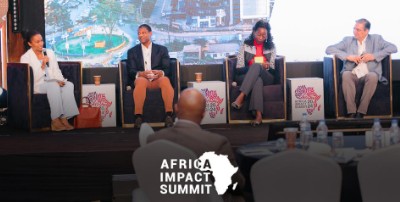
The Africa Impact Investment Summit (AIIS) returns to the continent in June 2026, anchored in Lusaka, Zambia, at the Ciela Resort from 10 to 12 June. Under the theme “Beyond Borders: Scaling Impact and Innovation for Africa’s Sustainable Transformation,” the summit convenes policymakers, investors, entrepreneurs, civil society actors, and development practitioners from across Africa and beyond. For those of us working at the intersection of technology, governance, and sustainable development, this is not simply another conference on the calendar. It is a deliberate gathering of people who understand that Africa’s development challenge cannot be solved by aid flows alone, and who are prepared to build the systems, relationships, and frameworks that make transformative investment possible. The Center of Artificial Intelligence and Sustainable Development www.CAISD.co.za based in Pretoria will be in attendance with and\ considers this summit a strategic priority, and what the broader development community stands to gain from being in the room.
The Summit and Its Architecture
The Africa Impact Investment Summit is hosted by the Africa Impact Investing Group (AIIG), a multi-country network affiliated with the Global Steering Group for Impact Investing (GSG). Established in May 2022 in Turin, Italy, the AIIG brings together national partners from Kenya, South Africa, Ghana, Nigeria, and Zambia, with a mandate to accelerate the deployment of impact capital across the continent.
The summit is co-anchored by NABII Zambia, the National Alliance for Business Impact Investing, which has been building the country’s impact investing infrastructure with notable consistency. The choice of Lusaka as the 2026 host is analytically significant. Zambia sits at an interesting developmental juncture. It has navigated a difficult debt restructuring process, is rebuilding fiscal headroom, and is simultaneously trying to position itself as an innovation-friendly economy. The summit arrives at a moment when domestic appetite for structured impact investment is growing, and when international capital is actively looking for credible entry points into the Southern African market.
Why CAISD Thinks This Summit Is Worth It
Our institutional calculus is straightforward. We go where decisions are being shaped, where frameworks are being negotiated, and where relationships that translate into action can be built. The AIIS meets all three criteria, and the 2026 edition does so with particular force. The summit’s thematic focus on scaling innovation and crossing borders maps directly onto CAISD’s core mandate. Africa’s sustainable development challenge is fundamentally a governance and systems problem, not merely a funding shortfall. Across the continent, promising innovations in agriculture, health, education, and financial inclusion are failing to scale not because the ideas are weak, but because the institutional environment, the regulatory frameworks, the data infrastructure, and the investment pipelines needed to sustain them remain fragmented and underdeveloped. CAISD exists precisely to address this gap, and the AIIS is the kind of convening where that argument can find a receptive audience.
CAISD is advancing several initiatives, including a precision agriculture and AI pilot in Vanderbijlpark, a university innovation partnership with UNDP Zambia, and a continental AI governance programme, all of which require the kind of blended finance, patient capital, and institutional co-investment that impact investors at this summit are positioned to provide.
Innovation as a Development Strategy
One of the most substantive threads running through this summit will be the work of UNDP in Zambia, and it deserves analytical attention rather than a passing mention. UNDP has evolved significantly in recent years from a traditional grant-making and technical assistance body into an active architect of innovation ecosystems. In Zambia, this shift is visible in programmes designed to connect university talent with digital tools, entrepreneurship support, and seed capital in ways that build long-term institutional capacity rather than short-term project outputs.
The UNDP UniPod model is a case in point. Embedded within university of Zambia (UNZA) campus, UniPods are designed to democratise access to innovation infrastructure, giving students and young researchers the space, connectivity, mentorship, and early-stage funding they need to convert ideas into viable enterprises. CAISD is engaged with this model through our partnership with UNDP Zambia, and the evidence from early implementation is instructive. The constraint on African innovation is rarely a shortage of ideas. It is the absence of structured pathways from ideation to prototyping to market entry, combined with a policy environment that has not yet caught up with the pace of technological change.
UNDP’s Africa Market Insights Report adds a further analytical layer, providing systematically gathered data on where private sector investment opportunities align with development priorities across ten African economies. For impact investors navigating a continent where information asymmetries are significant and due diligence costs are high, this kind of evidence infrastructure is not a nice-to-have. It is a prerequisite for responsible capital deployment, and UNDP’s willingness to produce and share it publicly is one of the more underappreciated contributions it makes to the continent’s development ecosystem.
AI, Innovation, and the Investment Frontier
For CAISD, the summit also advances a specific and urgent argument that artificial intelligence is not a future consideration for African development. It is a present-tense investment frontier that demands immediate governance attention. Across precision agriculture, financial inclusion, healthcare diagnostics, and education technology, AI-enabled solutions are already demonstrating measurable development returns in African contexts. The question is no longer whether AI will shape Africa’s development trajectory. It is whether the continent will build the regulatory frameworks, data governance standards, and institutional capacity to ensure that it does so equitably and sustainably.
Impact investors who enter the AI space without engaging these governance questions risk financing systems that entrench inequality rather than reduce it. Algorithmic tools trained on unrepresentative data, deployed in contexts without accountability mechanisms, and scaled through investment vehicles that prioritise financial returns over social outcomes can cause real harm at speed and at scale.
The Summit Is Where You Need to Be
The AIIS is one of a very small number of convening spaces on the continent where the full architecture of impact investing, spanning national policy, institutional frameworks, enterprise pipelines, and capital markets, is in the same room at the same time. The Africa Impact Investing Awards, the UNDP-hosted side events, and the bilateral dialogue spaces collectively create conditions for the kind of multi-stakeholder alignment that no single organisation can manufacture on its own. For practitioners, policymakers, and investors who are serious about Africa’s development, Lusaka in June is not optional. It is where the work gets done.
“A Necessary Withdrawal, and an Unfinished Conversation”
Authored by CAISD – Centre for Artificial Intelligence and Sustainable Development.
On 26 April 2026, Minister Solly Malatsi announced the withdrawal of the Draft National Artificial Intelligence Policy published for public comment in Government Gazette No. 54477. The stated reason was unambiguous: the document contained fictitious sources in its reference list, the most plausible explanation being that AI-generated citations were incorporated without proper verification. The Minister was right to act decisively. A national AI policy whose own evidentiary foundation is compromised by precisely the kind of AI governance failure it was meant to address is not merely an embarrassment. It is a structural contradiction that would have undermined the document’s authority from the moment of its enactment. The Centre for Artificial Intelligence and Sustainable Development (CAISD) notes, with candour, that our own review of Gazette No. 54477 had flagged irregularities in portions of the reference architecture. We therefore welcome the withdrawal of the document draft policy and commend the ministry for urgent action.
The withdrawal of this flawed draft should not silence this urgent national conversation. South Africa’s need for a credible, development-oriented AI governance framework should not be diminished by a single policy failure. If anything, the manner of that failure, a government document corrupted by unverified AI outputs in a policy designed to regulate AI, illustrates with painful precision why the governance imperatives identified in CAISD’s advisory submission remain pressing. We submit this analysis as a contribution to the redrafting process and direct it to the substantive policy architecture that the next draft must contain.
The Developmental Imperative Cannot Wait
The conceptual foundation of Gazette No. 54477, notwithstanding its referencing failures, contained genuine insight. Its philosophical grounding in Ubuntu, its insistence that AI must serve the community rather than merely maximise corporate efficiency, and its proposal for an AI Insurance Superfund modelled on the Road Accident Fund represented distinctive contributions to global AI governance discourse. These ideas deserve to be rescued from the wreckage of a poorly quality-assured drafting process and carried forward into the revised document with greater rigour and stronger enforcement architecture.
The central argument of CAISD’s advisory position is structural rather than rhetorical. For South Africa, AI governance designed primarily as a risk-management exercise is a strategic error. The OECD AI Principles, updated by the OECD Ministerial Council in May 2024, are explicit on this point that governments must invest in AI for public benefit while building governance environments that ensure equitable distribution of AI’s gains and adequate protection of citizens from its harms (OECD, 2024). A development-first framework does not abandon governance risks but calibrates regulatory strictness to the nature and severity of potential harm rather than applying precautionary restrictions that impose compliance costs on local innovators without protecting the citizens most exposed to AI-driven disruption.
The AI system that misdiagnoses a patient in a public hospital, the algorithm that denies a social grant application processed by SASSA, the automated credit-scoring model that reproduces apartheid-era spatial inequality in lending decisions are not abstract governance concerns. They are the specific harms that a development-first framework must anticipate and prevent, while simultaneously deploying AI in precisely these same domains to improve diagnostic accuracy, reduce administrative backlogs, and expand financial inclusion. The revised policy must be architecturally equipped to do both.
CAISD identified ten discrete governance gaps in Gazette No. 54477 relative to the standards established by verified international frameworks. Each gap is referenced below against sources that have been confirmed as genuine.
Robust Data Governance Mechanisms
The Draft National AI Policy should place robust data governance at the centre of its implementation architecture, as trusted AI systems depend fundamentally on the quality, integrity, fairness, and lawful use of data. In this regard, the policy should expressly strengthen bias-mitigation mechanisms through sustained investment in locally relevant, representative datasets that reflect South Africa’s demographic, linguistic, and socio-economic realities. Equally, it should require explainability standards for high-risk AI applications to ensure that automated decisions affecting citizens can be understood, interrogated, and challenged where necessary. These measures must be firmly aligned with the Constitution, particularly the rights to equality, dignity, just administrative action, and privacy, while ensuring full compliance with the Protection of Personal Information Act (POPIA). A strong data governance framework will not only protect the public interest but also enhance trust, legitimacy, and long-term adoption of AI across both the public and private sectors.
The withdrawn draft treated all AI as a single regulatory category. Singapore’s Infocomm Media Development Authority, in collaboration with the AI Verify Foundation, finalised the Model AI Governance Framework for Generative AI in May 2024, establishing nine governance dimensions specifically designed for large language models, deepfakes, and synthetic content (IMDA & AI Verify Foundation, 2024). The revised South African policy requires a dedicated generative AI chapter with mandatory transparency disclosures and content provenance requirements, particularly urgent given the country’s multilingual digital environment.
Algorithmic Impact Assessments.
The EU AI Act, formally adopted in 2024, requires fundamental rights impact assessments before high-risk AI systems are deployed (European Parliament, 2024). Canada’s Directive on Automated Decision-Making requires equivalent assessments for all federal government automated decision systems. South Africa’s revised policy must mandate pre-deployment assessments for public sector AI, beginning with SASSA’s grant administration and the South African Police Service’s use of predictive analytics.
Right to challenge AI decisions.
The 2024 OECD update to Principle 1.3 on Transparency and Explainability reframed the governance standard from enabling individuals to understand AI decisions to enabling them to actively challenge those decisions (OECD, 2024). This shift is constitutionally grounded in South Africa in Sections 33 and 34 of the Constitution, covering just administrative action and access to courts, respectively. A statutory right to contest AI-driven decisions, routed through the proposed AI Ombudsperson, must appear in the revised draft.
AI sovereignty and sovereign compute.
The draft’s aspiration for regional AI factories requires structural enforcement. Without defined domestic ownership thresholds, minimum compute capacity targets, and prohibitions against foreign hyperscalers operating under local branding, these factories risk becoming another iteration of structural dependency dressed in developmental language. The revised policy requires a sovereign AI capability roadmap with measurable targets, including a strategy for accessing advanced semiconductors amid tightening global export controls.
Green energy co-investment.
OECD Principle 1.1, in its 2024 formulation, explicitly addresses environmental sustainability as a core dimension of trustworthy AI, acknowledging the significant and growing energy footprint of large-scale AI systems (OECD, 2024). The EU AI Act requires energy consumption disclosure for large AI models. South Africa’s revised policy must mandate binding green energy co-investment requirements for all AI factories and data centres, making AI infrastructure development a lever for renewable energy expansion rather than an additional burden on a coal-dependent grid during the Just Energy Transition.
Remaining gaps.
Five further governance deficits require attention: a mandatory AI incident reporting regime modelled on POPIA’s breach notification framework; a supply chain accountability map specifying minimum duties across the AI development and deployment chain; a SANAS-accredited conformity assessment pathway for high-risk AI systems; a National AI Procurement Policy governing government AI tenders; and a formal SME support regime with differential compliance timelines to prevent regulatory architecture from entrenching the market dominance of large foreign technology firms at the expense of local innovators.
The Human Imperative: Building an AI-Productive Nation
Beyond institutional architecture, the most consequential long-term investment South Africa can make is in the human capacity to produce, govern, and critically interrogate AI systems. The withdrawn draft’s treatment of talent development was its most substantively developed thematic area, and it is the dimension most worth preserving and strengthening in the revised document. The country has more than twenty million people under the age of thirty-five; an unemployment rate above thirty percent among youth; and a structural mismatch between the skills the economy currently rewards and those an AI-transformed economy will require. The distance between producing passive AI consumers and active AI producers is, in this context, a development variable of first-order importance.
The revised policy must move beyond aspirational language on talent development to specify a National AI Skills Framework with competency standards by schooling phase, funded youth AI innovation programmes with measurable targets, and a legislated social dialogue mechanism, housed within NEDLAC, for managing AI-driven labour market disruption. The OECD (2024) is clear that fair labour market transitions require structured social dialogue, reskilling programmes, and social protection for displaced workers; these are not peripheral concerns in a country with South Africa’s employment structure. They are the conditions under which an AI governance framework can credibly claim to serve the people it governs.
The withdrawal of Gazette No. 54477 is, in the final analysis, a moment of institutional accountability that South Africa should take seriously and move on from quickly.
CAISD is an organisation that leverages artificial intelligence for development. It works with African universities, including AUDA-NEPAD, the UN and AI experts to advocate for AI that is development oriented. Dr AD Essome is the Co-Chair of CAISD and can be reached at essome@caisd.co.za
“AUDA-NEPAD and global organizations want to change the narrative and drive the continental transformation”
By Dr Alexandre D, Essome
The African Union (AU) and the African Union Development Agency-New Partnership for Africa’s Development (AUDA-NEPAD), in collaboration with the African Union Commission (AUC), demonstrated strong leadership in advancing science, technology, and innovation (STI) as a central driver of continental transformation. The Science, Technology & Innovation (STI) Week, held February 10–12, 2026, in Addis Ababa alongside the 39th AU Summit, served as a high-level platform that brought together policymakers, researchers, innovators, development partners, and youth to accelerate the operationalization of the Science, Technology and Innovation Strategy for Africa (STISA-2034).
The event delivered tangible milestones, including the official launch of the STISA-2034 Implementation Plan, the unveiling of AUDA-NEPAD’s EdTech Vision & Plan 2030, and commitments to mobilize resources for scalable, inclusive innovation. In a world of geopolitical tensions, AUDA-NEPAD seamlessly teamed up with academia, governments, international bodies, and private investors from the Global South, Europe, and America creating a multi-stakeholder ecosystem that functions as a unified front. Scholars, policymakers, and investors converged to align on STISA priorities, including science communication to combat misinformation. These partnerships amplify African agency, with participants from Asia sharing best practices that mirror Africa’s challenges and turning potential rivals into collaborators.
The STISA-2034 Implementation Plan
The STISA-2034 Implementation Plan serves as Africa’s roadmap for the next decade, shifting decisively from vision to action. It operationalizes five sectoral priorities agriculture, health, ICT and digital skills, energy, and environment alongside six cross-cutting enablers such as infrastructure, human capital, and partnerships. This framework rejects reliance on raw material exports and imported solutions, instead prioritizing indigenous industrialization, knowledge-to-wealth creation on African soil, and shared prosperity. A key highlight was AUDA-NEPAD’s ambitious target to mobilize up to $6 billion (with the full estimated cost of STISA-2034 at $6.8 billion) over the next 12 months.
This funding push addresses urgent challenges like food insecurity, climate vulnerability, and technological competition by scaling solutions in areas such as Health Tech, EdTech, Space Tech, microchips, and infrastructure. AUDA-NEPAD’s leadership and CEO Nardos Bekele-Thomas emphasized in her address at the high-level diner gala that, “moving beyond pilot projects to concrete deeds, underscoring that Africa’s brain drain stems from underinvestment and can be reversed through targeted resources and political commitment” .
Complementing this momentum, a landmark $42 million (CAD 57 million) commitment was announced for Phase 3 of the Science Granting Councils Initiative (SGCI), running from 2026 to 2030. AUDA-NEPAD will coordinate with national science councils to leverage domestic STI financing and public-private partnerships, promoting African ownership and sustainability. As South Africa’s Minister of Higher Education, Science and Innovation, Prof. Blade Nzimande, highlighted, increased domestic investment is crucial to reduce dependency and align resources with continental goals.
Partnerships That Break Silos: The Hidden Power of Global Alliances
This buy-in is evident: policymakers are on board, investors have expressed keen interest, and academia and private sectors are mobilized, as demonstrated by initial pledges such as the $42 million from the Science Granting Councils Initiative (SGCI).
This collaboration challenges the narrative of Africa as a passive recipient, showing how cross-continental ties can mobilize resources, heighten the visibility of innovation’s urgency, and commit leaders to real change. The $42 million boost, announced during the STI Week, comes from a mix of international funders including Canada’s International Development Research Centre (IDRC), Norway’s government, the UK’s Foreign, Commonwealth and Development Office (FCDO), Wellcome Trust, Germany’s DFG, and South Africa’s National Research Foundation (NRF). This funding directly backs STISA-2034 priorities, specifically the SGCI’s third phase, explicitly supporting STISA-2034’s focus on sectors like agriculture, health, ICT, energy, and environment. Participants called for more African domestic investment to avoid dependency as highlighted by South Africa’s science minister Blade Nzimande. This represents tangible progress in resource mobilization, underscoring that international commitments are kickstarting the journey toward the full $6.8 billion needed.
The CJED side event in a nutshell
The Calestous Juma Executive Dialogue (CJED), co-organized by AUDA-NEPAD and Michigan State University, took place on February 12–13, 2026, at the Skylight Hotel in Addis Ababa. On Day 1 (moderated by Dr. Callista Rakhmatov), the program opened with welcoming remarks from senior AUDA-NEPAD and MSU representatives, followed by an overview and a keynote that l, Dr. Alexandre Essome, Co-Chair of the Centre for Artificial Intelligence and Sustainable Development (CAISD), addressed titled “The Future of Science Communication in Africa and the Global South”. The presentation framed science communication as essential infrastructure for building trust, shaping policy, and scaling innovation across the continent and beyond. In emphasis was the urgent need to transition from passive consumption of knowledge to active ownership, aligning communication strategies with STISA-2034 priorities.
The talk highlighted mobile-first approaches, integration of indigenous knowledge into African-centric data systems, and the value chain of knowledge from mineral beneficiation to public trust in “Made in Africa” technologies. The other important call of CAISD was for institutional reforms to make science communication a core academic metric and stressed gender equity as a prerequisite for inclusive progress. My address concluded with a powerful call to action: “The world is listening. It is time to speak,” setting the tone for the dialogue’s focus on combating misinformation and strengthening capacity in health, agriculture, and environment sectors.
Other morning sessions featured panels on science communication practices in Africa and Asia, while the afternoon included presentations of regional success stories (Africa, Asia, United States), open discussions, and interactive breakout groups focused on building capacity in health, agriculture, and climate/environment sectors. The day closed with theme-lead reports and reflections on progress and the agenda ahead. Day 2 began with a recap and moved into panels addressing misinformation in African and Asian contexts and exploring science communication tools and resources, with active youth involvement. Discussions followed, leading into lunch and breakout sessions on program and tool development. The afternoon featured a dedicated panel and workshop on the role of higher education institutions in science communication, health breaks, collective feedback, recommendations, and a way-forward presentation. The dialogue concluded with closing remarks from MSU and AUDA-NEPAD representatives, officially ending the 12th CJED and reinforcing science communication as a vital enabler for STISA-2034 implementation.
Other key Events at the STI week
Youth emerged as a central force, with initiatives like the Presidential Youth in AI & Robotics Competition challenging outdated stereotypes. The EdTech Vision & Plan 2030 reimagines digital learning as a systemic tool for equity and resilience, integrated with STISA’s enablers to empower learners and teachers through localized, interoperable solutions. Policy dialogues, including those under the Calestous Juma Executive Dialogue (CJED), emphasized reforms in higher education institutions for science communication and curriculum integration such as online agricultural science courses. These efforts tie directly into broader calls for domestic R&D investment and governance changes to embed STI across sectors.
In summary, the 2026 STI Week marked a decisive shift from aspiration to implementation. With initial funding secured, partnerships solidified, and a clear roadmap in place, Africa is positioned to own its innovation narrative. The urgency is clear: by seizing this moment through collective action and sustained investment, the continent can reverse the brain drain, drive inclusive growth, and secure a self-sustaining future. The choice and the time are now.
Dr Alexandre D, Essome is a journalist the with 25 years of experience managing communication challenges and organizations for the United Nations. He is currently the Co-Chairs CAISD, a network connecting universities, civil society, government and private entities working to address Africa’s development issues through the leverage of technology and AI across the continent.
The West African sub-region stands at a pivotal juncture in the global artificial intelligence (AI) landscape. Digital innovation, particularly AI, is transitioning from an ancillary tool to a foundational element of macroeconomic resilience, sectoral productivity, and inclusive social progress. Amid the accelerating Fourth Industrial Revolution, Economic Community of West African States (ECOWAS) members are progressively aligning national priorities with continental frameworks to secure meaningful participation in AI-driven global value chains. This analysis, prepared by the Centre for Artificial Intelligence and Sustainable Development (CAISD), examines the implementation of African Union (AU) strategies, regional coordination mechanisms, and national trajectories, while highlighting persistent structural challenges and pathways to greater technological self-reliance (African Union, 2024a; Oxford Insights, 2025).
The Continental Compass: Implementing AU Strategies
West African governments actively engage with the Continental Artificial Intelligence Strategy (endorsed July 2024) and the Science, Technology and Innovation Strategy for Africa (STISA-2034) (launched 2025). These instruments provide harmonized guidance on ethical AI governance, risk mitigation, and sectoral applications, allowing resource-constrained states to adopt established best practices rather than developing them independently (African Union, 2024a; African Union, 2025). STISA-2034 prioritizes a shift toward a knowledge-based, innovation-driven economy, with emphasis on high-impact domains such as agriculture, health, and energy. The Continental AI Strategy advocates “Vertical AI” context-specific solutions addressing local realities, including predictive tools for agriculture and health systems. Data sovereignty remains central, reinforced by the Malabo Convention on Cybersecurity and Personal Data Protection, which counters risks of external exploitation and supports sovereign data governance (African Union, 2024a).
Regional Realities and the ECOWAS Collaborative Landscape
The Economic Community of West African States (ECOWAS) is advancing AI policy through its long-term ECOWAS Vision 2050, which identifies digital transformation and the digital economy as foundational pillars for regional integration, peace, security, and sustainable development (ECOWAS, 2021). A pivotal step forward occurred during the Thematic Dialogue on Digital Transformation, held in Lagos from 20 to 22 January 2026, where high-level stakeholders adopted a communiqué committing the region to the development of a Regional AI Governance Framework under Vision 2050 (Biometric Update, 2026; The Point, 2026). This framework aims to establish harmonized approaches to AI adoption, data management, ethical standards, cybersecurity, and risk mitigation including algorithmic bias, labour displacement, and the spread of misinformation (“information disorder”) while supporting the creation of a Regional Digital Single Market to reduce fragmentation and enable cross-border digital trade and innovation (ECOWAS, 2026; Businessday NG, 2026).
Building on the Supplementary Act on Personal Data Protection (2010) one of Africa’s earliest comprehensive regional data protection instruments, the proposed framework seeks to maximise AI’s potential in high-impact sectors such as agriculture, health, education, governance, and public service delivery, while effectively addressing associated risks (ECOWAS, 2010). Complementary efforts include linguistic inclusion for French and indigenous languages (e.g., Wolof, Fongbe), pooled data resources, emerging infrastructure sharing (e.g., data centers in key hubs), and exploratory regulatory sandboxes for cross-border testing in fintech, health, and agriculture. By aligning closely with the African Union’s Continental Artificial Intelligence Strategy, and promoting linguistic inclusion, sovereign data management, and regulatory sandboxes, ECOWAS is positioning West Africa to transition from a technology consumer to an active participant and co-creator in the global AI ecosystem. The AU continues to provide the overarching strategic vision, while ECOWAS operationalizes localized integration through these concrete initiatives (African Union, 2024a; Biometric Update, 2026).
West Africa ICT and AI Readiness Profile (2025–2026)
Country
Internet Penetration (2026 Est.)
AI Policy Status (2026)
Govt AI Readiness Rank (2025)
Technical Integration & Developmental Commentary
Benin
32.2%
YES (SNIAM 2023–2027)
90th
Designated the “Model Student” of AI policy; successfully deployed “JaimeMaLangue” for Fongbe NLP and automated land titles via GovTech AI.
Burkina Faso
17.0%
NO (Aligning existing ICT laws)
127th
Focused on foundational digital infrastructure; currently identifying “Vertical AI” opportunities for agriculture.
Cabo Verde
73.5%
Foundational Stage
122nd
High adoption coastal hub focusing on building data sovereignty and aligning with the AU Continental Strategy.
Côte d’Ivoire
40.7%
YES (Strategy launched March 2025)
95th
Leading governance actor; established a regional AI Laboratory in Abidjan and mandated 40% female participation in AI research.
Gambia, The
45.9%
Foundational Stage
153rd
Aligning existing data protection laws with AU cybersecurity standards.
Ghana
69.9%
YES (Ethics and educational focus)
78th
“Resource-Constraint Innovator” using satellite-linked AI to predict cocoa yields and detect crop diseases via COCOBOD.
Guinea
26.5%
Foundational Stage
183rd
Utilizing regional collaboration by storing sovereign government data in neighboring Senegal’s cloud infrastructure.
Guinea-Bissau
32.5%
High-Constraint State
195th
AI remains in academic/NGO pilot phases; prioritizing basic connectivity and power infrastructure.
Liberia
23.5%
High-Constraint State
189th
Infrastructure deficits limit AI adoption to academic research.
Mali
35.1%
Foundational Stage
152nd
Participating in the “Francophone Data Ring” to store government records in regional data centers.
Mauritania
58.8%
Foundational Stage
138th
Aligning national ICT policy with AU Malabo Convention standards.
Niger
23.2%
High-Constraint State
184th
Focusing on building basic internet and power layers.
Nigeria
44.9%
YES (National AI Strategy 2024/25)
70th
Designated Regional West African Compute Hub; leads the continent in NLP for Yoruba, Igbo, and Hausa and hosts 120+ active startups.
Senegal
60.6%
YES (Plan Sénégal Émergent)
96th
Regional “Compute Hub” hosting sovereign clouds for neighbors; uses a national supercomputer for predictive climate modeling in Sahelian agriculture.
Sierra Leone
20.6%
Foundational Stage
175th
Prioritizing data sovereignty and drafting an overarching national data strategy.
Togo
37.0%
Foundational Stage
124th
“GovTech Innovator” using AI to digitize land titles to prevent property fraud and increase investment security.
National AI Progress: Emerging Hubs and Policy Advances
AI maturity remains heterogeneous, with coastal and resource-endowed states advancing faster amid widespread infrastructure and talent constraints.
Nigeria (Talent and Startup Hub): The 2025 National AI Strategy prioritizes ethical, inclusive adoption across finance, agriculture, and public services, supported by initiatives like 3 million Technical Talent upskilling (Federal Ministry of Communications, Innovation and Digital Economy, 2025).
Senegal (Infrastructure Focus): Advances in digital sovereignty through Diamniadio facilities enable sovereign data hosting and applications in climate-resilient agriculture.
Benin (Policy Pioneer): SNIAM 2023–2027 outlines comprehensive actions for ethical AI in key sectors (Ministry of Digital and Digitalization, Benin, 2023).
Côte d’Ivoire (Governance Emphasis): SNIA 2030 emphasizes investment, inclusion, and governance, including ethical labelling and rural connectivity (Ministry of Digital Transition and Digitalisation, Côte d’Ivoire, 2025).
Ghana (Sectoral Innovation): Focuses on resource-constrained applications, particularly agriculture, despite persistent challenges like cocoa swollen shoot disease.
Strategic Recommendations: Bridging Gaps in Key Indicators (CAISD Perspective)
West Africa exhibits low-to-mid readiness in global benchmarks, with strengths in policy emergence but pronounced gaps in infrastructure (compute/energy), talent retention, research output, investment, and enabling environments (Oxford Insights, 2025). CAISD recommends:
Prioritize green compute by linking data centers to renewables, aligning with AU “Green Power for Compute” to build resilient infrastructure without grid strain (African Union, 2024a).
Accelerate talent development through integrated curricula, national bootcamps, and retention incentives (e.g., startup grants, tech visas) to reach critical mass and counter brain drain.
Deploy edge AI models on low-end devices for rural inclusion in low-connectivity contexts.
Establish multi-stakeholder national AI ethics boards and regulatory sandboxes compliant with the Malabo Convention.
Foster regional sovereign clouds and data-sharing mechanisms to enhance independence, reduce foreign biases, and support localized models.
Conclusion
West Africa possesses demographic and entrepreneurial advantages to leapfrog legacy systems toward AI-enabled sustainable development. Harmonizing Nigeria’s ecosystem dynamism, Senegal’s infrastructure progress, Benin’s policy rigor, and Côte d’Ivoire’s governance focus with AU and ECOWAS frameworks is essential. CAISD underscores that long-term success requires sustained investment in localized talent pipelines, inclusive policies, and foundational infrastructure to ensure AI delivers equitable benefits, particularly for vulnerable rural and agricultural communities (African Union, 2024a; Oxford Insights, 2025).
ECOWAS. (2026). Thematic Dialogue on Digital Transformation Communiqué (January 2026). Economic Community of West African States. (Summarized in reports from Biometric Update, PRNigeria, and others; official ECOWAS sources pending full publication).
The Global South faces a persistent challenge in translating scientific innovations into socio-economic benefits. Despite advances in genetics, biotechnology, and agricultural techniques by public and private institutions, a “communication deficit” hinders widespread adoption. This gap arises from information asymmetries, miscommunication, and disinformation, creating barriers to evidence-based policymaking. It is against this backdrop that the Centre for Artificial Intelligence and Sustainable Development (CAISD) will take an active role in the 12th Calestous Juma Executive Dialogue (CJED) in Addis Ababa, Ethiopia, on February 12–13, 2026.
Organized by the African Union Development Agency (AUDA-NEPAD) in collaboration with Michigan State University (MSU), the CJED serves as a platform to address these issues. CAISD’s Co-Chair, Dr. Alexandre D. Essome, a 25-year communication expert with the United Nations will deliver the opening keynote, on “The Future of Science Communication in Africa and the Global South,” positioning our organization as a leader in bridging science and policy through digital tools and intellectual frameworks.
The Strategic Imperative: Science Communication as Infrastructure
Effective science communication is not a luxury but essential infrastructure for development. The CJED targets the “information pandemic ” of misinformation that undermines technology uptake. Rather than a mere data shortage, the core issue is the absence of an enabling environment for informed decision-making. This “shadow pandemic” of myths derails initiatives in health, agriculture, and climate action before they gain traction.
CAISD views science communication as “precision communication,” replacing noise with clear, standardized messaging across regional blocs like SADC and ECOWAS. This builds an “infrastructure of trust,” combating cross-border disinformation and fostering public acceptance of innovations.
Addressing the Communication Deficit and the Knowledge Value Chain
Africa’s scientific landscape often resembles raw mineral extraction: we export unprocessed data and import refined analyses and policies from abroad. This “resource-to-rectifier” model cedes value to external actors, limiting local beneficiation in the global digital economy.
Innovations in biotechnology and crop varieties fail to reach smallholder farmers due to pervasive disinformation. The CJED aims to reverse this by integrating mobile-first strategies and AI with indigenous knowledge systems (IKS). Mobile penetration in Africa stands at 85%, far outpacing traditional academic reach (estimated at 15%). Platforms like WhatsApp and TikTok can democratize complex data, while AI models trained on IKS reduce bias and ensure culturally relevant outputs.
This strategic shift aligns with CAISD’s vision of leveraging Africa’s mineral resources, key to global microchips to communicate their value domestically. By meeting people where they are, we transform communication from a soft skill into a driver of sovereignty.
The CJED Agenda: A Laboratory for South-South Collaboration
The two-day dialogue at the African Union’s side event at this year summit emphasizes cross-continental knowledge exchange, drawing lessons from Africa and Asia to build institutional capacity.
Day 1: Institutional Capacity and Success Stories. Following Dr. Essome’s keynote, panels explore science communication frameworks in Africa and Asia, featuring insights from the Science for Africa Foundation and the National Academy of Agricultural Sciences. Success stories from the Alliance for Science (AFS) and Bayer Corporation highlight mitigation strategies against public resistance to technology. Breakout sessions strengthen resilience in health, agriculture, and climate/environment, offering CAISD opportunities to embed data-driven tools in policies.
Day 2: Combatting Misinformation and Tool Development. Sessions dissect the psychological and digital drivers of disinformation, with experts from MSU and the Society of Medical Arthropodology. A focus on “Science Communication Tools and Resources” includes perspectives from the Malawi Embassy and African youth, ensuring inclusivity for digital natives.
This structure positions the CJED as a collaborative roadmap, identifying common barriers and scalable solutions.
CAISD’s Role: Leading Technical Advocacy
CAISD’s participation underscores our commitment to academic advocacy, the “midstream” phase of our strategy. Dr. Essome’s keynote will advocate for integrating AI and IKS into communication curricula, empowering scientists to engage media, religious leaders, and communities. CAISD sees the CJED as a catalyst for human capacity building, turning raw scientific output into trusted, implementable policies. “Our expertise in AI-driven platforms aligns with AUDA-NEPAD and MSU’s goals, enhancing Africa’s digital transformation” Essome’s said.
Deliverables: A Comprehensive Science Communication Curriculum
A key outcome is a dynamic curriculum on agricultural science communication, evolving into an on-demand online course for scientists, educators, and regulators. This “software update” for Africa’s scientific community will be updated annually to adapt to technological and social changes. For CAISD, this curriculum bridges the skills gap, enabling local processing of resources and fostering technology adoption. It represents a step toward full ownership in the knowledge value chain.
Measuring Success: Short- and Long-Term Impacts
Success at the CJED is multifaceted:
Short-term: Training stakeholders with networks and resources, empowering them to communicate effectively with diverse audiences.
Long-term: Increased adoption of modern agricultural technologies and enactment of supportive policies, improving food security and livelihoods.
CAISD measures progress through alignment with frameworks like the Science, Technology and Innovation Strategy for Africa (STISA-2034), establishing AI pipelines, and achieving scientific sovereignty.
CAISD’s engagement in the 12th CJED advances our Path to 2030, defined by three phases: alignment with regional partners, infrastructure development integrating IKS, and sovereignty in global science architecture. As Dr. Essome leads our delegation to Addis Ababa, CAISD’s message resonates: Africa possesses the minerals, talent, and knowledge. Through masterful communication, we must own the narrative to drive sustainable development.
South Africa remains the continental leader in raw compute power and institutional research.
Policy Strategy: Driven by the Presidential Commission on the 4IR (PC4IR) and the National AI Government Plan. It focuses on high-level regulation (POPIA for data privacy) and industrial modernization.
Tech Integration: * Compute: Hosted Africa’s first “AI Factory” in 2025 with 3,000+ NVIDIA GPUs via Cassava Technologies.
Research: Home to CAIR (Centre for AI Research) and the Wits MIND Institute, focusing on machine intelligence.
Economy: Deep integration in FinTech and mining; AI is projected to add up to R1.4 trillion to its GDP by 2030.
2. Nigeria: The Talent & Startup Hub
Nigeria is positioning itself to capture 43% of Africa’s AI-driven economic gains by 2030, leaning heavily on its massive youth population.
Policy Strategy: The National AI Strategy (launched 2024/25) focuses on “Human-Centered AI” and digital literacy. It recently moved into the global top 40 for “Policy Capacity.”
Tech Integration:
Language: Leading the continent in NLP (Natural Language Processing) for local languages (Yoruba, Igbo, Hausa) to drive financial inclusion.
Ecosystem: Over 120 active AI startups.
Infrastructure: Building the first National AI Centre in UNIJOS to decentralize tech growth.
3. Kenya: The Bottom-Up Innovator
Kenya has the highest grassroots AI adoption rate on the continent, with over 42% of internet users utilizing AI tools like ChatGPT and Gemini as of 2026.
Policy Strategy: Focused on “AI Resilience” and ethics. Kenya uses a “sandbox” approach, allowing startups to test AI solutions in a controlled regulatory environment.
Tech Integration:
Green AI: Leveraging geothermal energy to power sustainable data centers.
AgriTech: Widespread use of AI for pest control and crop disease detection (e.g., PlantVillage).
Education: Over 600,000 citizens trained in basic AI literacy through government-backed digital programs.
4. Egypt: The Public-Private Pioneer
Egypt bridges the gap between the African and Arab AI strategies, focusing on large-scale government digitization.
Policy Strategy:National AI Strategy 2.0. It features a “National AI Council” that oversees cross-ministerial implementation.
Tech Integration:
Smart Cities: AI is the “brain” of the New Administrative Capital’s utility and security systems.
Arabic LLMs: Investing heavily in Arabic-centric generative AI to serve the MENA region.
Logistics: AI-driven optimization of the Suez Canal traffic and maritime logistics.
5. Rwanda: The Governance Laboratory
Despite its size, Rwanda is arguably the most “AI-ready” government, using the country as a “Proof of Concept” hub for the continent.
Policy Strategy: A comprehensive National AI Policy that mandates AI training for civil servants. It is the first to sign the “Global Statement on Inclusive AI.”
Tech Integration:
Health: AI-powered drone logistics (Zipline) and automated diagnostic tools in rural clinics.
Ethics: Working with the World Economic Forum to create the “African AI Governance Framework.”
Research: Home to the Carnegie Mellon University-Africa campus, a primary feeder for AI engineers.
The Emerging Challengers (Active Drafting & Implementation)
These nations are in the final stages of policy adoption and have significant private sector AI growth.
Nigeria: Drafting a comprehensive AI National Policy; leading in local language models (NLP) and startup funding.
Ghana: Policy continuity focusing on ethics; integration in cocoa farming and education.
Ethiopia: Embedded AI in its 10-year Development Plan; focusing on AI for public health and linguistics.
Morocco: Strong focus on AI in manufacturing and aeronautics; AI research centers in Ben Guerir.
Tunisia: National AI Strategy focusing on the startup ecosystem and “deep tech.”
Algeria: Established a National School for AI; focusing on industrial modernization.
3. The “Drafting & Developing” Group (Active Progress)
These countries have recently initiated formal policy processes or have integrated AI into their ICT policies.
Angola: Recently drafted comprehensive AI legislation (2025).
Tanzania: Developing AI guidelines under the Ministry of ICT; focusing on e-health.
Uganda: Part of the AU technical support program; focusing on AI in education.
Namibia & Botswana: Actively drafting national strategies to diversify from mineral-led economies.
Zambia: Meaningful progress in early rollout for mining and fintech.
Côte d’Ivoire: Officially entered the AI policy space in March 2025.
4. The Early/Alignment Stage (Foundational ICT Focus)
These countries are currently aligning their existing data protection and ICT laws with the AU Continental Strategy.
Group A (West/Central): Cameroon, Gabon, Republic of Congo, DRC, Togo, Sierra Leone, The Gambia, Burkina Faso, Guinea, Mali, Mauritania.
Group B (East/South): Malawi, Zimbabwe, Mozambique, Madagascar, Seychelles, Eswatini, Lesotho.
Current State: Focusing on building “Data Sovereignty” and basic digital infrastructure before AI-specific laws.
5. High-Constraint / Recovery States
Countries currently facing infrastructure deficits or post-conflict recovery where AI remains in the academic or NGO pilot phase rather than national policy.
Countries: South Sudan, Somalia, Chad, Central African Republic, Eritrea, Libya, Sudan, Comoros, Djibouti, Guinea-Bissau, Liberia, Niger, Sao Tome and Principe, Equatorial Guinea.
1. The Infrastructure-First Group (Southern & North Africa)
These countries are focusing on building the “backbone” (data centers and connectivity) before rolling out high-level AI services.
Mauritius: Despite its small size, it ranks #2 in Africa for AI readiness. By 2026, it has successfully automated its maritime surveillance using AI to protect its vast Blue Economy from illegal fishing.
Morocco: A leader in “Industrial AI.” With strong ties to the EU, Morocco uses AI in its automotive and aerospace manufacturing hubs (like Tanger Med) to optimize supply chains.
Botswana & Namibia: Both countries are leveraging their mineral wealth to fund AI-driven precision mining. In 2026, Namibia is also using AI to manage its “Green Hydrogen” water desalination projects.
🌾 2. The Resource-Constraint Innovators (West & East Africa)
Countries with limited electricity or high data costs are turning to “Offline-First” or “Lightweight” AI models.
Senegal: A standout in West Africa, Senegal launched its Big Data National Platform in 2025. It focuses on AI for “Public Service Delivery”—automating government records in rural areas where administrative staff are few.
Ghana: Following the AU AI Strategy closely, Ghana has integrated AI into its Cocoa Board (COCOBOD) operations. In 2026, they use satellite-linked AI to predict crop yields and detect “swollen shoot” disease before it spreads.
Ethiopia: Despite internal challenges, the Ethiopian AI Institute has developed its own locally-tuned models for healthcare diagnostics and Amharic NLP (Natural Language Processing), reducing reliance on foreign tech.
🛡️ 3. The “Fragile-State” Resilience Models
Even in countries facing conflict or severe economic recovery, AI is being used as a tool for Humanitarian Resilience.
Sudan & South Sudan: AI is being used by NGOs and local tech hubs for predictive flood modeling and tracking displaced populations to better allocate food aid.
Somalia: The 2026 profile shows a surprising leap in AI-based FinTech. Since Somalia skipped traditional banking for mobile money, they now use AI for biometric security and fraud detection in the informal economy.
🚀 Key 2026 Technology Integration Trends
Technology Type
Key Countries
Integration Focus
Edge AI
Tanzania, Uganda
AI that runs locally on smartphones without needing constant internet—crucial for rural health.
Sovereign Cloud
Angola, Côte d’Ivoire
Building local data centers to ensure “Data Sovereignty” (keeping citizen data within the country).
GovTech AI
Benin, Togo
Using AI to digitize land titles and prevent property fraud—a major hurdle for investment.
The 2026 Constraint Reality
While progress is visible, two major “walls” remain for these countries:
The “Power Gap”: AI requires massive electricity; countries like DRC and Zambia are trying to link AI hubs directly to hydroelectric projects.
The “Language Gap”: Most AI is trained on English. In 2026, the Masakhane project (a grassroots NLP community) is the primary force helping smaller countries build AI in Wolof, Swahili, and Zulu.
In early 2026, the Francophone Africa AI block has moved from high-level “digital visions” to a highly structured, sovereign-first model. While English-speaking Africa often leads in VC-funded startups, the Francophone block—led by Senegal, Benin, and Côte d’Ivoire—is setting the continental gold standard for integrated e-governance and linguistic preservation.
Their collaborative model is anchored by the AFRIA (Francophone Agency for AI) and the IDIA (Initiative for the Development of AI) network, which ensures that technology isn’t just imported but “localized” for French and indigenous languages.
🏛️ 1. Benin: The “Model Student” of AI Policy
Benin has arguably the most detailed AI roadmap in Africa, known as SNIAM 2023–2027.
The 2026 Milestone: The government has successfully rolled out its “National Data Strategy” (late 2025), which treats data as a national sovereign asset.
Technology Integration:
“JaimeMaLangue” (LoveMyLanguage): A massive AI project launched in early 2026 that uses crowdsourced data to build LLMs for Fongbe and other local languages, ensuring rural populations can access digital services via voice-AI.
Smart Gov: AI-driven automation for land titles and tax collection, making Benin one of the easiest places in West Africa to register property.
🇸🇳 2. Senegal: The Regional “Compute” Hub
Senegal’s strategy is built on the Plan Sénégal Émergent and a 2025 operationalization plan supported by international partners like Enabel and France.
The 2026 Milestone: Senegal has positioned itself as the “Data Center of the region,” hosting sovereign clouds that store government data for neighboring Mali and Guinea.
Technology Integration:
Supercomputing: The national supercomputer at Diamniadio is now being used for predictive climate modeling for Sahelian agriculture.
Youth Employment: Integrating AI training into “Vocational Training” centers to create a “Prompt Engineering” workforce for the Francophone global market.
🇨🇮 3. Côte d’Ivoire: The AI Governance Leader
In March 2025, Côte d’Ivoire officially launched its National Strategy for AI and Data Governance with a massive investment from the African Development Bank.
The 2026 Milestone: The completion of the AI Laboratory within the City of Innovation and Culture in Abidjan, which serves as a regional research hub.
Technology Integration:
Cybersecurity: Using AI to power its national Security Operation Center (SOC), aiming to be #1 in the Global Cybersecurity Index in Africa.
Gender Inclusion: A policy mandate requiring 40% female participation in all national AI research and training programs.
🤝 The “Francophone Collaborative Model”
Unlike the competitive nature of some tech hubs, these countries share a Common Roadmap (signed in Abidjan, Dec 2025):
Strategy Element
How it Works in 2026
Linguistic Sovereignty
Pooling datasets across Senegal, Benin, and Togo to ensure AI understands the “West African French” nuance and local dialects.
Regulatory Sandbox
A shared “Francophone Sandbox” where AI startups can test health-tech tools in one country and get “fast-track” approval in the others.
Cloud Independence
Shifting away from complete reliance on US/Chinese clouds toward a “Francophone Data Ring” (regional data centers).
⚠️ The Limitation: The “Digital Divide” vs. “Sovereignty”
Despite their sophisticated policies, these countries still struggle with connectivity costs. Their 2026 solution has been “Edge AI”—deploying AI models that run on local servers or low-end smartphones without needing a high-speed fiber connection, specifically for rural health and agriculture
SWOT Analysis: AU Continental AI Strategy & STISA (2026)
Strengths (S)
Unified Strategic Voice: The AU provides a single framework that allows smaller nations (like Lesotho or Djibouti) to adopt “best practice” laws without starting from scratch.
Demographic Dividend: 60% of the continent is under age 25. This “AI-native” generation is driving rapid adoption in the gig economy and software development.
The “Leapfrog” Effect: Similar to mobile money (M-Pesa), African nations are skipping legacy industrial systems to build AI-first infrastructure (e.g., Rwanda’s drone delivery networks).
Sovereign Data Focus: Strong emphasis on the Malabo Convention ensuring African data is governed by African laws.
Weaknesses (W)
The “Compute” Gap: Only a few countries (South Africa, Egypt, Kenya, Nigeria) have the GPU clusters needed to train large models, creating a digital divide within the continent.
Fragmentation: 54 different regulatory environments make it difficult for AI startups to scale across borders.
Energy Deficit: Over 600 million people still lack reliable electricity, which is a fundamental requirement for the “Physical Layer” of AI (servers and towers).
Linguistic Bias: Only 0.02% of global internet content is in African languages, making many global AI tools inaccurate for rural populations.
Opportunities (O)
AfCFTA Integration: Using AI to harmonize trade under the African Continental Free Trade Area, automating customs and logistics for all 54 states.
Localized LLMs: A massive opportunity to build “Small Language Models” (SLMs) for Swahili, Amharic, Wolof, and Zulu that can run on cheap smartphones.
Climate Resilience: AI-driven predictive modeling for the Sahel and coastal regions to combat extreme weather.
Health Diagnostics: Using AI to multiply the reach of the continent’s limited medical workforce.
Threats (T)
“Digital Colonialism”: Dependence on foreign (US/Chinese) cloud infrastructure, which can lead to data extraction without local value.
AI-Enabled Disinformation: Used to destabilize elections or fuel conflict in fragile states (a major concern cited in the 2025 AU Peace & Security reports).
Brain Drain: High-skilled African AI researchers being recruited by global tech giants, leaving national institutes understaffed.
Weaponization: The risk of AI-integrated drones and surveillance tech entering conflict zones with weak institutional oversight.
🛠️ Implementation Progress: The 54-Country Roadmap
As of January 2026, the AU’s implementation plan is in Phase 1 (Governance & Capacity):
AI Advisory Boards: 22 nations have established National AI Councils to oversee ethics and safety.
Centers of Excellence: Five regional hubs are being finalized (Egypt for North, Nigeria for West, Rwanda for East, DRC for Central, and South Africa for Southern).
The 2027 Review: Next year, the AU will audit all 54 countries to see which have successfully integrated AI into their National Development Plans.
Strategic Summary for Your Report
The African strategy is not about competing with Silicon Valley on general-purpose AI. It is about Vertical AI—deeply specialized tools for agriculture, maternal health, and trade—designed to work within the constraints of low bandwidth and limited power.
The following checklist is a roadmap for the 54 African countries based on the AU Continental AI Strategy 2025–2030 and the STISA-2034 framework.
🛠️ The “Tier II by 2030” Checklist
Phase 1: Legal & Ethical Foundation (Years 1–2)
Before any AI is deployed, the “Rules of the Road” must be established to prevent misuse.
[ ] Ratify the Malabo Convention: Ensure national data protection laws are aligned with the African Union’s cybersecurity standards.
[ ] Publish a National AI Policy: Transition from a general “ICT Policy” to a specific AI strategy with ethics guidelines.
[ ] Establish an AI Ethics Board: Create a multi-stakeholder group (academia, government, and civil society) to review high-risk AI deployments (e.g., in surveillance or health).
Phase 2: The “Physical Layer” (Years 2–4)
AI cannot run without reliable power and data storage.
[ ] Sovereign Cloud Strategy: Move government data from foreign servers to local or regional (African) “Sovereign Clouds.”
[ ] Green Power for Compute: Link AI data centers to renewable energy sources (Solar/Hydro) to ensure sustainable 24/7 operation.
[ ] Broadband Last-Mile: Achieve at least 60% 4G/5G or satellite internet coverage to reach rural farmers and clinics.
Phase 3: Human Capital & Localization (Years 3–5)
Building local talent is the only way to avoid “Digital Colonialism.”
[ ] AI-Ready Curricula: Integrate basic coding and AI literacy into secondary schools and vocational training.
[ ] The “1,000 Practitioners” Goal: Train a minimum of 1,000 local data scientists and engineers through national bootcamps.
[ ] NLP Localization: Fund the creation of datasets for at least two major indigenous languages to ensure AI is accessible to non-English/French speakers.
📈 The Maturity Transition Path
Tier
Focus Area in 2026
Tech Integration Level
Tier IV (Foundational)
Building basic internet & power.
Mobile money and SMS-based services.
Tier III (Sector-Specific)
Testing AI in one sector (e.g., Agri).
Pilot drone programs; AI soil sensors.
Tier II (Fast-Follower)
Broad policy + Local talent.
E-Government; AI-driven tax/health.
Tier I (Pioneer)
Sovereign LLMs & Compute.
National AI Data Centers; Exporting AI.
🚀 Why This Matters for the 54 Nations
By 2030, the AU aims to have all 54 countries at least at Tier III. This is not about building “The Next Silicon Valley”—it is about ensuring that a mother in rural Chad can use a voice-AI bot in her own language to diagnose a crop disease, or that a student in Lesotho can access an AI tutor that understands their local curriculum.
In early 2026, internet penetration in Africa remains the world’s most rapidly expanding digital frontier. While the continental average sits around 40-43%, the disparity between nations is vast—ranging from nearly universal access in island nations like Seychelles to under 15% in landlocked, high-constraint states.
The following data reflects late 2025/early 2026 estimates based on reports from the ITU, DataReportal, and GSMA.
🌐 Internet Penetration by Country (2026 Estimates)
North Africa
North Africa generally leads the continent in stable, high-speed connectivity.
Morocco: 84.1%
Egypt: 81.6%
Libya: 76.2%
Tunisia: 69.8%
Algeria: 76.9%
Southern Africa
High infrastructure investment has made this the most connected sub-region in Sub-Saharan Africa.
Seychelles: 87.4%
South Africa: 79.6%
Mauritius: 79.5%
Botswana: 81.4%
Namibia: 64.4%
Eswatini: 57.6%
Lesotho: 48.0%
Zimbabwe: 38.4%
Zambia: 31.2%
Malawi: 18.0%
West Africa
A mix of high-adoption coastal hubs and lower-adoption Sahelian nations.
Cabo Verde: 73.5%
Ghana: 69.9%
Senegal: 60.6%
Nigeria: 44.9%
Ivory Coast: 40.7%
The Gambia: 45.9%
Togo: 37.0%
Benin: 32.2%
Guinea-Bissau: 32.5%
Guinea: 26.5%
Mali: 35.1%
Burkina Faso: 17.0%
Niger: 23.2%
Sierra Leone: 20.6%
Liberia: 23.5%
Mauritania: 58.8%
East Africa
Often characterized by “Mobile-First” innovation despite lower general infrastructure.
Djibouti: 65.0%
Kenya: 42.5%
Rwanda: 34.2%
Tanzania: 29.1%
Uganda: 27.0%
Ethiopia: 18.2%
Somalia: 25.1%
Eritrea: 20.0%
Sudan: 28.4%
South Sudan: 12.1%
Comoros: 35.7%
Madagascar: 20.4%
Central Africa
This region faces the highest connectivity challenges due to geography and conflict.
Gabon: 71.9%
Sao Tome & Principe: 61.5%
Equatorial Guinea: 60.4%
Cameroon: 41.9%
Republic of Congo: 38.4%
DRC: 30.5%
Angola: 44.8%
Central African Republic: 12.5%
Chad: 13.2%
Burundi: 11.1%
📊 Summary Table: Top 5 vs. Bottom 5 (2026)
Rank
Top Connected
Penetration
Rank
Least Connected
Penetration
1
Seychelles
87.4%
50
Ethiopia
18.2%
2
Morocco
84.1%
51
Chad
13.2%
3
Egypt
81.6%
52
Central African Rep.
12.5%
4
Botswana
81.4%
53
South Sudan
12.1%
5
South Africa
79.6%
54
Burundi
11.1%
The “Usage Gap” Reality
It is important to note that while coverage (people living near a signal) has reached over 80% in many countries, the usage gap remains high. This is primarily due to:
Cost of Data: In countries like CAR, data can cost 25% of average monthly income.
Device Affordability: The transition from feature phones to smartphones is still ongoing in rural areas.
Digital Literacy: Many people have access but lack the skills to use the internet for more than basic messaging.
“DRC Mining week 2025 shed lights on where the sub regions is heading”
By Dr AD Essome and T. Chiraerae
The Democratic Republic of Congo (DRC) stands at a pivotal moment, poised to harness its vast mineral wealth for the global energy transition. DRC Mining Week 2025 underscored the sector’s escalating global importance, with the nation as the dominant producer of cobalt and a major source of copper. The event’s focus on “Investing in Infrastructure Development and Energy Security – Vision 2025–2030” signals a strategic shift towards local processing, value addition, and industrial sovereignty. This ambitious vision aims to transform the DRC from a mere raw material exporter into a diversified, industrialized economy, ensuring the Congolese people directly benefit from their mineral riches.
Overcoming Entrenched Challenges
Despite this immense potential, deep-seated challenges persist. Issues such as governance instability, an opaque tax system, human rights abuses (including dangerous working conditions, child labor, and forced evictions), environmental degradation, and illicit trade continue to undermine sustainable development. These systemic issues create a paradox where immense wealth coexists with widespread poverty, demonstrating that the extractive model has historically failed to translate mineral riches into broad-based human development. Furthermore, unpredictable policies and an uneven playing field actively deter responsible, long-term foreign investment, highlighting the critical need for regulatory certainty and fairness alongside geological potential.
A Shared Path Forward: Collaboration and Accountability
Realizing the DRC’s ambitious vision necessitates a dual imperative: the DRC’s unwavering commitment to ethical and transparent governance, coupled with the international community’s responsibility for ethical and sustainable engagement. Strategic recommendations, strongly advocated by Dr Alexander Essome of the Centre for Artificial Intelligence and Sustainable Development (CAISD), aim to address these systemic issues. Dr Essome’s holds the view that these strategic recommendations must include comprehensive tax and export policy reforms, the formalization of artisanal mining, and the strengthening of traceability systems. CAISD also emphasizes the transformative potential of Artificial Intelligence (AI) in enhancing efficiency, elevating safety, and driving sustainability within the mining sector.
Simultaneously, international partners and mining companies must commit to responsible investment, providing technical assistance, investing in critical infrastructure, and upholding rigorous ethical sourcing and due diligence standards. Successful initiatives, such as those demonstrated by Ivanhoe Mines in community development and the formalization efforts at the Mutoshi site, offer valuable blueprints for best practices that extend beyond mere compliance to actively create shared value.
The Transformative Role of Artificial Intelligence: CAISD’s Vision
The Centre for Artificial Intelligence and Sustainable Development (CAISD) firmly believes that AI can revolutionize the DRC mining narrative. AI offers unprecedented opportunities to tackle long-standing challenges, driving efficiency, elevating safety, and fostering sustainability.
Enhancing Efficiency Through Intelligent Systems
AI algorithms are being deployed to analyze complex geological data, including satellite imagery and subsurface sensor readings, to construct highly detailed three-dimensional models of ore bodies. This sophisticated modeling enables more precise drilling and blasting operations, ultimately maximizing the recovery of valuable ore while significantly reducing the extraction of waste rock. Beyond extraction, AI is also optimizing mine planning, scheduling, and logistical operations, ensuring the seamless coordination of equipment and personnel, thereby streamlining the entire mining process. Intelligent ventilation systems, powered by AI, dynamically adjust airflow based on real-time air quality data and personnel location, leading to reduced energy consumption and a safer working environment.
Elevating Safety Standards with Proactive Risk Management
Real-time monitoring systems, leveraging AI-powered video analytics and extensive sensor networks, continuously scan mining environments for potential hazards, including the early detection of rockfalls and the presence of dangerous gas leaks. These AI algorithms can identify anomalies and issue immediate warnings, enabling timely interventions and the prevention of accidents.
Driving Sustainability for a Greener Mining Future
Intelligent water management systems, powered by AI, optimize water usage across various mining processes, including mineral processing and dust suppression, by meticulously analyzing data related to water quality, flow rates, and prevailing weather patterns. Furthermore, AI algorithms can predict potential water contamination events, allowing for the implementation of proactive measures to safeguard vital water resources. In the realm of waste reduction and the promotion of a circular economy, AI plays a crucial role in optimizing mineral processing techniques to maximize the recovery of valuable resources and minimize the generation of waste.
Strategic Recommendations for Sustainable Development
Transforming the DRC’s mining sector into a true engine of sustainable and equitable development requires a concerted, multi-stakeholder approach. This involves significant policy reforms and proactive measures by the DRC government, complemented by responsible and ethical engagement from international partners and mining companies. The following recommendations are strongly proposed by the Centre for Artificial Intelligence and Sustainable Development (CAISD):
For the DRC Government
Policy Reforms. The DRC government must prioritize systemic reforms to create a more stable and transparent operating environment. This includes:
Tax System Reform: Establishing a single, transparent tax authority is paramount to reducing corruption and ensuring that mineral revenues are appropriately allocated and benefit the state and its citizens.
Stable Mineral Export Policies: Any future export quotas or tariffs should be implemented gradually, with sufficient notice and minimal alterations, to ensure predictability and encourage long-term, diversified investment.
Level Playing Field: It is crucial to ensure that all companies, both domestic and international, operate on the same footing, addressing historical disadvantages to foster fair competition.
Ethical and Transparent Governance: The government must uphold its commitment to “more ethical and transparent governance that looks to future generations,” building on existing progress to enforce transparency and community development requirements.
Strengthening Traceability: Investing in robust traceability systems is essential to foster transparency within the mineral supply chain, enabling ethical sourcing, meeting regulatory obligations, boosting market competitiveness, and enhancing risk management.
Formalizing Artisanal and Small-Scale Mining (ASM) Sector: The formalization of ASM is a critical step towards addressing widespread human rights problems and improving livelihoods. This requires:
Implementing clear licensing, cooperative frameworks, and comprehensive training programs for artisanal miners.
Introducing safety measures and appropriate mechanization to reduce dangerous working conditions and prevent accidents.
Creating stable employment opportunities for adults to reduce the reliance on child labor and provide funds for education.
Integrating artisanal miners into the formal economy to reduce human rights violations and combat illicit trade.
For International Partners and Mining Companies
Responsible Investment: International partners and mining companies must commit to attracting long-term investments that actively address Environmental, Social, and Governance (ESG) risks, fostering shared prosperity. Leveraging financing resources like the Development Finance Corporation (DFC) and the Export-Import Bank of the United States (EXIM) is crucial.
Technical Assistance: Providing technical assistance for new geological mapping initiatives is vital, given that only 20% of the DRC has been geologically mapped. Strengthening mineral diplomacy capabilities, such as establishing a U.S. Geological Survey (USGS) attaché, can support resource strategy and mobilize private investments.
Infrastructure Development: Prioritizing investment in strategic infrastructure is essential, focusing on economically viable micro-centers for hydroelectric, wind, or geothermal power, and supporting critical transport corridors like the Lobito Corridor.
Ethical Sourcing and Due Diligence: Companies sourcing minerals from the DRC must implement sustainable sourcing strategies with clear labor standards. Expanding the OECD Due Diligence Guidance for Responsible Supply Chains of Minerals as a global standard, with a focus on the DRC, is vital. Responsible sourcing efforts must also address underlying conditions of poverty, insecurity, and governance issues, providing tangible incentives for miners to engage in responsible practices.
Securing Global Supply Chains and Amplifying Africa’s Voicen
The DRC’s substantial mineral output is vital for meeting the escalating global demand for critical minerals, particularly those essential for driving the energy transition. Projections indicate that geographical concentration for key minerals like copper, nickel, and cobalt is expected to intensify by 2035, underscoring the DRC’s indispensable role in ensuring the stability and security of global supply chains. DRC Mining Week provided a crucial platform for global investors to connect directly with the DRC’s rapidly evolving cobalt sector, presenting high-return opportunities.
The call by Mzila Mthenjane, CEO of Minerals Council South Africa, for a “recommitment to the African mining vision” and the positioning of the “Global South as a partner in international decision-making” reflects a growing desire for African nations, led by resource-rich countries like the DRC, to assert greater control and influence over global resource governance. This signifies a shift from being merely passive suppliers to becoming active shapers of global mineral policy, aiming for more equitable partnerships and a fairer distribution of value. The upcoming G20 Leaders’ Summit on African soil presents a “rare opportunity” for Africa to amplify its voice and contribute to shaping global financial reform, further solidifying its position as a key partner in international decision-making.
Ultimately, the success of DRC Mining Week 2025 and the broader vision for the sector hinges on collective responsibility and the effective implementation of these strategic “do’s” while rigorously avoiding the “don’ts” that have historically plagued the sector. By fostering genuine partnerships, prioritizing local value addition, and upholding human rights and environmental stewardship, the DRC has the potential to truly transform its mineral wealth into genuine, inclusive, and sustainable development for its people, the sub-region, and the wider African continent, solidifying its role as a responsible and indispensable global player in the critical minerals supply chain.
Pretoria April 12, 2025: South Africa, a nation grappling with intricate developmental challenges, stands at a pivotal juncture in its technological evolution. The transformative potential of Artificial Intelligence (AI) is increasingly recognized across its academic institutions and within governmental spheres, albeit with varying degrees of maturity and integration. As international relations experts and scholars, this analysis will delve into the current landscape of AI adoption within South African academia and government, contextualize it within the broader regional response, identify key voices shaping the discourse, and propose practical recommendations for both prospective students and policymakers.
Furthermore, it will illuminate how the newly established Centre for AI in Sustainable Development (CAISD), in collaboration with esteemed institutions like the Central University of Technology (CUT) of Free State, Botswana International University of Science and Technology (BIUST), and Namibia University of Science and Technology (NUST), aims to catalyze AI capacity building across the region.
Academic Institutions: Seeds of AI Innovation
South African universities are increasingly acknowledging the imperative of equipping the next generation with AI-related skills. While a comprehensive, centralized database of all AI-integrated programs remains elusive, a discernible trend indicates a growing number of institutions incorporating AI into their curricula. Universities such as the University of Cape Town (UCT), the University of the Witwatersrand (Wits), the University of Pretoria (UP), and the University of Stellenbosch (SU) have been at the forefront, offering specialized postgraduate programs in areas like machine learning, data science, and robotics, often with applications in various fields including finance, healthcare, and engineering.
Furthermore, departments within computer science, electrical engineering, and statistics across numerous universities are embedding AI-related modules into their undergraduate and postgraduate offerings. This includes courses on neural networks, computer vision, natural language processing, and intelligent systems. The establishment of research centers and initiatives focused on AI within these institutions further underscores the growing academic interest and investment in this domain. It is estimated, based on publicly available information and university prospectuses, that at least a dozen major universities in South Africa currently offer dedicated postgraduate programs or significant specializations within existing programs that heavily integrate AI concepts and methodologies. This number is likely to grow as the demand for AI expertise continues to surge.
However, the integration of AI across all academic disciplines and the development of programs specifically tailored to sustainable development applications remain areas with significant growth potential. This is where the collaborative initiative led by CAISD, partnering with CUT of Free State, Botswana International University of Science and Technology (BIUST), and Namibia University of Science and Technology (NUST), presents a crucial intervention. By offering specialized postgraduate diplomas and Master’s degrees in areas like “AI for Sustainable Development,” “AI and Data Science for Agriculture & Mining,” and “AI and Digital Transformation,” CAISD aims to directly address the need for AI expertise focused on solving real-world challenges within the Southern African context. The PhD programs further aim to cultivate a new generation of researchers capable of pushing the boundaries of AI innovation for the region’s unique needs.
Governmental Embrace of AI: Policy and Practice
The South African government has demonstrated an increasing awareness of AI’s strategic importance. The Presidential Commission on the Fourth Industrial Revolution (PC4IR), established in 2019, played a pivotal role in articulating a national strategy for embracing emerging technologies, including AI. The commission’s recommendations spanned areas such as infrastructure development, skills development, regulatory frameworks, and ethical considerations. In terms of policy, the Department of Communications and Digital Technologies (DCDT) has been instrumental in driving the national AI strategy. While a comprehensive, overarching national AI policy document is still under development, various governmental initiatives and policy statements reflect an increasing focus on AI. These include discussions around data governance, the ethical implications of AI, and the potential for AI to enhance public service delivery.
In practical application, the government’s adoption of AI has been more nascent but is gaining momentum. Examples include the use of AI-powered tools for crime analysis by the South African Police Service (SAPS), the exploration of AI in healthcare for diagnostics and resource allocation, and the potential application of AI in optimizing energy consumption and managing natural resources. However, large-scale, integrated AI deployments across government remain limited, often hindered by infrastructural constraints, data silos, and a shortage of specialized skills within the public sector.
Regional Responses to AI: A Comparative Glance
Across the Southern African Development Community (SADC) region, governments are also beginning to explore the potential of AI. Countries like Botswana and Namibia, through institutions like BIUST and NUST (partners of CAISD), are investing in building foundational AI capacity within their academic systems. Other nations like Kenya and Rwanda have been more proactive in formulating national AI strategies and piloting AI applications in areas like mobile money, agriculture, and public services. These regional efforts highlight a growing recognition of AI’s transformative power, although the pace and focus of adoption vary significantly based on national priorities and resource availability. The collaborative approach of CAISD, bringing together expertise and resources from multiple countries, offers a promising model for accelerating regional AI capacity building and knowledge sharing.
Key Voices Shaping the AI Discourse in South Africa
The conversation around AI in South Africa is being shaped by a diverse group of stakeholders. Academics from leading universities, such as Professor Benjamin Rosman at Wits (robotics and AI), Professor Vukosi Marivate at UP (data science and AI for social impact), and various researchers within specialized AI centers, are crucial in driving research and thought leadership. Industry players in the fintech, telecommunications, and mining sectors are increasingly vocal about the potential and challenges of AI adoption. Furthermore, organizations like the Artificial Intelligence Institute of South Africa (AIISA) are playing a vital role in fostering collaboration, raising awareness, and advocating for responsible AI development and deployment. Public intellectuals and commentators are also contributing to the broader societal understanding and ethical considerations surrounding AI. AI technologies are advancing rapidly worldwide, necessitating
South Africa to adopt these innovations to stay competitive and relevant. The nation must keep pace with global advancements to avoid falling behind in technological capabilities.
Economic Necessity: AI offers significant potential for economic growth by enhancing productivity, creating new industries, and fostering innovation. Embracing AI can drive South Africa’s economic development, create job opportunities, and improve overall economic resilience.
Social Demands: There is an increasing demand for AI-driven solutions in critical sectors in the economy (healthcare, agriculture, education, and public safety, etc). AI can provide innovative solutions to social challenges, improving service delivery and enhancing quality of life.
Policy Momentum: Global trends in AI governance and the need to harmonize with international standards are pushing South Africa to develop its own AI policies. The country needs to align with international norms and standards to ensure ethical and effective AI deployment
Pull of the Future
This refers to the captivating visions of the future that are so irresistible that one cannot resist focusing on them. The National Development Plan (NDP) was aimed to envision South Africa’s future where poverty, unemployment and equality are overcome.
Economic Transformation: The vision is to use AI to transform South Africa’s economy, reduce unemployment, and foster innovation. This involves creating a dynamic and competitive economic environment that can adapt to global changes and leverage AI for sustainable growth.
Social Equity: Ensuring that AI contributes to social equity by addressing disparities and improving access to services is a key goal. AI can help bridge gaps in areas like healthcare, education, and economic opportunities, promoting inclusiveness and reducing inequalities.
Sustainable Development: AI can drive sustainable practices in agriculture, energy management, and urban planning. Utilizing AI for sustainability aligns with global environmental goals and helps South Africa address its environmental challenges as well as Sustainable Development Goals (SDG’s).
Global Leadership: South Africa aims to be a leader in AI within the African continent and a significant player on the global stage. This involves not only technological advancements but also influencing global AI ethics and governance frameworks
CAISD: A Catalyst for AI-Driven Sustainable Development
CAISD’s strategic collaboration with CUT, BIUST, and NUST positions it as a pivotal player in advancing AI expertise and application within the region. By offering specialized postgraduate programs tailored to the unique challenges and opportunities of sustainable development in Africa, CAISD directly addresses the identified skills gap. The focus on areas like agriculture and mining, critical sectors for many Southern African economies, demonstrates a practical and needs-driven approach. The emphasis on AI ethics and policy within the PhD programs further underscores CAISD’s commitment to responsible innovation.
Practical Recommendations
For Prospective Students:
Explore Interdisciplinary Programs: Consider programs that combine strong foundational AI knowledge with domain-specific expertise (e.g., agriculture, finance, environmental science). CAISD’s offerings directly cater to this need.
Seek Practical Experience: Look for programs that offer opportunities for internships, research projects, and collaborations with industry or government partners.
Network and Engage: Attend AI-related workshops, seminars, and conferences to connect with researchers, practitioners, and potential employers.
Consider Regional Opportunities: Explore programs offered by institutions like CUT, BIUST, and NUST through CAISD, which are specifically tailored to the African context.
Focus on Ethical Considerations: Develop a strong understanding of the ethical and societal implications of AI, as this will be increasingly crucial in your future career.
For the South African Government:
Finalize and implement a comprehensive national AI strategy that should clearly outline national priorities, ethical guidelines, investment in infrastructure and skills development, and regulatory frameworks.
Invest in AI education and research by increasing funding for AI-related programs in universities and supporting the establishment of dedicated AI research centers. Collaborate with initiatives like CAISD.
Promote data accessibility and interoperability by addressing data silos within government and creating frameworks for secure and ethical data sharing to facilitate AI development and deployment.
Foster Public-Private Partnerships, encouraging collaboration between government, academia, and industry to drive AI innovation and adoption in key sectors.
Develop AI literacy programs for the public sector, equipping public sector employees with the foundational knowledge and skills to understand and leverage AI effectively.
Engage in Regional Collaboration by working with neighbouring countries to share best practices, develop joint AI initiatives, and address cross-border challenges using AI solutions. Support initiatives like CAISD that foster regional collaboration.
Conclusion
South Africa is on a promising trajectory in embracing the potential of AI. While academic institutions are increasingly integrating AI into their offerings, and the government is acknowledging its strategic importance, significant opportunities remain for deeper integration and more impactful application. The establishment of CAISD, with its focus on sustainable development and its collaborative partnerships with universities across the region, represents a crucial step towards building the necessary human capital and driving AI-led innovation. By fostering a strong academic foundation, implementing enabling policies, and fostering regional collaboration, South Africa and its neighbours can harness the transformative power of AI to address their unique developmental challenges and build a more prosperous and sustainable future. The algorithmic wave is here; the key lies in riding it strategically and inclusively.